Energywise iconEnergywise

Green Energy Tech at Year's End

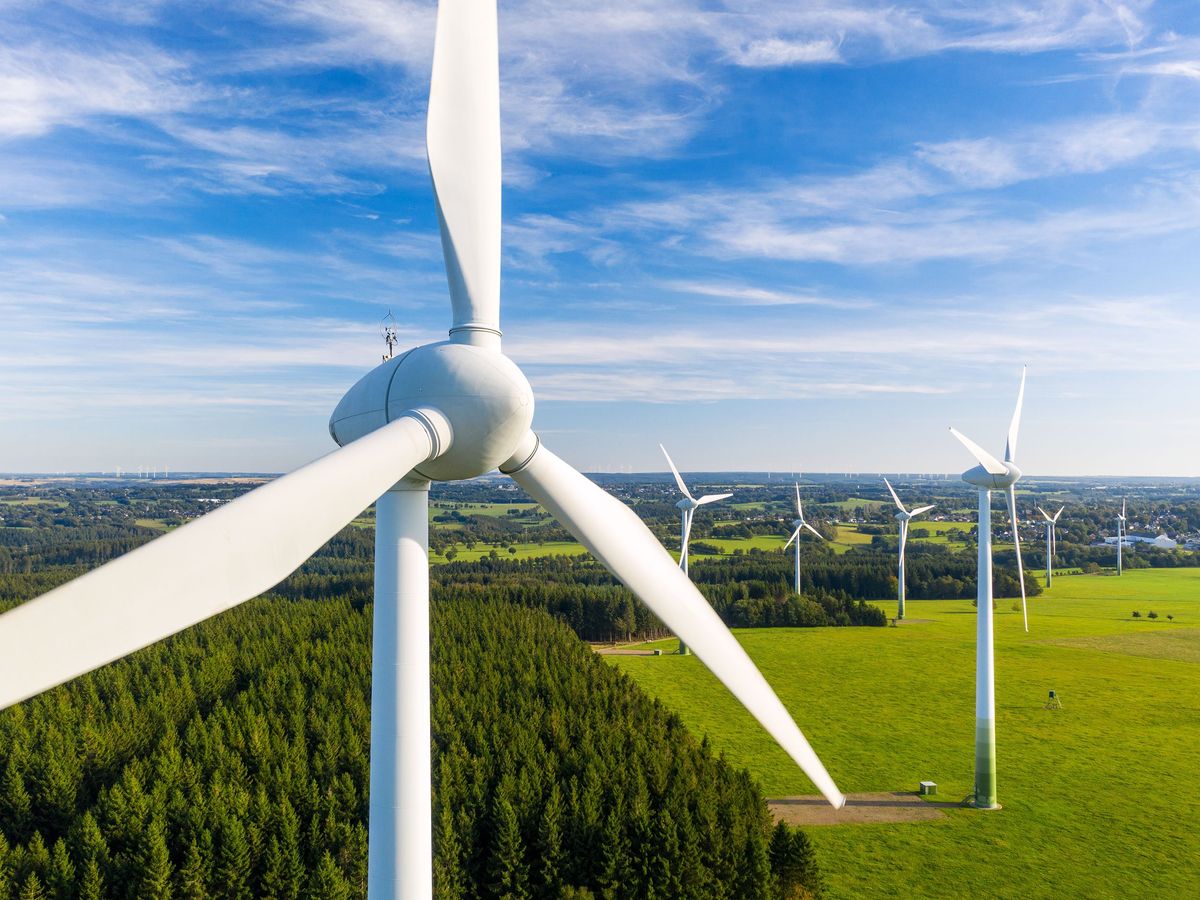
Whether seen in a global or a U.S. perspective, and whether it is defined narrowly or broadly, "cleantech" or "greentech" did not do well in the last year compared with most recent previous years. Wind and solar growth rates decelerated, while sales of electric vehicles and hybrids fell well short of hopes and expectations. Improvements in both vehicular and grid-scale storage technologies were likewise incremental at best, while some of the luster came off the smart gird vision, as measurable efficiencies and economies from smart meter deployments proved slow to materialize.

When the 2012 figures for all renewable energy investments are finalized and released, they are expected to show for virtually the first time in this century a decline in wind and solar spending rather than increase--a decline that could be as big as 10 percent, insiders say. General factors include political disillusionment (mainly connected with excessively high subsidies in Europe and public investment failures like Solyndra in the United States), a U.S. and European crackdown on solar dumping by Chinese manufacturers, sharp competition from dirt-cheap natural gas in the United States, and Chinese difficulties in building out regional power grids to accommodate larger shares of wind and solar energy. In the United States, wind farm developers are racing to get blades spinning by year end, so as to secure eligibility for production tax credits that expire at midnight on Dec. 31.

Read More

2012 Renewable Energy Recap: Renewables Reality Check

This year, the United States installed wind capacity passed the 50 GW milestone, while solar power continued a meteoric rise as well, now upwards of 6 GW installed. After a couple of years of massive resource assessments and grandiose thinking on renewables, though, 2012 seems to have been a year when we confronted the difficult realities involved with huge renewables scale-up.

With nuclear power phaseouts in Europe and Japan still looming, adding large amounts of renewables in a hurry has become an urgent priority. Some of these countries are starting to see how hard that is, with assessments of Germany's phaseout costs rising into the trillions. Still, that country continues to offer a solid example to the rest of the world: On part of one day in May, Germany met half of its total energy demand from solar power alone. It also has a massive transmission project on the board aimed at bringing 25 GW of offshore wind to the grid.

In the U.S., the offshore wind industry stalled yet again; last year we wrote here about the coming celebration for the first offshore turbine, but I have yet to put on my party hat. This time, though, I am more confident: in 2013 the first offshore turbine in U.S. waters will start spinning. (Probably.) The Department of the Interior has been pushing ahead on various offshore plans, including the release of environmental assessments for huge areas of the East Coast. The DOI also has helped the Google-backed Atlantic Wind Connection, an offshore wind "backbone" of transmission lines, move closer to reality, useful for when those turbines do end up in the water.

In Europe, offshore wind continues to impress. In February, the United Kingdom switched on the world's largest offshore wind farm (at least for a little while, until the much more massive London Array beat it), at 367 MW. More than 5 GW of offshore power are in some phase of construction around Europe, and turbine manufacturers have begun rollouts of the biggest turbines the world has ever seen.

Read More

Tornado Power: Breakout Labs Funds Research Into Energy-Generating Vortex

Tornados are very energetic. But of course, they are far too unpredictable and uncontrollable to actually make use of that energy. Right?

Peter Thiel, billionaire founder of PayPal and early Facebook funder, says wrong. Thiel's foundation, through its Breakout Labs fund, awarded US $300 000 to a company called AVEtec, based in Canada, to work on designs and prototypes for an "atmospheric vortex engine." The AVE involves a circular chamber into which warm air is introduced at tangential angles, creating a rising vortex controlled by colder air above the chamber (mini-prototype pictured). Turbines at the base will spin thanks to the artificial tornado, generating energy. According to AVEtec, a 200-meter wide version of this could generate 200 megawatts of energy at a cost of only $0.03 per kilowatt-hour, below even the cheapest forms of power we have now.

In a press release from Breakout Labs, AVEtec founder Louis Michaud said: "The power in a tornado is undisputed. My work has established the principles by which we can control and exploit that power to provide clean energy on an unprecedented scale. With the funding from Breakout Labs, we are building a prototype in partnership with Lambton College to demonstrate the feasibility and the safety of the atmospheric vortex engine."

Read More

Study Suggests 99.9 Percent Renewables Is Feasible and Cost-Effective

Intermittency may be a problem for an individual wind farm or solar power plant, but a diverse array of renewable energy systems—coupled with storage in the form of batteries or hydrogen tanks—apparently wouldn't suffer such issues.

A study by researchers at the University of Delaware modeled how well renewables could sustain a big chunk of the U.S. grid—72 gigawatts worth, where the entire country has a capacity just north of 1000 GW—and found as high as 99.9 percent reliability at reasonable costs.

The Delaware researchers evaluated 28 billion combinations of renewable energy and storage, modeled out over a theoretical four-year period using historical weather and electricity load requirement data. "At 2030 technology costs and with excess electricity displacing natural gas, we find that the electric system can be powered 90 to 99.9 percent of hours entirely on renewable electricity, at costs comparable to today's," the authors wrote. Senior author Willett Kempton has long pushed for vehicle-to-grid (V2G) systems in which plugged in electric vehicles can provide power back to the grid.

Read More

Severe Weather and the Grid

Uncannily, in a report on "Extreme Weather and Grid Disruptions" that was issued in May and updated on Aug. 30, Evan Mills of Lawrence Berkeley Laboratory cited risk manager estimates that a severe Northeast U.S hurricane could result in total costs of $76.4 billion, uninsured costs of $45.1 billion, and 85 fatalities. Those projections are right in line with current estimates of the total costs and fatalities from the perfect storm dubbed "frankenstorm," the combined hurricane and Nor'easter that devastated cities and communities in the U.S.Northeast at the end of October.

According to ten-year-old estimates from the Electric Power Research Institute, displayed by Evans in his report, annual costs to the U.S. power grid from severe weather average $104-164 billion. Estimates of average weather damage to the grid in a parallel report issued by the Congressional Research Service at the end of August are lower but still very substantial: "Data from various studies lead to cost estimates from storm-related outages to the U.S. economy at between $20 billion and $55 billion annually," that report said. "Data also suggest the trend of outages from weather-related events is increasing."

Read More

Exabyte Problem: Climate Scientists Grapple With a Deluge of Data

Climate science is a computationally intense discipline. The entire idea is to figure out what a massively complex system—essentially, the world— is going to do based on hundreds of different variables, including carbon dioxide concentrations, cloud cover, airplane contrails, and so on. And the scientific community's means for measuring those variables has improved dramatically in recent years, with satellites and any number of terrestrial sensors multiplying all the time. This is a good thing in principle, and a very complicated thing in practice.

"We face a data deluge," said Ian Foster, a professor of physical sciences at the University of Chicago's Computation Institute, during a session at the American Geophysical Union (AGU) meeting in San Francisco on 7 December. "Data volumes are increasing far faster than computer power, due to improvements in sensors. This is, of course, a tremendous opportunity for scientists, but it's also a tremendous challenge."

To address this challenge, many groups have started developing tools aimed specifically at helping computing power catch up with the available data. Brian Smith, a software engineer at Oak Ridge National Laboratory, delivered a talk at AGU about one such tool in development called ParCAT. The idea behind ParCAT is breaking down climate modeling runs into workable time scales using parallel analysis. This basically means that climate modeling can be done simultaneously for different spatial locations and points in time, rather than tackling each point in sequence. Smith said that without parallel analysis, a typical modeling run on 15 to 20 years of simulation data with 300-plus variables can take as long as a day. But in one test using ParCAT, Smith said, a 15-year run of monthly data on global ground temperatures that involved 303 variables took only 54 seconds. And that set of operations was run on a "low end cluster" of Oak Ridge Lab's computer systems.

Another new tool using parallel analysis is called TECA: Toolkit for Extreme Climate Analysis. According to Prabhat, of Lawrence Berkley National Laboratory, a single run with the commonly used NCAR CAM5.1 atmospheric model can generate 100 terabytes of data. TECA allows that mass of data to be quickly searched for signatures of extreme weather events, such as cyclones or "atmospheric rivers" (like the system that hit California just as the AGU meeting began). This type of analysis, paired with actual observation, can be used to verify that our climate models are actually working; Prabhat said TECA was picking up about 95 percent of extreme events.

Finally, researchers including NASA Goddard's Gavin Schmidt are developing a web-based application that will allow researchers to analyze data without even having to bother with command-line programming—an impressive feat considering the huge datasets in question. Chaowei Yang, an associate professor at George Mason University, told onlookers AGU that some of the more ambitious model runs—say, 1000 iterations of a given model out to 200 years in the future—can each generate almost 250 terabytes. With the new Web tool, manipulating that sort of data, or changing one of hundreds of variables to see how the model shifts, can be done easily. Because the data itself will be housed in the cloud, there won't be a need for figuring out how to move these large masses of data between collaborators. Yang said they hope to release the tool in 2013.

The generation of climate-related data isn't slowing down as we add more satellites, more ice flyovers, more ocean monitoring, and so on. It's good to see that our ability to say what all that data really means is striving to keep up.

Image via UCAR

Anti-Fossil Divestment Campaign Gets Traction

The campaign to force major institutions to divest holdings in fossil energy companies may be conceptually misguided and its ultimate goal utterly unrealistic, but it appears to be rapidly gaining traction. Yet if the ultimate effect is to accelerate adoption of a U.S. carbon tax--and, in the bargain, help clear our precious national airwaves of endless ads trumpeting the virtues of coal, oil, and natural gas--the ultimate effect may be benign.

"Spreading like wildfire, [the] fossil fuel divestment campaign [is] striking a moral chord," intoned Inside Climate News last week. "Divestment campaigns are now underway at 153 colleges and universities, large and small from coast to coast," the online publication reported. "The organizers expect to reach 200 after the winter break."

Bill McKibben [photo], the inspirational figure behind 350.org, has been "touring the country by bus, speaking at sold-out halls and urging students to begin local divestment initiatives focusing on 200 energy companies," The New York Times reported. The really big and influential colleges, to be sure, are keeping 350.org at a distance. No college with an endowment greater than $1 billion has endorsed the campaign, noted the Times.

We may be sure, however, that every senior-level college administrator and every fossil company CEO is keenly aware of the success similar campaigns had when they took on the tobacco industry and South Africa's racist apartheid regime. So, though administrators and executives may feel it is deeply wrong to formulate issues connected with climate change and fossil fuels in moral terms, they also know their feelings may turn out to be politically irrelevant.

Could McKibben's fast-spreading grassroots campaign prompt energy corporations to rethink their hostile attitude toward "putting a price on carbon" by means of a cap-and-trade emissions reduction system or a carbon tax? Might they come around to the view that the wiser course of action is to support pricing up carbon on a national basis, rather that face a constant barrage of unpredictable attacks from every side?

There are other reasons--quite a lot of other reasons, actually--to think the political fundamentals could shift in favor of a carbon tax. Elizabeth Kolbert, the author of a good book about climate change, sums them up in the current issue of The New Yorker magazine: among them, a Congressional Research Service report finding that a modest carbon tax could cut the U.S. budget deficit in half; a bipartisan Brookings Institution/American Enterprise Institute conference in which the idea was seriously considered; and, not least, a Wall Street Journal article reporting on that conference and related matters.

Bob Inglis, a Republican former congressman from South Carolina told the Associated Press that the idea of a carbon tax may be "may be moving [from the impossible]  to the inevitable without ever passing through the probable," notes Kolbert.

The idea is simple enough, as the Journal put it in its article: "Put a price tag on the harmful emissions from fossil fuels, such as oil and coal, and use the revenues to fund clean-energy development, pay down the deficit or slash taxes." Just as important, as I emphasized in my climate book, a carbon tax penalizes carbon in exact proportion to its harmfulness, fairly: Because of varying carbon intensities (carbon emitted per unit energy produced), a carbon tax hits coal perhaps twice as hard as gasoline and up to three times as hard as natural gas. The effect of a tax is to encourage not only conversion from fossil fuels to zero-carbon energy sources, but also from high-carbon to low-carbon sources--notably coal to natural gas.
 
This is not to belittle the political obstacles, starting with the Obama administration's own explicit position. It has said unequivocally that it will not propose a carbon tax, and no doubt it means exactly that. Remember, this is the same administration that made known on the eve of the Copenhagen climate conference three years ago that the United States not only would not join the Kyoto emissions-reduction regime, but that it would not "do Kyoto" while pretending not to. It did not, and it has not. No, no, no,

The Buzz This Week about Rising Sea Levels


Those attentive to science news developments—and many members of the general public—will have heard mention this week of rising sea levels. The main reason was publication yesterday by Science magazine of two major research articles, along with a news summary and commentary. The one getting most of the attention comes from a team led by Andrew Shepherd of Leeds University in the UK and is called "A Reconciled Estimate of Ice-Sheet Mass Balance." A second article, by Ian Joughin and colleagues delves into the dynamics of how the great Greenland and Antarctic sheets melt and disintegrate as warm waters intrude.

The importance of the Shepherd article is that it confirms the general estimates of ice sheet destruction made in a 2007 report of the Intergovernmental Panel on Climate Change (IPCC), while greatly narrowing the range and increasing the certainty of the IPCC's estimates, as a Science magazine press release explains. "Altogether, Greenland and Antarctica are now losing more than three times as much ice (equivalent to 0.95 mm of sea level rise per year) as they were in the 1990s (equivalent to 0.27 mm of sea level rise per year)." Shepherd's group concludes that ice sheet melting has accounted for about one-fifth of the world's sea level rise since 1992.

Unless you happen to be a Science subscriber or a member of the science press, most material appearing in the journal is behind a firewall. If that represents a problem, you can begin by looking at the sea ice report with which Brian Williams of NBC news led off the Thursday evening national newscast. To delve more deeply into the subject, watch the webcast of a 12 November conference sponsored by Columbia University called, "Warming Arctic, Changing Planet," which is available on YouTube.

While you're at it, you may want to buy access to the article about how melting Arctic ice is stacking the deck in favor of harsher North American and European winters, which is in the current issue of Scientific American. A graphic in the article does a particularly nice job of accounting for why last winter presented an unusual combination of colder-than-normal weather in Europe and warmer-than-normal weather in the United States. An opinion article in the same issue argues that geoengineering may be the only way to cope with what the editors call "the Arctic death spiral."


Dumb but Tough Grid (II)

Last week I suggested that in many places, having a grid that's dumb but really tough may be a higher priority than incorporating the latest in computing and communications. That post attracted a remarkable number of constructive comments, making the subject worth revisiting.

Let me start with my esteemed colleague Massoud Amin, the University of Minnesota professor who is credited with having coined the term "smart grid." (I edit a smart grid newsletter under his direction.)  Professor Amin takes me to task for presenting a false choice—"we need both a stronger, hardened grid AND a smarter and more resilient grid."

We do indeed need both, but in a world of scarce resources, it often will be necessary to choose which we build first. And in the many parts of the world that will be vulnerable to more frequent flooding as sea levels rise, or to more frequent severe storms, it may be necessary to harden grids before we work on their intellect.

To be sure, making infrastructure tougher does not necessarily imply "dumb" (a term I admit I used rather casually). For example, researchers at West Virginia University, with Department of Homeland Security support, have devised a system in which giant balloons would be pre-positioned in subway tunnels to be inflated in emergencies.The scheme was described in the New York Times science section on Nov. 20.

In other situations, however, making infrastructure more resistant to floods or wind does not require rocket science, just the brains and the political know-how to make the right decision at the right time. An example, also described in the Times last week, is a recently built metals recycling plant in Brooklyn, where it was decided, with rising sea levels in mind, to put some floors four feet higher at a cost of US $550 000. That facility survived the hurricane cum nor'easter intact.

So I agree with the comment from someone named Roger, who said, "If you build [the grid] strong you can add 'smarts' any time and it will be even better. If you build it just on the edge of secure, then the first, 25, 50 . .. 100 year storm will take out too much of it, along with all the 'smarts.' "

Some commenters seem to think it's dumb to harden the old outdated grid when we could be building an all-new smarter grid. That, I believe, is a misunderstanding. Nobody is talking about replacing our existing grid, however old and outdated, with an all-new smarter grid. The 'smarts' are largely an overlay.

Thus, as Tom G says, "While it will be expensive to relocate transformers, seal subways and go underground with utilities [transmission?], it really is the only solution that makes any sense."

Are current methods of grid oversight and management, and our political institutions, adequate to the task of making smart decisions about how to make the grid tougher? Another commenter, Amosbyrd, raises some fundamental questions that are worth considering in detail. Remember that the cost of a blackout go way beyond the replacement costs of damaged equipment and labor costs of restoring service. They are the total region-wide human and economic expenses associated with the blackout.

With that in mind, watch for a definitive estimate of what it cost the U.S. economy for the lower one third of Manhattan to go one week without lights. It may end up being best measured as a fraction of the nation's 2012 GDP.


Carbon Capture Is Dead, Long Live Carbon Capture

The Financial Times of London, widely considered the world's best newspaper, carried two articles about carbon capture and storage (CCS) last week, both by the daily's environmental correspondent, Pilita Clark. One carried the headline, "Carbon Capture Plants Choked by High Up-Front Costs," the other, "Carbon Capture: Investment Pays Off in Field of CCS."

Somewhat paradoxically, perhaps, the two articles together nicely summarize the whole world's status with respect to CCS. "For the past five years," writes Clark in the first article, "the British government has been trying to give away 1 billion pounds to a bunch of energy companies without success. Equally bizarrely, the European Commission in Brussels has been trying to hand out money to many of the same companies from a separate pot of 1 billion pounds."

Clark goes on to say that the underlying problem is cost: Adding CCS to a fossil-fuel plant can double its capital costs (and that's not to mention operating costs, which also are higher), and in Europe the problem is compounded by the extra anticipated expense of having to sequester carbon under the North Sea, because nobody would tolerate having it in their backyards. "The end result is the governments have committed $25 billion to carbon capture projects in the last four years without managing to produce a single large commercially operating CCS power plant anywhere in the world."

The one place representing a possible exception to what might be the rule, as Clark details in the second article, is Canada. With its oil sands industry booming and its greenhouse gas emissions going through the roof, evidently Canada has decided to mitigate the situation as best it can by concentrating a lot of effort in CCS. The utility company SaskPower is building a coal-fired plant outfitted with CCS at Boundary Dam, which is supposed to be operational in 2014. Alberta, the main home of the country's oil sand deposits, has committed to spending close to $2 billion on four CCS projects in the next year. All four are supposed to come on stream by 2015.

The only other commercial-scale CCS project nearing completion is the coal-fired plant in Kemper County, Mississippi. Though the United States is not as firmly committed to a fossil future as Canada, anybody following the presidential campaign will have noticed that coal remains a big bone of contention.

However the politics of greenhouse gas reduction evolve nationally and internationally, it is scarcely conceivable that the world will be able to do without CCS in the long run, as Clark observes. As reported here, the World Bank recently warned that if the world does not radically change course, the effects of higher temperatures will be "devastating." The International Energy Agency has drawn attention to global subsidies for fossil fuels that totaled more than $500 billion last year. The World Resources Institute fears that 1200 new coal-fired plants may be built in the next decades, which would make global devastation a virtual certainty.

High quality global journalism requires investment. Please share this article with others using the link below, do not cut & paste the article. See our Ts&Cs and Copyright Policy for more detail. Email ftsales.support@ft.com to buy additional rights. http://www.ft.com/cms/s/0/8717b060-2fd3-11e2-891b-00144feabdc0.html#ixzz2DRXdE1Rw

Clean coal: a carbon capture unit at Longannet power station, Scotland

It scarcely seems possible in these straitened times but for the last five years, the British government has been trying to give away £1bn to a bunch of energy companies without success.

Equally bizarrely, the European Commission in Brussels is struggling to hand out money to many of the same companies from a separate pot of more than €1bn.

High quality global journalism requires investment. Please share this article with others using the link below, do not cut & paste the article. See our Ts&Cs and Copyright Policy for more detail. Email ftsales.support@ft.com to buy additional rights. http://www.ft.com/cms/s/0/8717b060-2fd3-11e2-891b-00144feabdc0.html#ixzz2DRXdE1Rw

Clean coal: a carbon capture unit at Longannet power station, Scotland

It scarcely seems possible in these straitened times but for the last five years, the British government has been trying to give away £1bn to a bunch of energy companies without success.

Equally bizarrely, the European Commission in Brussels is struggling to hand out money to many of the same companies from a separate pot of more than €1bn.

High quality global journalism requires investment. Please share this article with others using the link below, do not cut & paste the article. See our Ts&Cs and Copyright Policy for more detail. Email ftsales.support@ft.com to buy additional rights. http://www.ft.com/cms/s/0/8717b060-2fd3-11e2-891b-00144feabdc0.html#ixzz2DRXdE1Rw


Most Commented Posts

Energywise

IEEE Spectrum’s energy, power, and green tech blog, featuring news and analysis about the future of energy, climate, and the smart grid.

Contributors

 
Editor
Bill Sweet
New York City, USA
Contributor
Dave Levitan
New York City, USA
 
Contributor
Peter Fairley
British Columbia, Canada
 

Newsletter Sign Up

Sign up for the EnergyWise newsletter and get biweekly news on the power & energy industry, green technology, and conservation delivered directly to your inbox.

Advertisement
Advertisement
Load More