IEEE Spectrum logo Continue to site ➔
ADVERTISEMENT

Energywise iconEnergywise

Photovoltaics Penetrate Brooklyn, New York

New York City, with its massive buildings, high population density, poor ratio of roofttop to resident, and rather northerly latitude, has represented a tough frontier for solar energy to conquer. Eight years ago, when I looked into the economics of putting a photovoltaic array on the roof of a home in the central Brooklyn neighborhood where I reside, I found that even with enormous state subsidies, going solar did not pay.

As laid out in a book about energy and climate that I was writing at the time, for a PV array costing about US $32 000, the homeowner stood to collect $20 000 in subsidies from New York State. Still, the payback period would be at least a decade—and then only if everything turned out to work as advertized.

Now, however, a few PV arrays are popping up on roofs in my neighborhood. The ones nearby are being installed by VoltaicSolaire, a four-year-old company founded by Carlos Berger, owner and operator of a successful electrical contracting business. (Why the French-sounding name? He just wanted the company to sound different, Berger explains.) The arrays are provided by an American company in Wisconsin, says Berger, and the PV material is standard silica.

Berger says that VoltaicSolaire's system installation costs run $4 to $6/Watt. The installer stands to collect a 30-percent subsidy from the federal government upon completion of the system, with another 25 percent (up to $5000), coming from the state of New York. 

Even so, the economics are still a close call. Berger says the expected payback period is now 5 to 7 years, a big improvement from what it was eight years ago. But the installation will pay off only if the home has a rooftop with a large expanse facing south or southwest. (A killer eight years ago was that my roof faced mainly west.) Another set of hurdles are the bureaucratic type. Obtaining city building permits can involve a lot of red tape, and so can getting net metering set up, which is essential. Berger expects such obstacles to diminish with time, however.

Will we soon see a deluge of photovoltaic installation in places like Brooklyn? It will depend largely on whether global PV prices stabilize near their current level—despite a general meltdown in solar manufacturing—or bounce back to much higher levels. Future price scenarios are explored in a current IEEE Spectrum news report by Peter Fairley.

Photo: VoltaicSolaire

Tiny Online Publication Wins Pulitzer Prize

This week a scrappy little online publication with no physical headquarters and an editorial staff of just seven was awarded the Pulitzer Prize, the most prestigious award in American journalism. InsideClimate News, based theoretically in Brooklyn, N.Y., is just the third electronic-only publication to be given a Pulitzer--ProPublica, the first to get one, now has two, and Huffington Post has one.

InsideClimate news won the Putlizer for an investigative story by three of its reporters about an under-covered oil spill in Michigan, an article that testifies to the publication's broad interest in energy and the environment, going beyond climate news as such.

The publication's report that most caught my eye was one in January, on the subject of drastic cuts in environmental reporting staffs at top U.S. newspapers. Prompted by the news that The New York Times was dismantling its environmental desk and reassigning many of the desk's reporters to other beats, InsideClimate News said that the country's leading five newspapers now had only a dozen journalists covering the environment, despite the general public's obvious interest in the subject.

The second paragraph to that story noted that Hurricane Sandy had just "brought home the reality of climate dangers to many Americans," and that a recently released draft government report predicted "far worse to come." Temperatures could rise by as much as 10 degrees Fahrenheit by mid-century, threatening "Americans' health and livelihoods and the ecosystems that sustain us," as the draft report put it.

Michael Mann—whom the Yale University alumni magazine has dubbed "the most hated climate scientist in the U.S."—told InsideClimate News that "specialized, experienced environment editors and reporters are essential to navigate the escalating politics and complicated science of climate change." Bill McKibben, founder of 350.org, said that climate change was "not just the biggest crisis ever, it's the biggest story ever."

Another InsideCimate News story catching my eye concerned John Kerry's appointment as Secretary of State: It said that he would take personal control of the controversial Keystone XL review. This struck me as a shrewd political observation. When President Obama delayed his decision on the pipeline last year, calling for further review, it was widely assumed that he would approve construction after the election. But his appointment of Kerry as Secretary of State may indeed have changed the political chemistry. Kerry is well known to be a passionate advocate of strong policy to counter climate change, respected as such around the world.

One of the InsideClimate News reporters who won this week's Pulitzer told The New York Times that though people think of the publication as an advocacy organization because of its name, that's wrong. This may be a trifle disingenuous. If you decide to devote a publication, say, to the science of evolution, that would seem to imply that you take evolution seriously. Or if you were to devote it to planetary science, that might imply you think the Earth is spherical and rotates around the Sun. By the same token, if you call your publication InsideClimate News, that will generally communicate that you take climate science seriously.

In any event, the award should hearten anyone who fears for the future of investigative journalism—a fear that all too often seems warranted. Like ProPublica, InsideClimate News has a set of media partners and makes its stories available to other publications. As other publications reduce their editorial staffs, it's a hopeful sign that other organizations are emerging to pick up the slack.

Miracle Microbattery? "Breakthrough" Is Promising, But Cycling and Safety Are Still Issues

Can I interest you in a microbattery with a power density better than the best supercapacitors—2000 times higher than other microbatteries—and energy density rivaling conventional lithium-ion batteries? Yes? Thought so.

A team of researchers at the University of Illinois report on a Li-ion microbattery composed of "three-dimensional bicontinuous interdigitated microelectrodes," and a University press release and a variety of media coverage has essentially decided the battery can save the world. While it is certainly impressive and may eventually fit a range of applications, there are still problems with the idea, and as of now it mainly exists in a paper in Nature Communications. It could take a while to go from the lab to your cell phone.

To the miracle claims: "The most powerful batteries on the planet are only a few millimeters in size, yet they pack such a punch that a driver could use a cellphone powered by these batteries to jump-start a dead car battery—and then recharge the phone in the blink of an eye." Whew!

Sounds great, right? I emailed Paul Braun, one of the researchers involved, and asked what the catch is. He said that though this battery can charge at speeds resembling capacitors, "a capacitor usually can be cycled millions of times. We have a long way to go in this regard. Almost all Li-ion batteries exhibit capacity fade with cycling, including our system." He added that this isn't a direct replacement for a capacitor, but "rather this is best for systems where the high energy density is particularly useful. Because of the 3-D structure, we can also provide capacitor-like power, but a million cycle life is quite unlikely."

Read More

European Parliament Vote Leaves Carbon Trading System in Shambles

Abrupt role reversals are nothing new to the field of behavioral psychology: In a marriage, from one moment to the next one spouse stops being the perpetual nag and critic to assume the part of lazy laggard, while the other goes from laid-back to laying it on. There's dirty work that has to be done, so the two martial partners take turns doing it.

Evidently the picture is not much different in international affairs. During the decade following the adoption at Rio of the 1992 United Nations Framework Convention on Climate Change, the Europeans--above all Germany and the United Kingdom--took the global lead in cutting greenhouse emissions in conformity with the requirements of the 1997 Kyoto Protocol to the Rio treaty. But then, midway through George W. Bush's administration, the balance of action reversed. Virtually from one month to the next, it was the United States that was sharply cutting its carbon emissions, while Europe went from carping critic to whining, put-upon victim.

The latest manifestation was the decision yesterday by the European Parliament to not take aggressive action to shore up the price of carbon emission permits in the deathly ill (carbon) Emissioons Trading System (the ETS). The non-move left the European carbon trading system "in tatters," as the Wall Street Journal reported; an earlier report in the Journal attributed the underlying problem mainly to indecision and divisions in the government of Germany, Europe's heavyweight. In the last years, as any newspaper reader knows, Germans have gone from purposeful high-mindedness and self-sacrifice to feeling put upon in every possible way.

The U.S.-European reversal is by no means just a product of policy and public attitudes. In the last years, the single most important factor in decreasing U.S. greenhouse gas emissions has been fuel switching by utilities and energy companies from coal to natural gas, which has been largely a spontaneous response to free-market forces. In Europe, to pile irony upon ironies, the pattern has been the opposite. As several commentators on yesterday's parliamentary decision noted, in major countries like Germany, the UK and Spain, utilities have been switching from natural gas back to coal. In the UK, for example, coal consumption was 35 percent higher in the first half of 2012 than in the comparable period of 2011, while gas consumption was 33 percent lower.

Of course it's not possible in energy to distinguish sharply between market forces, policy and technology. To a great extent, price changes are driven by expectations about future policy and technological developments. But the U.S.-European reversal is just as visible in policy as it is in the marketplace. Another manifestation: A recent opinion column by former Secretary of State George Schulz and Nobel Prize economist Gary Becker advocating U.S. adoption of a revenue-neutral carbon tax. Consistent with free-market principles, the two luminaries--both associated now with teh arch-conservative Hoover Institution at Stanford University--argue that such a tax would level the playing field in energy.

Sun Catalytix "Artificial Leaf" Can Heal Itself

The so-called "artificial leaf" is continuing to grow up, with an announcement this week at the American Chemical Society meeting that the device can essentially heal damage it sustains during energy generation processes on its own. This would allow Sun Catalytix's device—a "catalyst-coated wafer of silicon"—to run in the impure, bacteria-laden water found out in the world instead of just in pristine laboratory conditions.

The artificial leaf actually mimics only a part of the photosynthetic process found in plants. Drop the leaf into some water and expose it to sunlight, and the catalysts on its surface break down water into hydrogen and oxygen. Those bubbling gases can be collected and stored to be used as energy.

"We figured out a way to tweak the conditions so that part of the catalyst falls apart, denying bacteria the smooth surfaced needed to form a biofilm. Then the catalyst can heal and re-assemble," said Daniel Nocera, founder of Sun Catalytix and a professor at MIT, according to a press release.

The company has been touting the leaf as a cheap and easy solution to global issues of energy poverty. Nocera says that as many as 3 billion people lack access to "traditional electric production and distribution systems," and that a simple device one drops in a bucket of water—even dirty water, with the latest development—could provide standalone electricity to those multitudes. A couple of years ago, the company's chief technology officer Tom Jarvi told me a bit more cautiously that because "the inputs are light and water, and the output is fuel, one can certainly see the applicability of something like that to the developing world." The economics of really reaching such an audience are probably still in question, and there is still a step missing: convert the fuel the leaf creates into something readily usable in generators or even cars. The leaf is also relatively inefficient, well below 10 percent, compared to 15 to 20 percent efficiency for solar panels.

Still, back in 2011 I wrote this about the Sun Catalytix leaf:

Jarvi says the company expects to be able to bring the device to the point where a kilogram of hydrogen could be produced for about US $3. Given that a gallon of gasoline contains about the same amount of energy as 1 kg of hydrogen, as long as gas prices stay north of $3 per gallon, this would make a cost-effective fuel source.

Let's see, what have U.S. gas prices done since then? Okay: never dropped below $3.22 and scared $4.00 once or twice. Looks like we're still on track there.

Photo: mediaphotos/Stockphoto

Margaret Thatcher (1925-2013): Chemistry Major, UK Prime Minister, Climate Hawk

This article originally appeared on Slate's Future Tense blog.

Thatcherites like to remember their heroine as a free-market absolutist. What most forget is how strongly she insisted that economic development not come at the cost of environmental destruction.

A chemistry major at Oxford, Thatcher was never one of those conservatives who saw science as the enemy of progress. And in the last three years of her premiership, she became one of the first world leaders to call for action of global warming. Below are excerpts from four of her most stirring speeches on the subject.

In a speech to the Royal Society on 27 September 1988:

For generations, we have assumed that the efforts of mankind would leave the fundamental equilibrium of the world's systems and atmosphere stable. But it is possible that with all these enormous changes (population, agricultural, use of fossil fuels) concentrated into such a short period of time, we have unwittingly begun a massive experiment with the system of this planet itself. …

The Government espouses the concept of sustainable economic development. Stable prosperity can be achieved throughout the world provided the environment is nurtured and safeguarded. Protecting this balance of nature is therefore one of the great challenges of the late Twentieth Century. …

In a speech to the Conservative Party Conference on 14 October 1988:

It's we conservatives who are not merely friends of the Earth—we are its guardians and trustees for generations to come. (Clapping.) The core of Tory philosophy and for the case for protecting the environment are the same. No generation has a freehold on this earth. All we have is a life tenancy—with a full repairing lease. This Government intends to meet the terms of that lease in full.

Read More

"The Most Hated Climate Scientist in the U.S."

Since the first appearance of the famous or infamous "hockey stick" graph 14 years ago, it and its creator Michael Mann have been icons and lightning rods in the climate debate. Because of its empirical specificity, the chart showing a steep rise in global temperatures in the last century seemed to carry more weight with a lot of people than mere theory or computer models. So it is not surprising that the chart and its maker became the target climate change rejectionists most wanted to take down. In the affair of the hacked e-mails at, to and from East Anglia University, Mann's correspondence was especially closely scrutinized, leading to formal investigations.

Then too there is Mann's personality, which is said to be difficult and bristly. "Mann is the embodiment of everything that is wrong with climate science today. He is a hardcore political activist, very thin skinned, does not take criticism well at all, and he surrounds himself within his own little world of supportive warmist activists,” Marc Morano, communications director for Committee for a Constructive Tomorrow, told the Yale Alumni Magazine. (The committee, a conservative non-profit in Washington, D.C., describes itself as dedicated to protecting environmental values, while ensuring that people the world over can enjoy the longer, healthier and more productive lives that modern science and technology can bring.)

That's a harsh judgment, but it's nothing compared to what others have called Mann, the Yale magazine reports. A writer for the Competitive Enterprise Institute, comparing Mann to Jerry Sandusky, the disgraced football coach at Penn State, where Mann happens to teach, said that "instead of molesting children, he has molested and tortured data in the service of politicized science." Morano himself has "called for Mann and other scientists to be publicly flogged. Morano’s former boss, Rush Limbaugh, said they should be drawn and quartered."

That kind of desperate rhetoric can be safely ignored and dismissed. What cannot be ignored are the data accompanying the Yale article showing how Mann's findings have fared in recent years. Best of all is a compact world map charting the world's hottest places in 2012. The hottest in modern history--the century and a half in which thermometer readings have been taken—were most parts of the United States, parts of south and southeastern Europe, and the areas around Sao Paulo and Buenos Aires.

Photo: Greg Grieco

HVDC Supergrid Technologies Besting Expectations

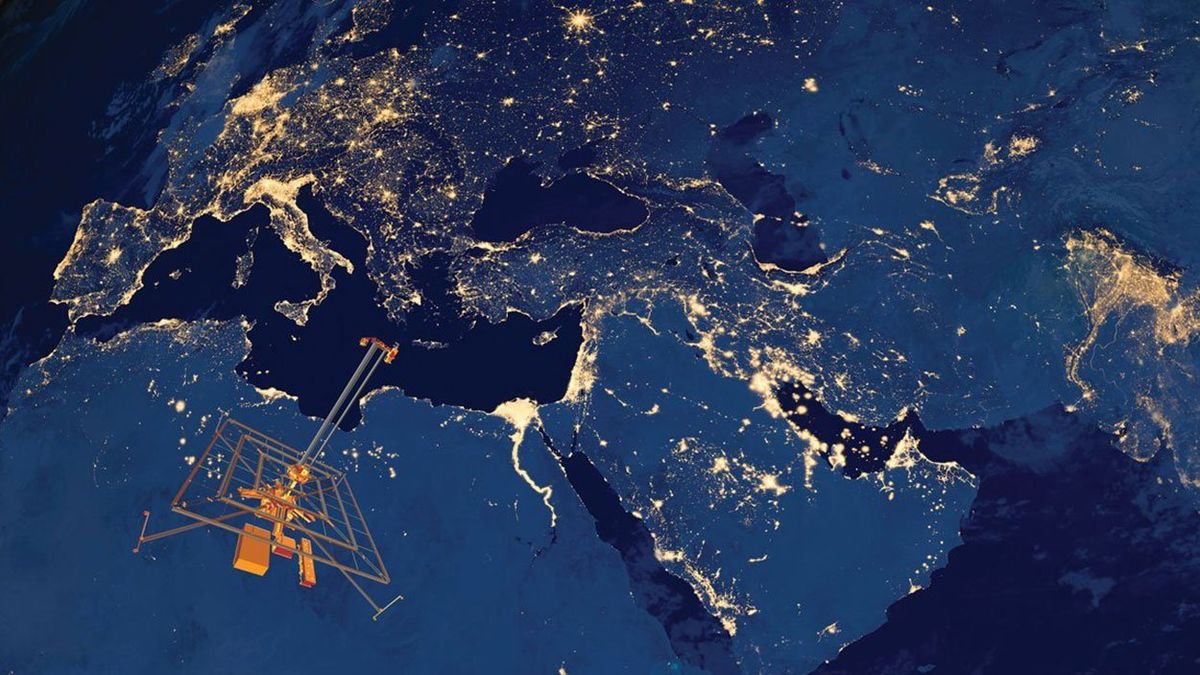
Photo: AlstomAn industrial research consortium that's a who's who of the European power industry says the development of technologies to produce high-voltage DC (HVDC) supergrids accelerated in 2012 and is "surpassing expectations." The assessment comes in the supergrids technology roadmap updated earlier this month by Friends of the Supergrid (FOSG), whose members include power equipment suppliers Siemens, ABB, and Alstom, as well as transmission system operators and renewable energy developers.

Summarizing the conclusions of an expert group within the International Council on Large Electric Systems -- better known as CIGRE, its French acroynm -- FOSG says there is now no doubt as to the feasibility of HVDC networks ferrying renewable energy resources from wherever they are in surplus to wherever they are needed. "CIGRE Working Group B4–2 considered this question, specifically whether it was technically and economically feasible to build a DC Grid, and the answer was yes," wrote FOSG.

Read More

The Suntech Bankruptcy: Bad or Good News?

Predictably, the Suntech collapse has undammed a flood of instant commentary, some of it somewhat self-contradictory.

There are those who argue that the Suntech bankruptcy and others soon to follow will relieve a glut in the global photovoltaics market, leading to supply being more in line with demand and prices stabilizing at a somewhat higher level, giving a badly needed incentive to innovators.  And then there are those—sometimes the same those—who say the shakeout will be brutal indeed, with no end in sight.

Whatever the situation, though it may now be a necessary one, it is hardly the best of all possible worlds.

Taking a relatively optimistic line, the Financial Times's prestigious "Lex" team asserts that "the end of the [solar] misery is almost in sight. Crippled balance sheets have brought growth in capacity to a halt. And demand is recovering. China’s Golden Sun solar subsidy scheme will double installed solar power capacity in the country to 10 gigawatts this year." Warren Buffett is investing in solar in the United States, and profitability could return to the industry "as early as" next year.

Yet just two days before a Beijing correspondent for the paper reported that "Chinese solar-panel makers are set to follow the lead of Suntech as the solar  industry enters a difficult period of consolidation and "adjustment.' " The clear implications were that a lot of PV makers will go down the tubes too, and that is won't be any easy adjustment.

Earth2Tech's Katie Fehrenbacher, like Lex, declared the Suntech bankruptcy "a good thing." But she went on to cite a Technology Review estimate that "hundreds of solar companies need to fail"; as many as 180 PV panel manufacturers may go under by 2015, she said.

One of the more drastic estimates of the global situation comes from Keith Bradsher of The New York Times: "The industry’s problem is that most of the cost of a solar panel lies in building the factory, not in operating the equipment. So when the industry has severe overcapacity, as it does now, each company continues running its factories to cover its tiny operating costs, and at least a small part of the interest on the loans it took out to buy the costly factory equipment. But when every company pursues that strategy, the whole industry loses money and virtually no business is able to cover its full interest costs."

Maybe the most balanced assessment was in the Wall Street Journal's "Heard on the Street": Chinese companies like LDK Solar, with balance sheets known to be weak, will go under too; stronger companies like Trina Solar and Yingli Green Energy will prosper.

photo: Peter Parks/AFP/Getty Images

China's Suntech in Bankruptcy Proceedings

It came as no surprise today when the photovoltaics manufacturer Suntech, the world market leader in recent years, filed for bankruptcy in China. The company was well known to be in serious financial trouble and has been under investigation for having spent the equivalent of almost US $700 million for bonds that probably are fraudulent, to provide financial collateral for solar projects in Germany. Last week Suntech forfeited on a US $541 million bond, and the company's chairman, Shi Zhengrong (photo), a scientist widely admired the world over as an innovative entrepreneur, had to step down, as speculation centered on whether the Suntech's municipal sponsor, the city of Wuxi, would step in to save it with some kind of bailout package.

The news, however expected, is nonetheless, stunning. In recent years, Suntech led the pack of low-cost Chinese PV makers who laid waste to commodity manufacturers in Europe and the United States, making life impossible for innovative startups like Solyndra in the U.S. and Germany's Q-Cell, the world market leader when Suntech first emerged as a force to be contended with. But then there was sharp push-back from the United States and Europe, which imposed trade sanctions after their manufacturers complained the Chinese were "dumping" PV modules at below production costs. It now appears those complaints were well-founded, as the Chinese have run up huge debts that they cannot pay back, reportedly from selling their product at a loss. As the old joke goes, for only so long can you do that and make it up in volume.

Looked at another way, the Suntech collapse appears to be a case of a technology revolution devouring its own children. According to Keith Bradsher of The New York Times, who made his reputation as a technology and business correspondent covering the troubled U.S. auto industry, "China’s approach to renewable energy has proved ruinous, financially and in terms of trade relations with the United States and the European Union. State-owned banks have provided $18 billion in loans on easy terms to Chinese solar panel manufacturers, financing an increase of more than tenfold in production capacity from 2008 to 2012. This set off a 75 percent drop in panel prices during that period, which resulted in losses to Chinese companies of as much as $1 for every $3 in sales last year."

Suntech itself is believed to owe its Chinese creditors upwards of $2 billion. "If Suntech seeks bankruptcy protection in the U.S. [as well as China]," reports the Wall Street Journal, "or if its U.S. creditors successfully filed for an involuntary bankruptcy, the company would be the largest and highest-profile Chinese company listed in the West to enter U.S. Bankruptcy Court in recent years. Suntech ranks as the second-largest Chinese company by revenue listed solely in the U.S. through American depositary receipts…"

The implications of the Suntech story go of course far beyond the company's investors and creditors, and indeed well beyond just China, the United States, and Europe. The whole global PV industry has been radically disrupted by the cut-throat tactics of the Chinese manufacturers and their political sponsors. Until the brutal shake-out in manufacturing is complete and the world market has stabilized, we will have no way of knowing the real price of a solar cell.

Photo: Nelson Ching/Bloomberg/Getty Images

Most Commented Posts

Energywise

IEEE Spectrum’s energy, power, and green tech blog, featuring news and analysis about the future of energy, climate, and the smart grid.

Contributors

 
Editor
Bill Sweet
New York City, USA
Contributor
Dave Levitan
New York City, USA
 
Contributor
Peter Fairley
British Columbia, Canada
 

Newsletter Sign Up

Sign up for the EnergyWise newsletter and get biweekly news on the power & energy industry, green technology, and conservation delivered directly to your inbox.

Advertisement
Advertisement
Load More