iCandy: April 2010
IEEE Spectrum's monthly slideshow proves that a picture is worth a thousand bytes
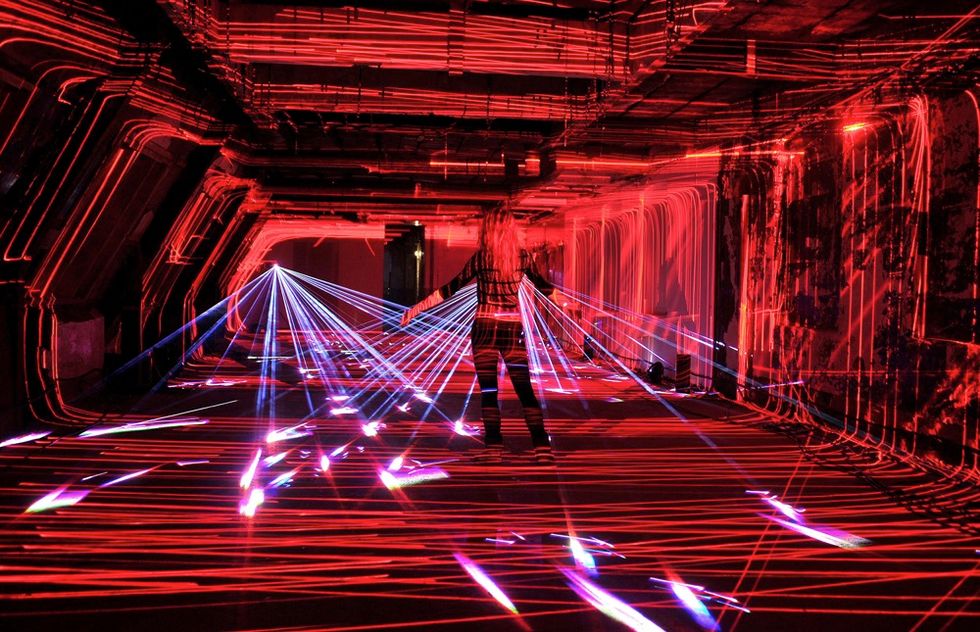
The Speed of Light laser art show that lit up the Oxo Tower Wharf in London from 9 to 19 April was reminiscent of the high-tech security systems faced by movie superspies. But the beams were commissioned by Virgin Media to commemorate 10 years of broadband communications in the United Kingdom.
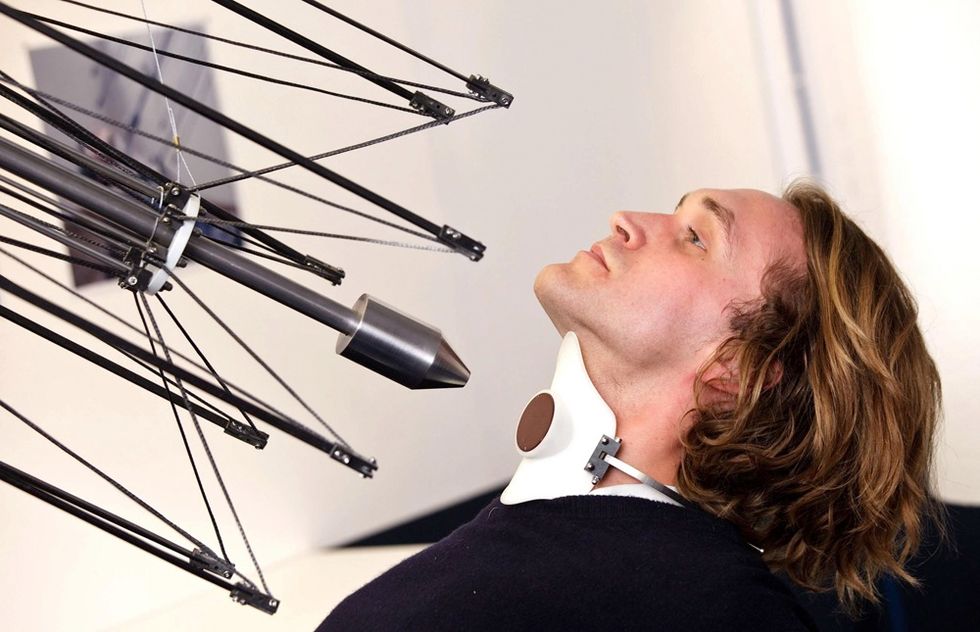
Industrial designer Andrew Friend really believes in the ability of nanotechnology. He put his neck on the line—literally—to demonstrate the effectiveness of a high-tech shock absorber against a high-pressure blast from an air cannon. It was one of the items on display at the Impact Exhibition at the Royal College of Art in London.
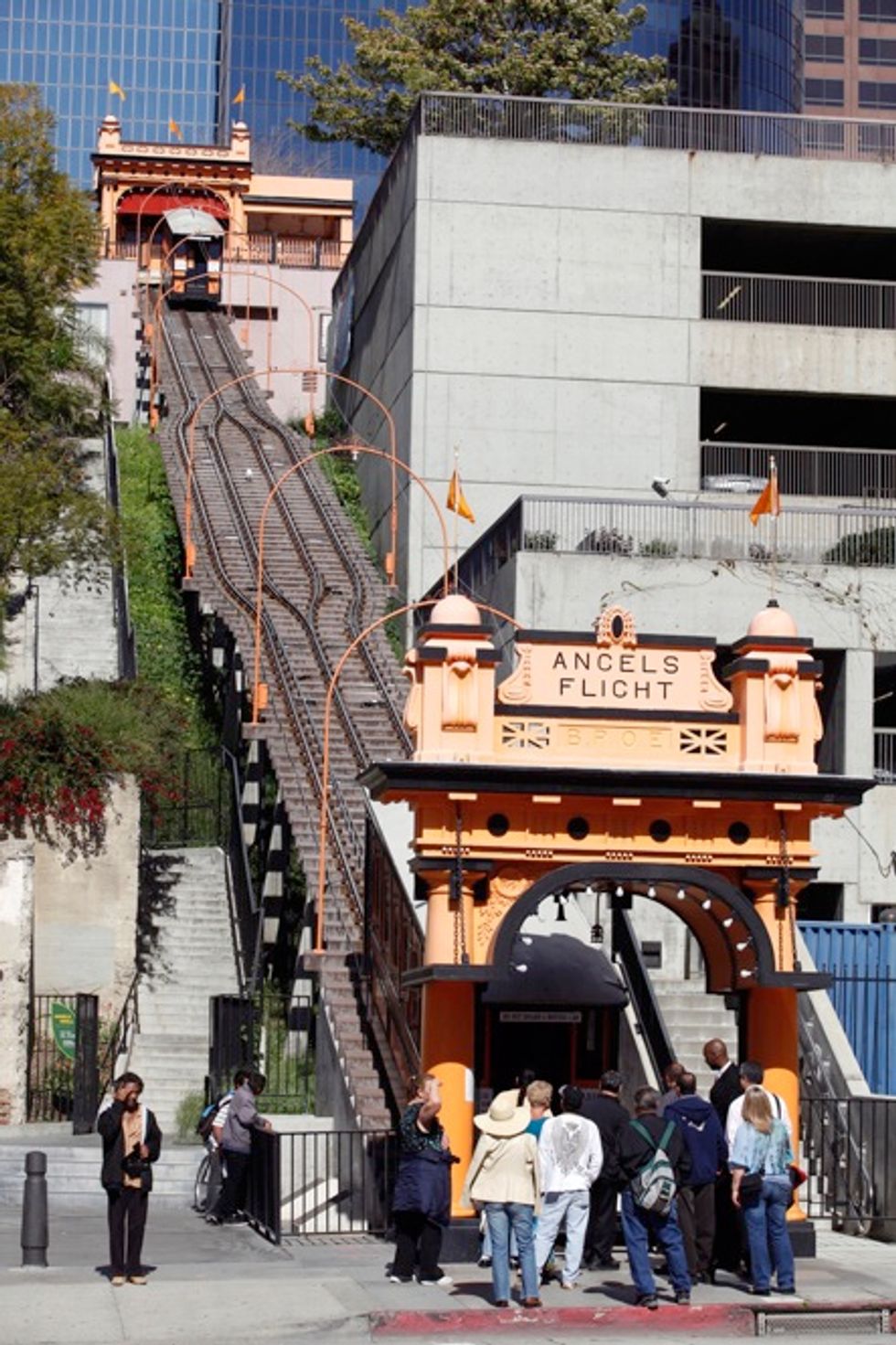
Rail service shuttling people up and down the nearly vertical slope of Bunker Hill in Los Angeles resumed on 15 March. The two-station train line, which closed nine years ago after a deadly accident, now features a computerized braking system and other safety features.
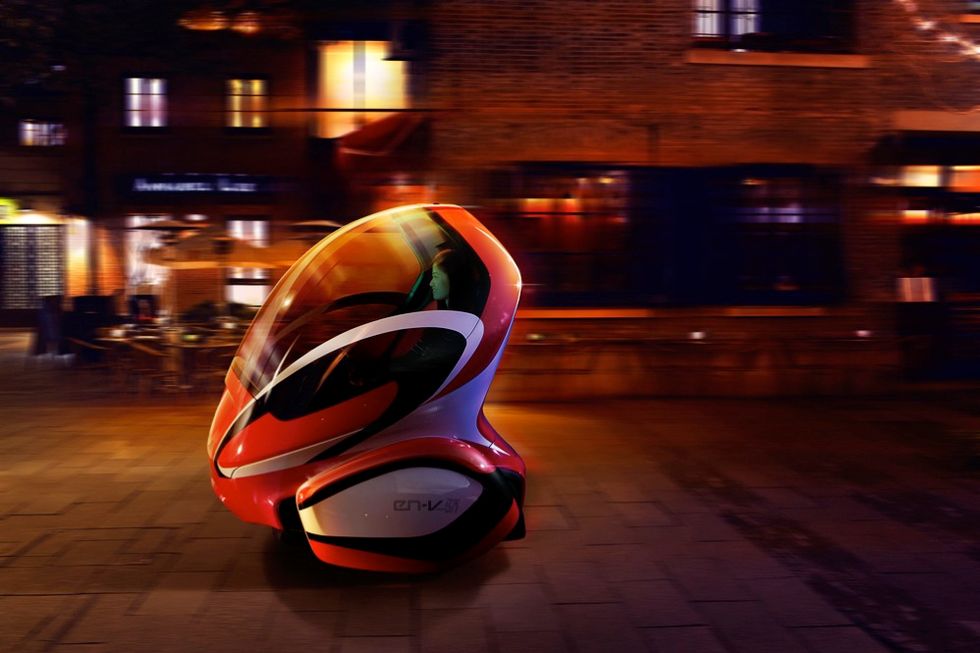
This battery-powered two-seater, called an Electric Networked Vehicle, runs for 40 kilometers on a single charge. It’s based on technologies developed for the Segway motorized scooter and can operate without any driver intervention, using GPS, distance sensors, and vehicle-to-vehicle communications.
Want a restaurant where the waiters never forget your order or disappear for a cigarette break just when you need a refill? Try a Japanese robot restaurant like this one in Bangkok. Patrons order food on touch-screen displays, and the servomotor servers go to work.
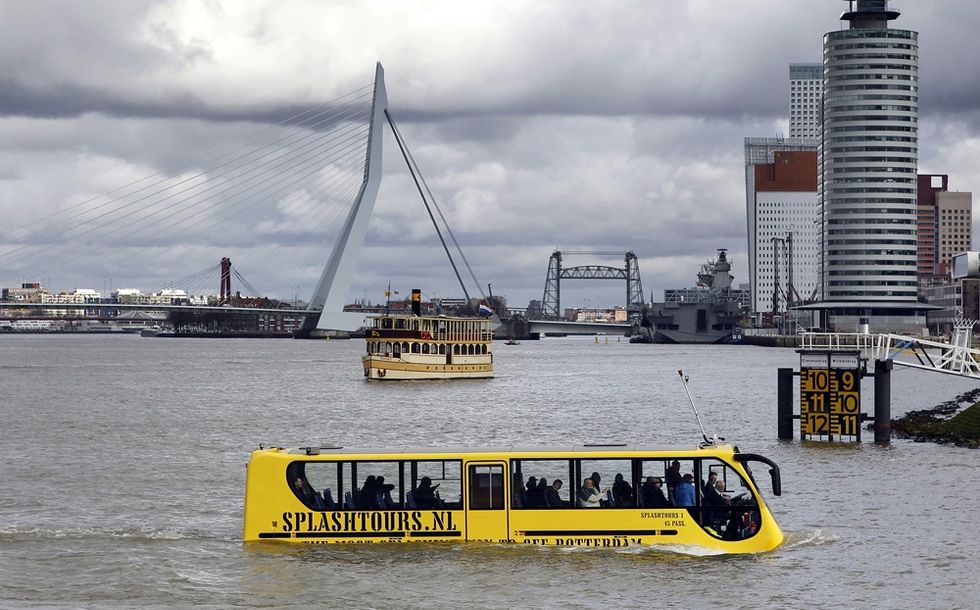
We don’t need no stinkin’ bridges. That seems to be the message delivered by a bus company in Rotterdam, Netherlands. The Amphibus pictured here can cruise the streets, then ferry passengers across the city’s waterways as it completes its route.
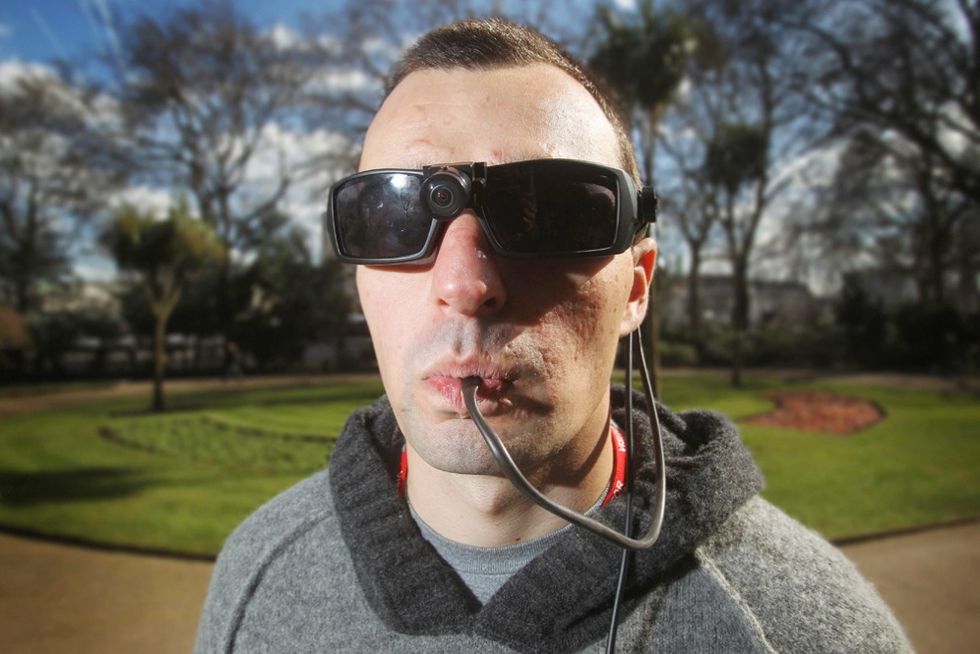
No, this isn’t a novelty drinking device for campers or stadium-goers. The cable is part of a system that allows the man, a former British soldier who lost his sight to a grenade blast, to “see” with his tongue. Images captured by a camera attached to the glasses are transformed to signals that create impulses on a pad inserted in his mouth.
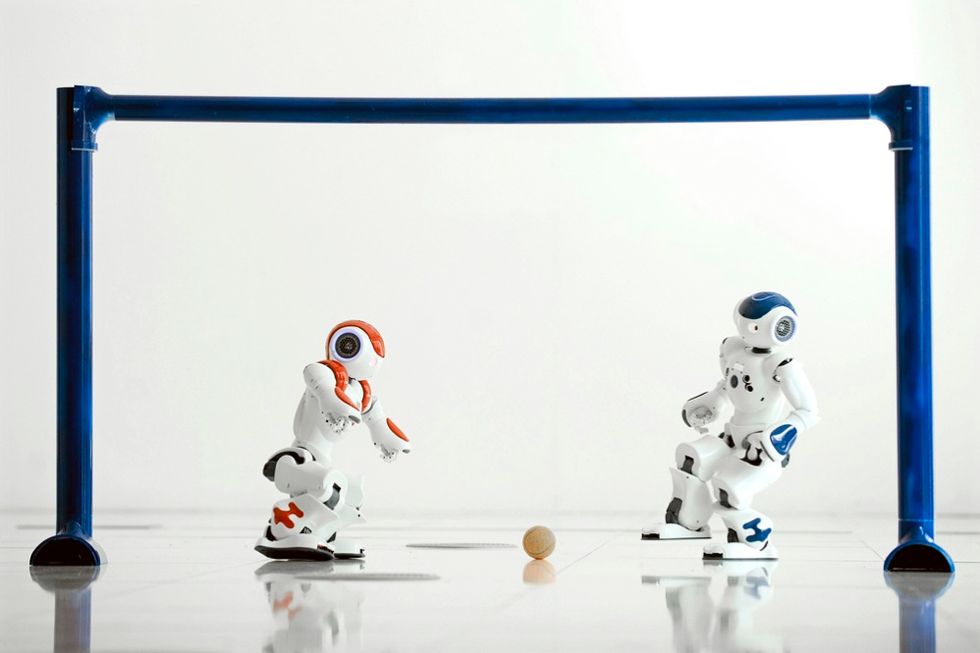
Researchers at the Edinburgh University School of Informatics have created Android FC, a team of 60-centimeter-tall humanoid robotic soccer players fitted with sensors and processors that allow them to react to the ball and to other players autonomously. The androids will battle other teams next year at a global RoboCup competition in Istanbul.
Comments