IEEE Fellows Survey
As our population ages and needs more care, there will be fewer young people to provide it. But don’t expect to fill the personnel gap with humanoid robotic nurses, say a majority of the more than 700 IEEE Fellows surveyed in a joint study by the Institute for the Future (IFTF) and IEEE Spectrum.
The survey was conducted earlier this year to learn what developments IEEE Fellows expect in science and technology in the next 10 to 50 years. They ought to foresee such things better than most, because they have so much to do with bringing them about.
What other bubbles did the Fellows burst? Forget about being chauffeured to work by your car; the Fellows doubt that autonomous, self-driving cars will be in full commercial production anytime soon. And though they say Moore’s Law will someday finally yield to the laws of physics, slowing the increase in computer performance, the IEEE Fellows don’t expect to get around the problem by using quantum weirdness to perform calculations at fabulous speeds. Seventy-eight percent of respondents doubt that a commercial quantum computer will reach the market in the next 50 years. In short, the future is taking longer than expected to arrive.
”We tend to overestimate the impact of a technology in the short run and underestimate it in the long run,” observed former IFTF president Roy Amara years ago. The IEEE Fellows seemed to agree. On the whole, the Fellows turned out to be a down-to-earth bunch—no space elevators in most of their forecasts—and they were quick to dispel future hype while eager to ground their forecasts in state-of-the-art engineering.
A few were uncomfortable making forecasts, arguing that science and technology are unpredictable. At IFTF, we wholeheartedly agree. Trying to predict specific events and timing is best left to astrologers. Instead, our researchers in Palo Alto, Calif., look for signals—events, developments, projects, investments, and expert opinions, like those provided by this survey—that, taken together, give indications of key trends. Observed as a complex ecology, these signals reveal where these developments may be taking us.
The survey identified five themes that we believe are the main arteries of science and technology over the next 50 years: ”Computation and Bandwidth to Burn” involves the shift of computing power and network connectivity from scarcity to utter abundance; ”Sensory Transformation” hints at what happens when, as Neil Gershenfeld, director of MIT’s Center for Bits and Atoms, puts it, ”things start to think”; ”Lightweight Infrastructure” is precisely the opposite of the railways, fiber-optic networks, centralized power distribution, and other massively expensive and complicated projects of the 20th century; ”Small World” is what happens when nanotechnology starts to get real and is integrated with microelectromechanical systems (MEMS) and biosystems; and finally, ”Extending Biology” is what results when a broad array of technologies, from genetic engineering to bioinformatics, are applied to create new life forms and reshape existing ones.
Computation and Bandwidth to Burn
Over the past 25 years, we’ve seen two waves of technology infrastructure development. The first wave began in the 1980s, when computing power was decentralized from mainframes to PCs. In the 1990s, we added widespread access to the Internet, as well as communications capabilities, including e-mail, instant messaging, various online communication and collaboration tools, and high-speed connectivity. The IEEE Fellows foresee the continuation of both trends. Indeed, the two will coalesce as networking makes it possible to make use of a lot of processing power that today stands idle.
”There are roughly a billion PCs on the Internet, and they’re 98 percent available for computing,” says Larry Smarr, professor of computer science and engineering at the University of California, San Diego, and director of the California Institute for Telecommunications and Information Technology. ”That’s like having a billion-processor computer just sitting there, with nobody using it.”
What will we be doing in this era of digital abundance? According to the Fellows, we will engage in highly sophisticated mathematics like deep data mining and combinatorics, for example, to seek out patterns in vast amounts of data and to construct models and simulations of increasingly complex phenomena. SETI@home is an early example of the former, and climate modeling is a familiar application of the latter. Also, sophisticated algorithms will enable near-perfect handwriting recognition, automatic real-time language processing, and unstructured speech recognition.
Biologists are rapidly becoming ”power users” of math and computational resources. We will map our genetic makeup, our biology, even our brains, with exponentially greater resolution. IEEE Fellows agree that within the next 50 years we will have accurate computational models of the human senses—vision, hearing, motion, touch, smell. But the Fellows are divided on the possibility of modeling human cognition.
On the other hand, these experts are confident that we will soon exploit the massive increase in processing power to improve climate modeling, specifically modeling the impact of solar weather on Earth’s climate. Unfortunately for those of us living along seismological fault lines, they don’t expect accurate earthquake prediction any time soon that would allow us enough lead time to evacuate.
Most Fellows believe that within 10 years, interactive computer graphics will be so lifelike that it will be hard to distinguish on screen between what is real and what is ”virtual.” Everyone will be able to do sophisticated simulations that let them see, hear, and even feel inputs and outputs. Computing pioneer Alan Kay believes that we are at the dawn of a new type of literacy—simulation literacy. Imagine running simulations of your own life, say, by asking how you would look if you lived on a vegan diet or ran 16 kilometers a day.
Sensory Transformation
Tiny smart sensors will increasingly be embedded in everyday objects and places, forming the basis for a sensory infrastructure. The one question in the entire survey on which the Fellows agreed the most was the proliferation of RFID-enabled devices. Ninety-five percent of respondents thought that this was likely, with almost two-thirds saying it would happen within the next 10 years. Most of the Fellows also foresee the widespread diffusion of ”smart dust”—tiny wireless sensors that self-organize into ad hoc networks.
As computing and processing move off the desktop into everyday things and sensor networks become widespread, every object, every movement, and every interaction online become pieces of data to be endlessly communicated, stored, mined, and analyzed on countless levels. Pervasive sensor networks also open up new vistas for scientists and engineers to observe physical phenomena and react to them. ”As we attach unique labels to more and more objects in our environment, our ’inventory management’ systems must scale accordingly,” says Ken Goldberg, an IEEE Fellow and professor of electrical engineering and computer science at the University of California, Berkeley. ”Comparing the required systems with today’s FedEx package tracking is like comparing the game of go with tic-tac-toe.”
Of course, this sensor-rich world also raises deep questions about personal privacy. Goldberg is exploring this in his own work involving telerobotic webcams that stream ultrahigh-resolution images and enable scientific fieldwork, for example, to be conducted remotely.
”Some engineers might think that it’s up to the politicians and lawyers to work out the privacy challenges,” he says. ”But unless we see this from the beginning as an important technology problem to solve, we’ll wake up with tons of gadgets around us and nowhere to hide.”
Lightweight Infrastructure
During the 20th century, infrastructure networks were the most transformative technology for industrial nations and a powerful engine for economic growth. They were also the most complicated and expensive efforts of the time. In the next 50 years, new materials and information technologies will enable a shift from massive, centralized infrastructure networks to modular, scalable, lightweight grids.
MEMS will shift the scale of materials processing, perhaps making possible home-based miniature plants to generate power, process waste, and purify water. The components will be organized more efficiently, more flexibly, and more securely than the capital-intensive networks of the 20th century.
Already today, Voice over Internet Protocol, or VoIP, communication promises to disrupt the well-established players and business models of telephony. And in the developing world, solar-powered Wi-Fi network hubs and ultralow-cost laptop computers are starting to bring the information age to rural communities. Also, in poorer regions, carbon nanotube filters are enabling the creation of portable personal water purification systems, about the size of a roll of paper towels, that do not require electricity.
And that’s just the beginning of the new, light infrastructure. Today, flipping on a light switch is an act of faith in the central utilities that serve our cities. They sell, we buy. However, distributed power systems could lead to energy markets where any of us can deal in juice.
”The power grid will become a tool to exchange energy from millions of individual sources instead of hundreds to thousands,” as it is today, writes IEEE Fellow Math Bollen, technical manager for electromagnetic compatibility and power at STRI AB, in Ludvika, Sweden.
Several Fellows also pointed to an array of alternative energy sources they think show potential—nuclear, wind, biomass—but there was no agreement on which one would dominate. Whatever our future sources of energy might be, expect energy-efficient devices to be in wide use. This includes light-emitting diodes (LEDs) instead of incandescent lightbulbs in home lighting and much more efficient photovoltaics, made possible by advances in nanoscience and nanoengineering.
Meanwhile, software-defined radio will transform our communications systems, making them highly versatile, dynamic, and easily upgradable. Ideally, a single device would be able to navigate the wireless world’s diverse networks with their myriad protocols. Software-defined radios do this by using software instead of hardware to modulate radio signals. The Fellows expect widespread use of this radio technology in the next 10 years.
Small World
For nearly three decades, nanotechnology has been hyped as the ”next big thing.” However, our survey suggests that the real small-world revolution will be a confluence of lots of little things, such as wee robots built from MEMS, bionanotechnology inspired by nature, and the continuation of Moore’s Law.
The integrated circuit industry has in many ways pioneered nanotechnology. Nearly half of the IEEE Fellows we surveyed believe that processors with 5-nanometer features will become commercially viable in two to five decades, and 22 percent think it’ll happen sooner.
Of course, entirely new chip architectures and manufacturing processes will affect these developments. ”Self-assembly of materials and structures will be one of the ways to overcome the resolution limitations in the current lithography technology,” IEEE Fellow Shinji Okazaki, at the Association of Super-Advanced Electronics Technologies, in Tokyo, commented in the survey.
In the realm of the micromechanical, microrobotics may not be as far off as one might imagine. After an earthquake, swarms of ant-size microrobots may someday burrow through the rubble of a building searching for survivors or crawl onto the hull of a spacecraft to repair damage during a flight. In the decade after next, more than half of those polled expect microscale robotics to become viable and MEMS to be widely applied to internal medicine.
Will nanotechnology go further still, leading at last to medical nanobots coursing through our bloodstreams, à la 1966’s Fantastic Voyage? Not so fast, say the Fellows.
”At the nanoscale, fundamental issues of coordination and communication remain and, in particular, the control of collections of self-organizing robots,” Howard Chizeck, professor of electrical engineering and bioengineering at the University of Washington, Seattle, wrote in his survey response. ”This is especially true for the control of nanomedical systems.”
Eventually, you may not even need to contract with a factory manufacturer to build microrobots or many other small tech-enabled devices, from RFID tags to flexible displays. Modified inkjet printers loaded with conductive nanocrystal inks have been demonstrated, hinting at a future when you can print your own electronics. Combine this technology with next-generation three-dimensional printers currently used in prototyping and you get a fab lab right on your desk.
Extending Biology
For 3.6 billion years, evolution has governed biology on this planet; now Mother Nature has a collaborator. Inexpensive tools for reading and rewriting the genetic code of life are enabling us to manipulate biology from the bottom up.
”The idea of synthetic biology is to do for biology what electrical engineers have done for circuit design and what chemists have done for the synthesis of chemicals—that is, to make an engineering field out of it,” says University of California, Berkeley, Professor Jay Keasling, director of Lawrence Berkeley National Laboratory’s Synthetic Biology Department. ”Rather than just use the natural devices as they exist, we’re building new parts that we can integrate into devices that function in predictable ways.”
Keasling is already developing microbial factories to produce drugs against malaria and cancer and to spew out octane for fuel. Meanwhile, MIT researchers are building a storehouse of interchangeable parts—BioBricks—that can be snapped together to construct artificial systems in living cells. One key enabler behind synthetic biology is the ability to rapidly sequence and synthesize DNA and to do it very cheaply. Forty-two percent of our respondents believe that it will become affordable to do this for any organism in the next decade; another 38 percent think it will happen in the following decade.
What about sequencing your own genome? Fifty-six percent of our respondents forecast that most individuals in developed countries will have a documented personal genetic profile within two decades. ”Medical therapies will be quite individualized,” Edward Berbari, biomedical engineering professor at Indiana University�Purdue University, Indianapolis, noted in his survey response. ”These will be specific therapies for diagnosed maladies aimed at very specific metabolic pathways.” He expects such therapies in another 10 years or so.
New devices are on the horizon that would close the gap between biology and bits. Cochlear implants to treat deafness and deep brain stimulators to treat Parkinson’s disease are already on the market. Meanwhile, implantable brain-machine interfaces are making headlines with primitive artificial vision systems and mind-controlled robot prosthetics. But fewer than half of the Fellows believe that implantable brain-machine interfaces will be widely adopted.
”While technology may permit many of the forecasted accomplishments to occur, human beings may well resist their implementation,” writes electrical and computer engineering professor Andrew Szeto of San Diego State University in his survey comments.
As Yogi Berra reportedly said, ”The hardest thing to predict is the future.” And as we’ve said, our survey does not try to predict the sci-tech future but merely to uncover key directions. So although we may not be able to say that in 2015 a space elevator will be shuttling goods and people into orbit or that in 2020 we’ll all have robot servants, we can foresee that in the next several decades we will be building our infrastructure in a new way: we will have unlimited computing resources, live in a sensory-rich computing environment, and reengineer ourselves and the biological world around us. Understanding these larger trends helps organizations think about adapting to the future, and thus shaping it. Alan Kay’s prescription: ”The best way to predict the future is to invent it.”
..................................................................................................................
Computer Science (199 respondents)
Will a universal language translator become commercially available?
Unlikely 15.1%
Equal chances 20.1%
Likely 64.8%
........
When is this likely to occur?
10 years or less 19.8%
11 to 20 years 50%
........
Will a quantum computer reach the market?
Unlikely 42.7%
Equal chances 25.1%
Likely 22.1%
........

Will handwriting recognition approach 99% accuracy?
Unlikely 15.1%
Likely 69.3%
........
When is this likely to occur?
10 years or less 31.2%
11 to 20 years 46.4%
........
Will computer speech recognition of unstructured human speech approach 99% accuracy?
Unlikely 19.1%
Likely 61.8%
........
When is this likely to occur?
10 years or less 25.2%
11 to 20 years 49.5%
........
Will we use parallel programming in mainstream applications?
Unlikely 5%
Equal chances 9%
Likely 83.4%
........
When is this likely to occur?
10 years or less 58.6%
11 to 20 years 31.6%
..................................................................................................................
Telecommunications (258 respondents)
Will terabit optical networks be common?
Unlikely 3.5%
Equal chances 6.9%
Likely 80.6%
.........
........
When is this likely to occur?
10 years or less 42.2%
11 to 20 years 46.9%

........
Will 3-D TV be adopted in homes?
Unlikely 29.8%
Equal chances 31.4%
Likely 33.3%
........
Will interactive computer graphics be lifelike?
Unlikely 5.8%
Likely 80.2%
........
When is this likely to occur?
10 years or less 47.1%
11 to 20 years 40.7%
........
Will gigabit Internet access be available in homes in developed countries?
Unlikely 5%
Equal chances 10.5%
Likely 84.1%
.........
When is this likely to occur?
10 years or less 44.6%
11 to 20 years 45.1%
........
Will software-defined radio be integrated into consumer electronics?
Unlikely 3.5%
Equal chances 9.3%
Likely 81.8%
.........
When is this likely to occur?
10 years or less 57.9%
11 to 20 years 34.7%
Will global videoconferencing become routine?
Unlikely 7%
Equal chances 10.5%
Likely 81%
.........
When is this likely to occur?
10 years or less 70.7%
11 to 20 years 26.1%
..................................................................................................................
Electronics (208 respondents)
Will nonvolatile data storage eclipse magnetic media?
Unlikely 14.4%
Equal chances 21.6%
Likely 57.7%
.........
When is this likely to occur?
10 years or less 39.3%
11 to 20 years 50.4%
........
Will holographic storage be a mainstream consumer technology?
Unlikely 35.6%
Equal chances 34.6%
Likely 15.4%
........
Will nanotube-based integrated circuits be commercialized?
Unlikely 34.1%
Equal chances 27.9%
Likely 33.2%
........
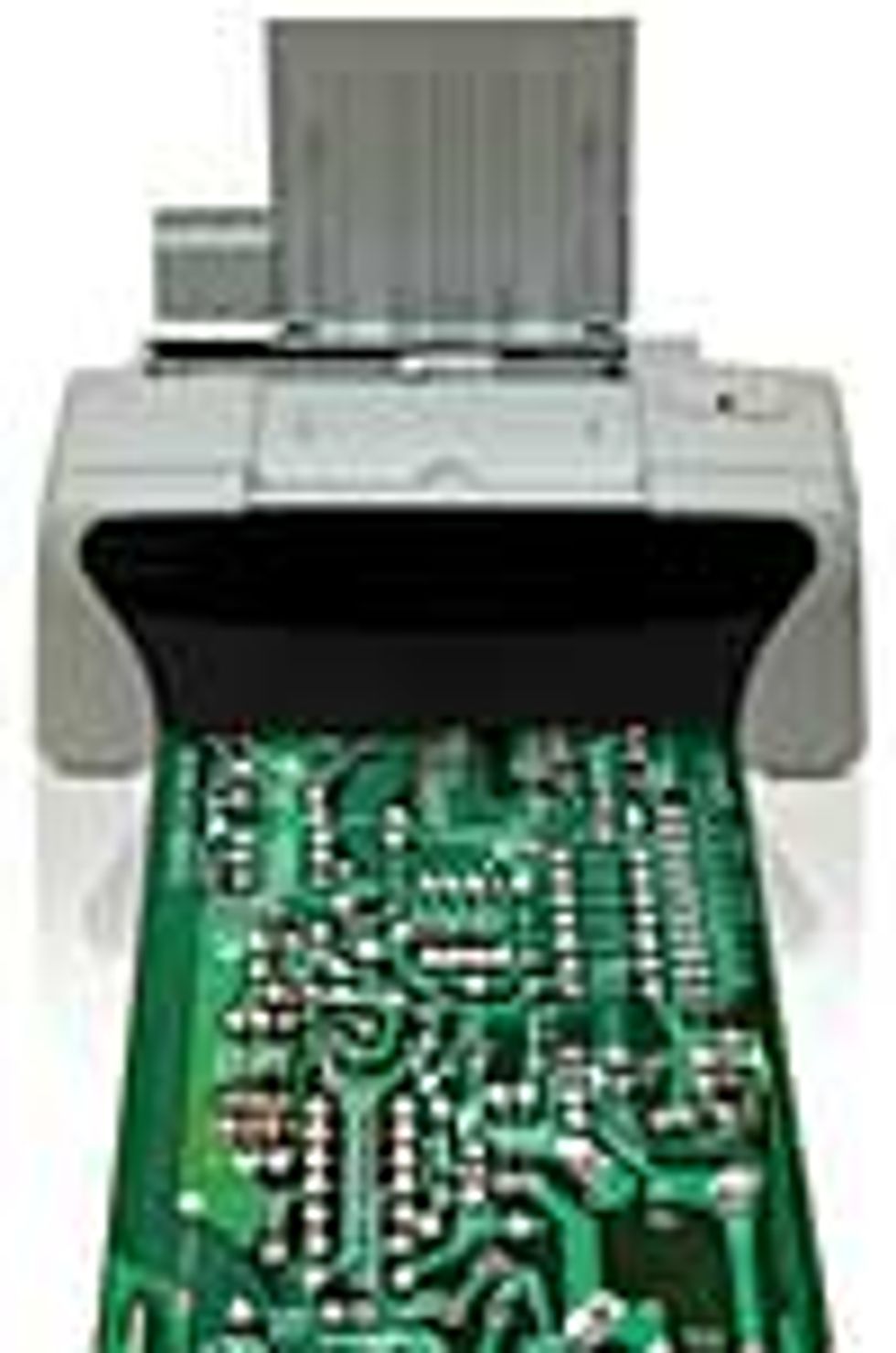
Will desktop printable electronics become routine?
Unlikely 17.3%
Equal chances 22.1%
Likely 48.1%
........
When is this likely to occur?
10 years or less 38.7%
11 to 20 years 43%
........
Will 5-nanometer processors become commercially viable?
Unlikely 20.7%
Equal chances 22.6%
Likely 50.5%
.........
........
When is this likely to occur?
10 years or less 22.3%
11 to 20 years 48.5%
........
Will organic light-emitting diodes be the dominant display?
Unlikely 16.8%
Equal chances 31.7%
Likely 38.5%
........
Will the semiconductor industry hit the ”Moore’s Law” wall?
Unlikely 12.5%
Equal chances 15.4%
Likely 70.7%
........
When is this likely to occur?
10 years or less 29.6%
11 to 20 years 53.5%
..................................................................................................................
Sensors and Robotics (129 respondents)
Will ”smart dust” devices be widely deployed in sensor networks?
Unlikely 15.5%
Likely 51.9%
.........
When is this likely to occur?
10 years or less 29%
11 to 20 years 40.3%
........
Will radio-frequency identification be commonly integrated in consumer electronics?
Unlikely 0%
Equal chances 2.3%
Likely 95.3%
........
When is this likely to occur?
10 years or less 66.7%
11 to 20 years 30.6%
........
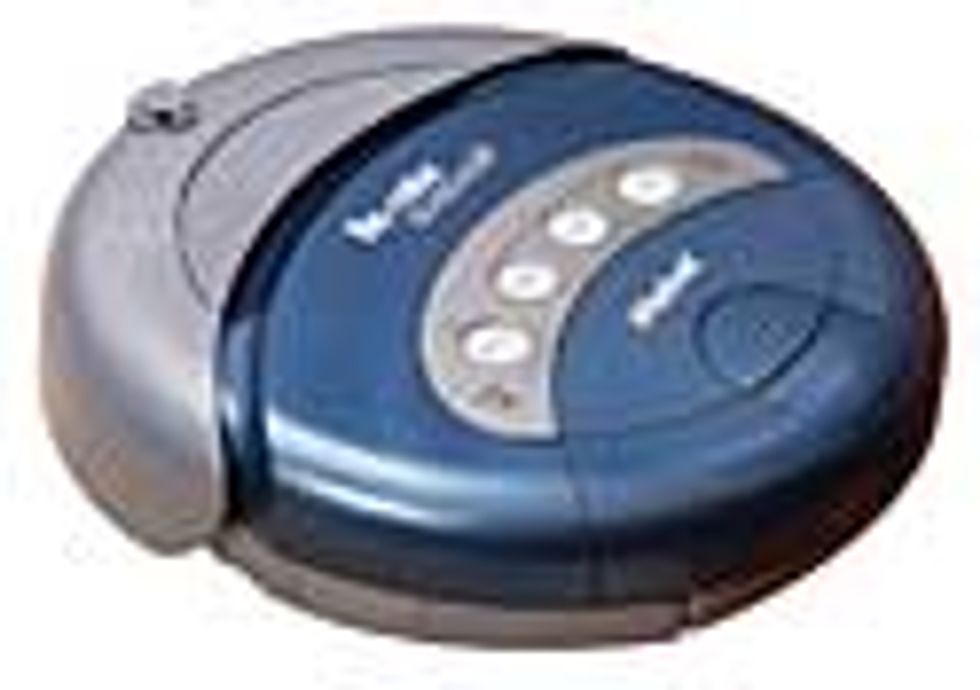
Will household robotics be widely adopted?
Unlikely 17.8%
Equal chances 29.5%
Likely 48.8%
........
When is this likely to occur?
10 years or less 16.1%
11 to 20 years 50%
........
Will printed bar codes be replaced by smart-tag technologies such as RFID?
Unlikely 2.3%
Equal chances 8.5%
Likely 86.8%
........
When is this likely to occur?
10 years or less 63.1%
11 to 20 years 30.1%
........
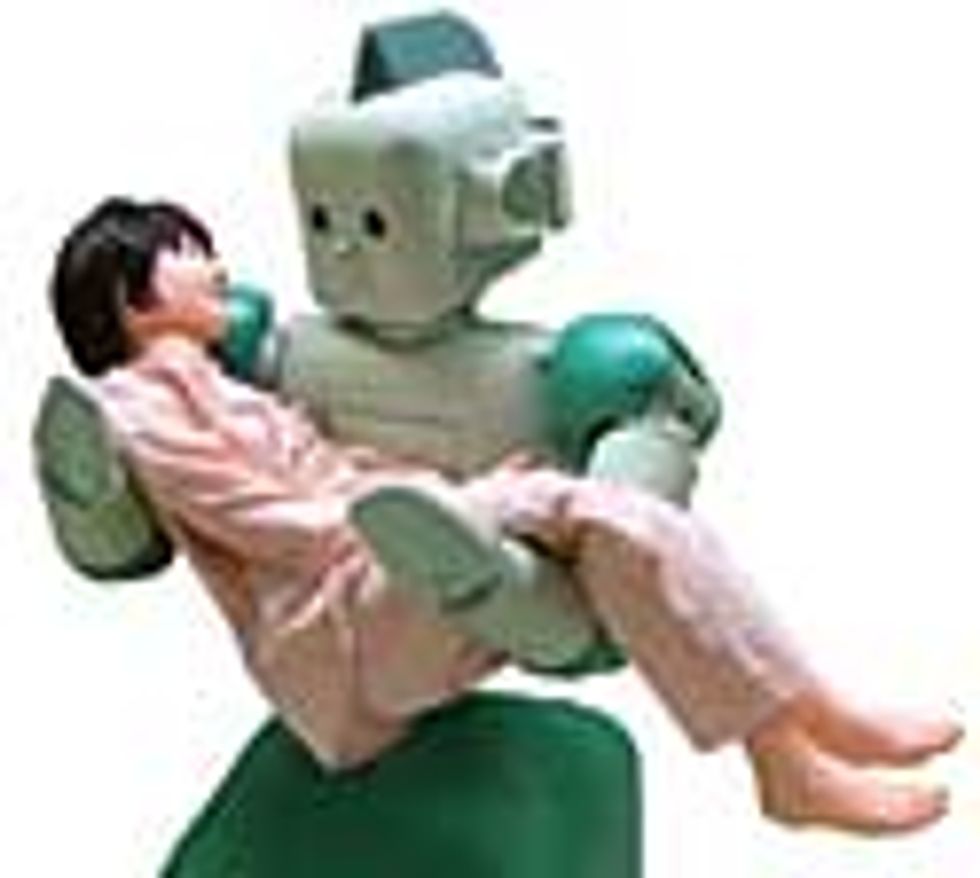
Will humanoid robots care for the elderly in their homes?
Unlikely 39.5%
Equal chances 27.9%
Likely 27.1%
........
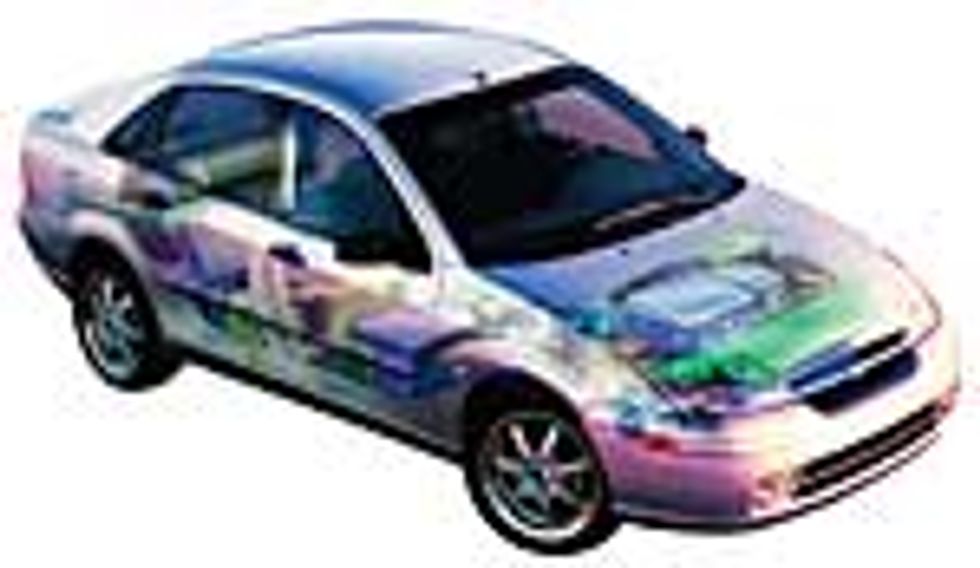
Will self-driving cars be in commercial production?
Unlikely 39.5%
Equal chances 30.2%
Likely 26.4%
Will sensor networks that scavenge power be widely used?
Unlikely 7.7%
Equal chances 21.5%
Likely 66.2%
.........
When is this likely to occur?
10 years or less 38.3%
11 to 20 years 44.4%
..................................................................................................................
Physics (57 respondents)
Will a ”Theory of Everything” unifying the forces of nature be widely accepted?
Unlikely 57.9%
Equal chances 26.3%
Likely 15.8%
........
Will cold fusion be demonstrated?
Unlikely 71.9%
Equal chances 12.3%
Likely 12.3%
........
Will the origin and nature of dark matter be well understood?
Unlikely 26.3%
Equal chances 26.8%
Likely 29.8%
..................................................................................................................
Space and Earth Sciences (40 respondents)
Will Earth-like planets be discovered?
Unlikely 25%
Equal chances 15%
Likely 52.5%
........

Will we have accurate models of the impact of solar weather on Earth’s climate?
Unlikely 12.5%
Equal chances 25%
Likely 60%
........
Will living organisms be discovered on other planets?
Unlikely 40%
Equal chances 27.5%
Likely 25%
........
Will terrestrial weather forecasting be accurate to the hour?
Unlikely 30%
Equal chances 27.5%
Likely 40%
........
Will microelectromechanical systems be widely applied to medicine?
Unlikely 15.4%
Equal chances 22.1%
Likely 59.6%
........
When is this likely to occur?
10 years or less 19.6%
11 to 20 years 50%
........
Will humans understand signals from extraterrestrial civilizations?
Unlikely 72.5%
Equal chances 15%
Likely 5%
........
Will scientists predict earthquakes with enough lead time to evacuate affected areas?
Unlikely 22.5%
Equal chances 50%
Likely 25%
..................................................................................................................
Materials and Nano-technology (104 respondents)
Will room-temperature superconductors be commercially available?
Unlikely 56.7%
Equal chances 23.1%
Likely 14.4%
........
Will LEDs replace incandescent lightbulbs for home lighting?
Unlikely 1.9%
Equal chances 10.6%
Likely 86.5%
........
When is this likely to occur?
10 years or less 46.3%
11 to 20 years 40.2%
........
Will nanoelectromechanical systems go commercial?
Unlikely 11.5%
Equal chances 26.9%
Likely 57.7%
.........
When is this likely to occur?
10 years or less 27.6%
11 to 20 years 55.2%
........
Will molecular self-assembly be commonly used to build integrated circuits?
Unlikely 38.5%
Equal chances 33.7%
Likely 26%
........
Will robust design tools for fabrication at the nanoscale become available?
Unlikely 10.6%
Equal chances 23.1%
Likely 63.5%
.........
When is this likely to occur?
10 years or less 38.7%
11 to 20 years 40.3%
........
Will microscale robotics become viable?
Unlikely 15.4%
Equal chances 26.9%
Likely 52.9%
........
When is this likely to occur?
10 years or less 9.6%
11 to 20 years 53.8%
........
Will it be commercially viable to manufacture nanostructured materials to exact specifications without machining?
Unlikely 20.2%
Equal chances 22.1%
Likely 55.8%
.........
When is this likely to occur?
10 years or less 26.3%
11 to 20 years 50.9%
..................................................................................................................
Energy (180 respondents)
Will fuel cells be widely used to power cars?
Unlikely 16.1%
Equal chances 26.7%
Likely 55%
.........
When is this likely to occur?
10 years or less 27.4%
11 to 20 years 56.8%
........
Will photovoltaics with 50% efficiency be in commercial production?
Unlikely 31.7%
Equal chances 31.7%
Likely 28.9%
........
Will fuel cells be widely used in mobile devices?
Equal chances 17.2%
Unlikely 14.4%
Likely 66.7%
........
When is this likely to occur?
10 years or less 44.3%
11 to 20 years 43.5%
........
Will fuel cells be widely used as a source of household electricity in developing nations?
Unlikely 31.7%
Equal chances 30.6%
Likely 32.2%
.........
When is this likely to occur?
10 years or less 17.5%
11 to 20 years 38.6%
21 to 50 years 43.9%
........
Will fuel cells be widely used a source of household electricity globally?
Unlikely 44.4%
Equal chances 32.3%
Likely 19.4%
........
Will fusion reactors be a commercial success?
Unlikely 57.8%
Equal chances 23.3%
Likely 14.4%
..................................................................................................................
Biology (82 respondents)
Will implantable brain-machine interfaces be widely adopted?
Unlikely 19.5%
Equal chances 29.3%
Likely 47.6%
........
Will prosthetic retinas be commercially available?
Unlikely 11%
Equal chances 28%
Likely 54.9%
........
Will most people globally have documented personal genetic profiles?
Unlikely 56.1%
Equal chances 19.5%
Likely 22%
........
Will scientists have accurate computational models of the human senses?
Unlikely 13.4%
Equal chances 30.5%
Likely 53.7%
........
Will most individuals in developed countries have documented personal genetic profiles?
Unlikely 11%
Equal chances 19.5%
Likely 68.3%
.........
When is this likely to occur?
10 years or less 22.2%
11 to 20 years 55.6%
........
Will rapid DNA sequencing become affordable?
Unlikely 6.1%
Equal chances 21.4%
Likely 67.1%
.....
When is this likely to occur?
10 years or less 41.5%
11 to 20 years 37.7%
........
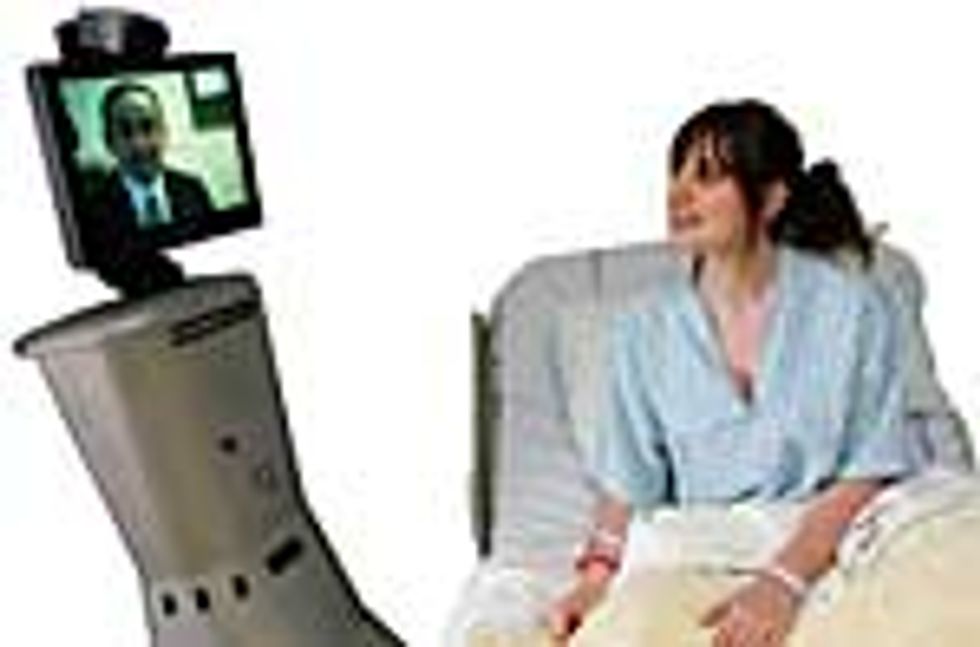
Will most medical diagnosis be conducted via telemedicine in developed nations?
Unlikely 29.3%
Equal chances 31.7%
Likely 36.7%
........
Will most medical diagnosis be conducted via telemedicine in developing nations?
Unlikely 39%
Equal chances 31.7%
Likely 28%
..................................................................................................................
The Institute for the Future/ IEEE Spectrum Future of Science and technology Survey
The Institute for the Future/IEEE Spectrum Future of Science and Technology Survey was conducted online in February and March 2006. More than 700 IEEE Fellows across the globe participated. The sample consisted of 97 percent males and 3 percent females, with an equal mix of academic researchers and those working in industry. The survey asked participants to identify key breakthroughs in their areas of expertise and then to forecast probabilities of specific developments. The respondents were then asked to forecast trends within their areas of expertise. The forecast domains included computer science, telecommunications and media, sensors and robotics, materials and nanotechnology, energy, physics, space and earth sciences, and human health and biology. The respondents were also asked the probability of each forecast’s occurring over the next 50 years. If they believed that the forecast had at least a 60 percent chance of occurring, they were asked to provide a time frame in which it was likely to occur.
Because the graphics here show only the most salient data, the percentages do not add up to 100 percent. Time frames were omitted when the consensus was divided or the number of respondents was small.
IFTF staff who contributed to this survey include Mani Pande, Anthony Townsend, Mike Liebhold, Alex Soojung-Kim Pang, and Maureen Davis.
About the Author
MARINA GORBIS is executive director of the Institute for the Future (IFTF), an independent nonprofit research group based in Palo Alto, Calif.
DAVID PESCOVITZ is a research affiliate at IFTF, coeditor of the blog BoingBoing.net and editor-at-large of Make Magazine. For information on the IFTF, visit https://www.iftf.org.


