The Conversation (0)

 Photo: Pete McArthur
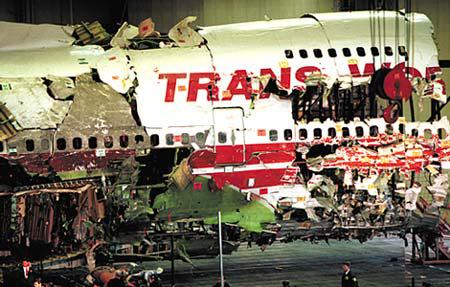
As today's military and commercial aircraft age past their teen years, the many kilometers of wiring buried deep within their structures begin to crack and fray. Once thought to be rare and benign, such faults are found by the hundreds in a typical aircraft. Unlike obvious cracks in a wing or an engine, though, damaged wire is extremely difficult to detect. But the resulting arcing and electromagnetic emissions can be just as deadly: faulty wiring has been blamed for the downing of Swissair 111 near Nova Scotia in 1998 and of TWA 800 off New York's Long Island in 1996 [see Photo]. Indeed, any densely wired system is vulnerable--the space shuttle, nuclear power plants, subways and railroads, even the family car.
Public scrutiny has prompted strongly worded recommendations from the likes of NASA, the U.S. Federal Aviation Administration, and the National Transportation Safety Board (NTSB) [see "Government and Industry Take Action"]. "The safety of the nation's wire systems is an issue of major importance to us all," noted a White House report issued last fall. Several months earlier, the NTSB concluded its lengthy investigation of TWA 800 with the verdict that a short circuit sparked an explosion in the center wing fuel tank. The condition of the wiring, it noted, was "not atypical for an airplane of its age." Among the NTSB's recommendations was to incorporate into aircraft "new technology, such as arc-fault circuit breakers and automated wire test equipment."
Solutions are not straightforward. Among the most promising technologies are advanced reflectometry methods, for routine maintenance; so-called smart wire systems, for continual, on-the-spot wire testing; and arc-fault circuit breakers and advanced fire suppression techniques, for minimizing damage and injury should a fault occur. Remaining challenges include detecting the minuscule insulation breaks that encourage arcing; optimizing the benefits and mitigating the risks of the various wire testing techniques; and getting a better handle on the labyrinthine complexity of aircraft wiring systems.
Failing the test of time
A healthy wire is perhaps the simplest, yet most important, element in an electrical system. Typically, a copper conductor (from 1 to 10 mm in diameter) is covered by a thin outer insulation (from 0.5 to 2 mm thick). Damaged insulation can expose the copper, giving rise to arcs, shorts, and electromagnetic emission and interference. Arcing occurs when current flows from the wire through ionized air to another conducting object, such as a second wire or the aircraft structure. A short circuit channels the current to an undesired conductor. If an external shield or braid protecting a wire is broken, the resulting antenna radiates the signal on the wire.
As the wire ages, the insulation may become brittle and crack. Vibration can also chafe the insulation as wires vibrate against each other, a tie-down, or any other hard surface. Maintenance can also be hard on wires, as they may be nicked by workers' pliers, or bent beyond their tolerable radius, or sprinkled with metal drill shavings, chemicals or water, or even used as stepladders in hard-to-reach places. [see Photosthat show cracked and singed wiring taken from U.S. Navy planes.]
But perhaps the greatest concern is the breakdown of the wire's insulation when exposed to moisture. Insulation made from polyimide film, often referred to by the brand-name Kapton, was once thought to be the ideal wiring insulation and was widely used in both military and commercial aircraft during the 1970s and early '80s. A long-chain polymer that is both tough and durable, with a very high resistivity, Kapton provides excellent electrical insulation even at a thickness of less than a millimeter.
What was not known initially was how Kapton held up to the moisture that tends to condense in or near aircraft wiring harnesses. This moisture is so prevalent that most wires are outfitted with a drip loop, which prevents water droplets from running down the cables and into critical electronics. Exposed to this moisture, Kapton's long polymer chains break down, and the insulation becomes brittle, developing small cracks that in turn let in even more moisture. So-called wet arcs begin to flow along these cracks, creating intermittent arcs too small to trip normal circuit breakers and often too small even to interfere with the signal transfer along the wire. Nonetheless, the tiny arcs do begin to carbonize the insulation, and carbon is an excellent conductor. Once enough carbon has built up ("enough" depends on the type and thickness of the insulation, the power handling of the wire, and other factors), there can be a large explosive flashover, with exposed wires spewing molten metal.
One would hope that Kapton cracks are relatively rare. Not so, according to a recent report by Lectromechanical Design Co., an electrical research firm based in Sterling, Va. Using a proprietary tool called the DelTest, Letromec engineers tested the wiring in a Boeing 747, an Airbus A300, a Lockheed L-1011, and two DC-9s that were each over 20 years old and had been retired by commercial airlines within the previous six months. The results: 13 cracks per 1000 meters of wire in the L-1011, down to 1.6 cracks per 1000 meters in one of the DC-9s. With approximately 240 km of wire in the L-1011, this amounted to over 3000 cracks, each a potential cause of catastrophic arcing.
Some time after Kapton's problems came to light, in the late '70s, its use was cut back, and aircraft manufacturers began replacing it in some of the most critical wiring systems in planes in service. Alternatives to Kapton include polyvinylchloride, glass, nylon, polyester, and teflon. But polyimide can still be found on thousands of aircraft in service, including the McDonnell Douglas MD-11 and older Boeing 737s and 767s.
How old is too old?
Updating rather than replacing old planes has become a standard way to save money. Some aircraft being designed today, such as the Joint Strike Fighter, may fly 100 years. Similarly, the B-52s flown by the U.S. Air Force were built in 1961-62 and are expected to remain operational until 2045. Its designers would have never dreamed that this plane would fly for over 80 years. Indeed, not much thought was given to replacing or inspecting the wiring, because the planes were to have been retired long before any problems developed.
So when is it time to scrap an airplane because its wires are too old? The answer depends on a complex array of factors--among them calendar age, manufacturing variations, exposure to water, ultraviolet light, temperature, vibration and g-forces, and stress during normal use and maintenance.
Planes over 20 years old are virtually guaranteed to have wiring problems, many of which turn up during routine maintenance. The average age of civilian aircraft in use today is 18 years, and the average age of military planes is 16 years. [See table, below.]
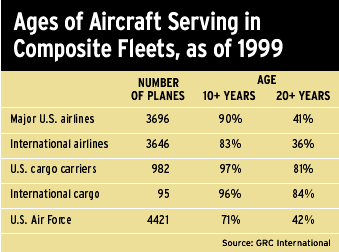
Of course, most fleets are composed of a mix of aircraft types and ages. Trying to relate this information to wiring failure probability rates, such as those in the table below, gives some idea why wiring problems are endemic today.
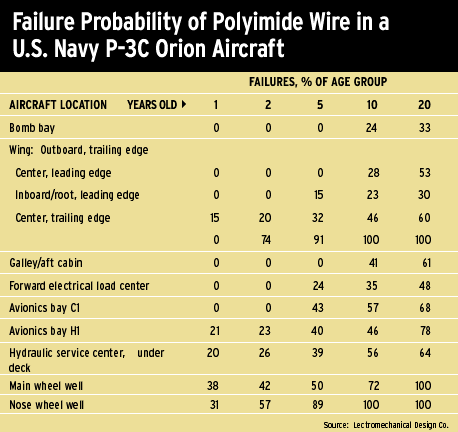
Short of replacing an entire aircraft, how about replacing just the wiring system? That also turns out to be hugely expensive--anywhere from US $1 million to $5 million for a typical aircraft. Determining what, when, or whether to replace then means weighing cost against risk--a decision complicated by the fact that neither the cost nor the risk has yet been fully characterized. What is more, military planes get exposed to more hostile environments than the average commercial plane, so extrapolation to other types of planes is not necessarily accurate.
The maintenance nightmare
Snaking through an aircraft are many kilometers of wire--some 17.5 km in a Navy F-18C/D fighter, 240 km in a typical wide-body jet. The wire is literally built into the aircraft, running through fuel tanks, and twisted around hydraulic lines. Just reaching the wiring harness often entails dismantling an aircraft's external structure. And merely touching a wire, let alone disconnecting, handling, and reconnecting it, heightens the risk that the wire will be damaged.
But maintenance workers do not always show due respect. They have been known to stand on wires instead of step stools, to cut and splice them poorly to get them out of the way of difficult-to-reach places, and to smack connectors with hammers to loosen them. Tiny razor-sharp metal shavings from maintenance or upgrades, coupled with ordinary aircraft vibration, create the perfect conditions for insulation damage.
Other parts of the aircraft never get touched, but are no less problematic. The dust bunnies and chaff that collect in these out-of-sight areas are excellent tinder to turn sparks into smoke and flames. Then there's the sticky "syrup" that collects in and around wire bundles. This well-aged potion of condensation, toilet and galley leaks, dust, hydraulic fluid, and various unnamable ingredients is intensely caustic to most kinds of insulation. One of the Navy and FAA directives for making aging wiring safer has been simply to improve cleanliness within aircraft!
Compounding the maintenance nightmare is its high cost. By one estimate, the Navy spends 1.8 million person-hours each year to troubleshoot and repair its aircraft wiring systems.
Why state of the art isn't enough
Wire troubleshooting is still very much a hands-on art that has changed little over the last 40 years. Among the techniques in current use are visual inspection, several versions of reflectometry, and impedance testing. Each technique has its advantages and, more importantly, disadvantages.
Visual inspection is still the most common way to check for wiring failures. It entails accessing the cables and then carefully checking the insulation for holes and cracks, often no larger than the head of a pin. Whole sections of wiring never get inspected: chafed insulation can be hidden under clamps or around corners, or within multiwire bundles, each consisting of 75 or more wires. And many wire bundles are built right into the walls of the aircraft.
Another approach involves measuring the cable's resistance from end to end. A low resistance means the cable is "good," and a high resistance means that it is broken. When a very high voltage (500 V or more) is placed between adjacent, supposedly unconnected wires, current leakage from one wire to another can indicate degraded insulation.
There is some concern, though, that high voltage may in itself damage the insulation. So nondestructive resistance tests, such as those developed by Eclypse International Corp., Corona, Calif., use voltages of 28 V or less. A floating comparator analyzes the currents on the cable as the input current is stepped through several levels. In a healthy cable, Ohm's Law predicts that the resistance will stay the same for all current levels. If it does not, then something is wrong with the cable. The method has been used to locate cold solder joints, bad crimps, carbonization of the cable or connectors, and foreign matter on or near the cables. And unlike the high-voltage tests, it can be used on a fueled airplane. It does, though, still require disconnecting and reconnecting the cables.
Several techniques now used or under development involve reflectometry. Common to all these methods is the sending of a signal (a pulse, sine wave, or the like) down the wire and sensing the reflection that returns from the wire's end. They are most useful for detecting so-called hard errors, such as short circuits, but have not proven useful for less obvious wire problems.
Time domain reflectometry (TDR) is customarily used when a wiring problem is already suspected. A short, typically rectangular pulse is sent down the cable, and the cable impedance, termination, and length give a unique temporal signature to the reflected signal. A trained technician then interprets the signature to determine the health of the cable. Such signal interpretation is particularly necessary for aircraft systems, where wires branch into complicated network structures and connect to active avionics. The running joke about TDR is that it requires a Ph.D. to use.
Standing-wave reflectometry (SWR) involves sending a sinusoidal waveform down the wire. A reflected sinusoid is returned from the wire's end, and the two signals add to a standing wave on the line. The peaks and nulls of this standing wave give information on the length and terminating load of the cable; a healthy line's wave pattern will be distinct from that of a line with an open or short circuit. The edge this method has over TDR is that the electronics are simpler and therefore less expensive.
Like SWR, frequency domain reflectometry (FDR) uses sine waves. FDR, though, directly measures the phase difference between the incident and reflected waves; any faults in the line will generate resonances between the two signals. This method is being developed for in situ wire testing by researchers at Utah State University with support from Management Sciences Inc., Albuquerque, N.M., and the Naval Air Systems Command. The goal is to allow preflight testing of cables with the touch of a button, and without the risk of damaging the cables by disconnecting them.
On the horizon
Because of the shortcomings in the above techniques, researchers are now looking at several new technologies. These include automated reflectometry testing; smart wire systems for real-time, on-the-spot testing; and, in the event of an in-flight failure, advanced fire suppression methods and arc-fault circuit breakers.
Automating the reflectometry methods now in use may one day mean that maintenance workers will be able to gauge a cable's health with minimal physical intervention. A hand-held unit would clamp around the wire, rather than directly connecting to it. Recently, a fully automated TDR unit was developed by Phoenix Aviation and Technology. It provides a wider range of fault diagnostics and prognostics, with precise location and interpretation of the fault. The same software can be easily embedded into application-specific IC format or similar small computing platforms, thus paving the way for real-time embedded conductor monitoring.
All the same, reflectometry is pushing the state of the art when it comes to finding small insulation cracks, detecting chafed insulation before arcs occur, and locating an arc's source. Better detection of these tiny anomalies may be achievable by wetting the cable with water or saline solution, or filling the plane with inert gas.
Perhaps the maintenance worker's greatest nightmare is finding faults that come and go. These so-called ticking faults arise from vibration, temperature change, moisture, g-forces, electromagnetic interference, and so on. Diagnosing the problem requires systems that can function in flight, where ticking faults usually occur.
Smart wire systems are thus being designed for testing cables continuously, both before takeoff and during a flight. Systems now under development include a frequency domain reflectometer, on-board processor, environmental sensors, and wireless communication system integrated into a single miniaturized unit, hundreds of which can be embedded in the wiring system. They will monitor the health of the cable and guide cable maintenance, and even detect any faults that occur and correct them in real time.
For the aircraft being designed today, a novel kind of wiring with a complete array of embedded sensors is being proposed. This is particularly critical for long-lived planes such as the Joint Strike Fighter. Weight and space constraints are likely to drive this technology to nanoscale sensors, emerging material science technologies, and microelectromechanical system devices.
Of course, wire failures will still occur. New technologies that can help limit the damage in such an event include arc-fault circuit breakers and fire suppression methods.
Smart wire systems will continuously monitor the cable's health and correct faults as they occur
Ordinary circuit breakers are heat-sensitive bimetal elements that trip only when a large current passes through the circuit long enough to heat the element. This power may be on the order of 1000 percent of the rated current for 0.35 to 0.8 seconds. By comparison, a single arc fault may last only 1.25 ms, and a series of events may last 20-30 ms. Too fleeting to trip the circuit breaker, these arc faults can nonetheless cause catastrophic local damage to the wire. Fires have been known to break out with the breaker still intact.
Arc-fault circuit breakers contain sophisticated electronics to sample the current on the wire at submillisecond intervals. Both time and frequency domain filtering are used to extract the arc-fault signature from the current waveform. This signature may be integrated over time to discriminate, by means of pattern-matching algorithms, between a normal current and a sputtering arc-fault current. And so ordinary transients, due to, say, a motor being turned on and off, can be distinguished from the random current surges that occur with arcing.
Arc-fault breakers are already required in new home wiring in the United States and are now being miniaturized for use on aircraft. Normally these breakers either are used in tandem with a traditional heat-sensitive breaker or else include a heat-sensitive element in addition to the pattern-matching electronics. Ideally, circuitry will also be added to locate the fault after the breaker has tripped.
Once a fire starts on an aircraft, it spreads rapidly, aided by Mylar-backed insulation in the cabin walls, limited access to fire extinguishers, and so on. New extinguisher designs that rely on super-fine, high-pressure mists of water, inert gases, and other techniques are now being developed to put out all types of aircraft fires, including those due to faulty wiring.
Amazingly little is known about how and why wires age, but polymer scientists are making up for lost time. Among other things, they are studying the chemical and physical changes and resultant effects on electrical insulation properties that occur as wires age. One goal is to find new materials to replace copper wiring in signal-transfer and electromagnetic interference shielding on aircraft, as well as new types of wire insulation that resist chafing and have extended life and built-in diagnostics.
Not to panic
If you happen to read this article while flying, do not panic. Few wiring problems end in disaster. There is cause for concern, though, as the air fleet continues to age, and our reliance on air transport grows. While an aircraft's other major systems undergo preflight testing and regular inspection and maintenance, its central nervous system--wiring--has been long neglected. Sorely needed are new maintenance methods that account for the aging of wires, as is done for aging structural and computer systems.
Diagnosis is good. Prognosis is better. And prevention is better still. This last may require a new way of thinking for electrical engineers, who tend to be more at home with obsolescence than geriatrics. For aging aircraft wiring, diagnostics and prevention are improving, and prognostics are on the horizon. What remains to be seen is how all of these methods will be implemented in practical systems, so that disasters like TWA 800 and Swissair 111 can be prevented.
About the Authors
CYNTHIA FURSE (SM) and RANDY HAUPT (F) are in the department of electrical and computer engineering at Utah State University in Logan. Furse is an assistant professor there, and Haupt is professor and department head.