iCandy: Electronics for Power and Play
A giant circuit breaker, a virtual pop star, and a wind turbine at a ballpark
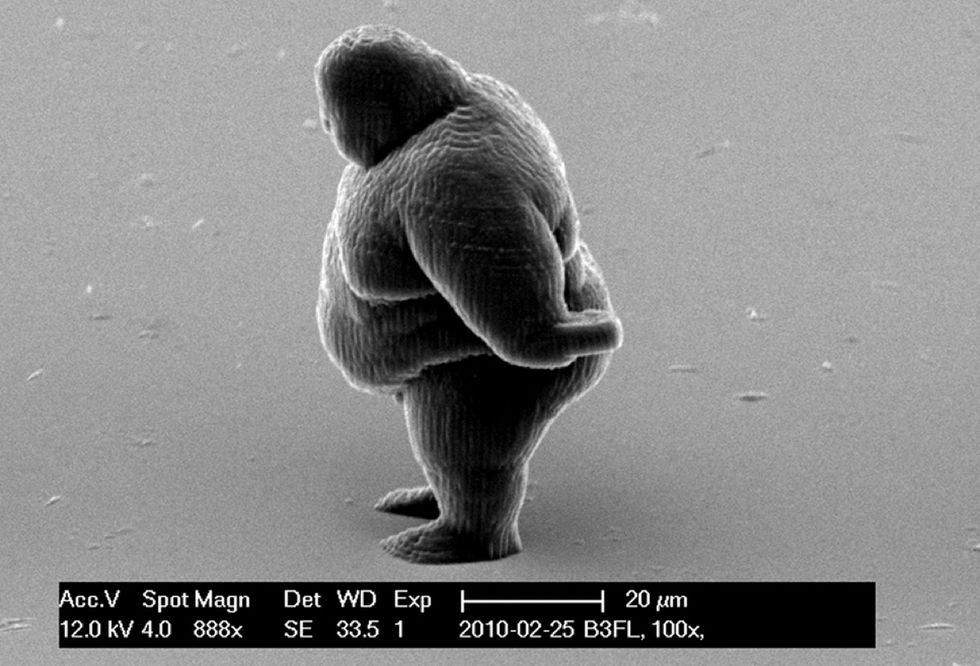
Can you still be considered obese if you weigh less than a grain of sand? This portly nanoscale human figure shows off the capabilities of a new 3-D printing technique developed by researchers at the Vienna University of Technology. The two-photon lithography technique, which could be used to make tiny biomedical devices, produced the figure in about 4 minutes.

These aren’t rabbit-ear antennas for a giant TV set. The unit is actually the world’s first circuit breaker capable of switching on and off power lines that carry 1.2 megavolts. It was created by Siemens at the behest of the Indian government. India wants to upgrade its 800-kilovolt transmission lines to 1.2-MV ones, because costly power losses diminish as voltage is stepped up.
Every small boy’s fantasy has been lived out by engineer Art Thompson and workers at the Pima Air and Space Museum in Eloy, Arizona. They hooked up a 13.7-meter-long paper airplane to a helicopter, dragged it to a height of 1219 meters, and released it over the desert. The plane, dubbed Arturo’s Desert Eagle, glided 1.5 kilometers before making a spectacular crash landing.
MIT researchers have created an optical fiber whose brightness can be varied along its length. Its creators envision the flexible fiber being woven into “fabrics” that can be used to make 3-D displays and medical devices that can irradiate diseased tissue while leaving healthy tissue unaffected.
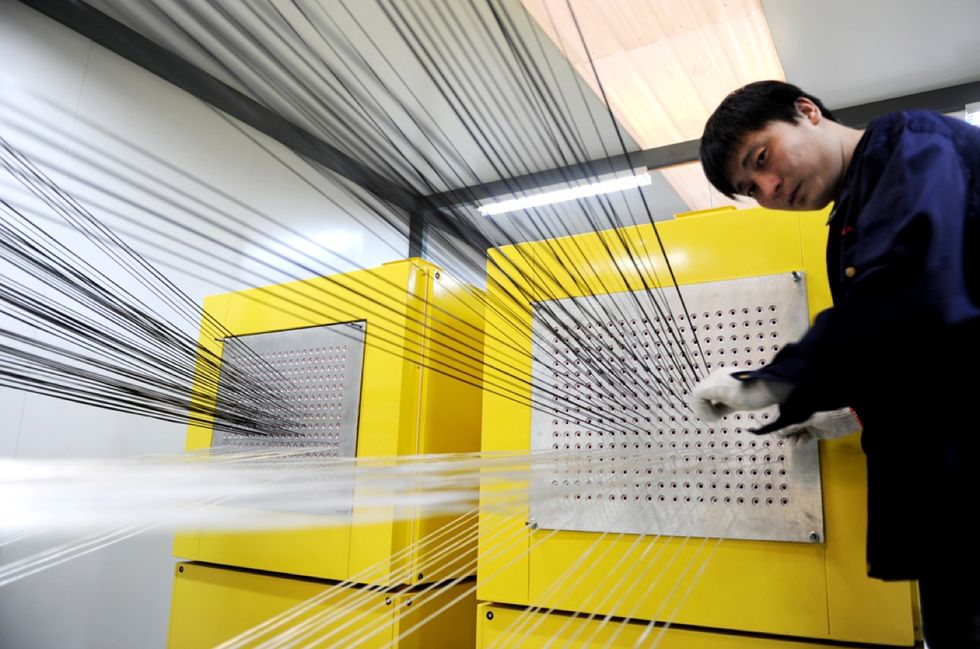
A worker at Lianyungang Zhongfu Lianzhong Composites Group Co. monitors the production of aluminum conductor composite core wire. The composite core is lighter than the aluminum that surrounds it but is stronger than steel. The resulting electric transmission lines carry more current than all-aluminum cables and are less likely to sag when overheated.
Workers assemble a giant white corkscrew that now sits atop the southeast corner of Progressive Field, home of the Cleveland Indians, of Major League Baseball. The device, designed by engineers at Cleveland State University, houses four wind turbines that depend on the corkscrew configuration to gather wind so they can generate power even at low wind speeds.
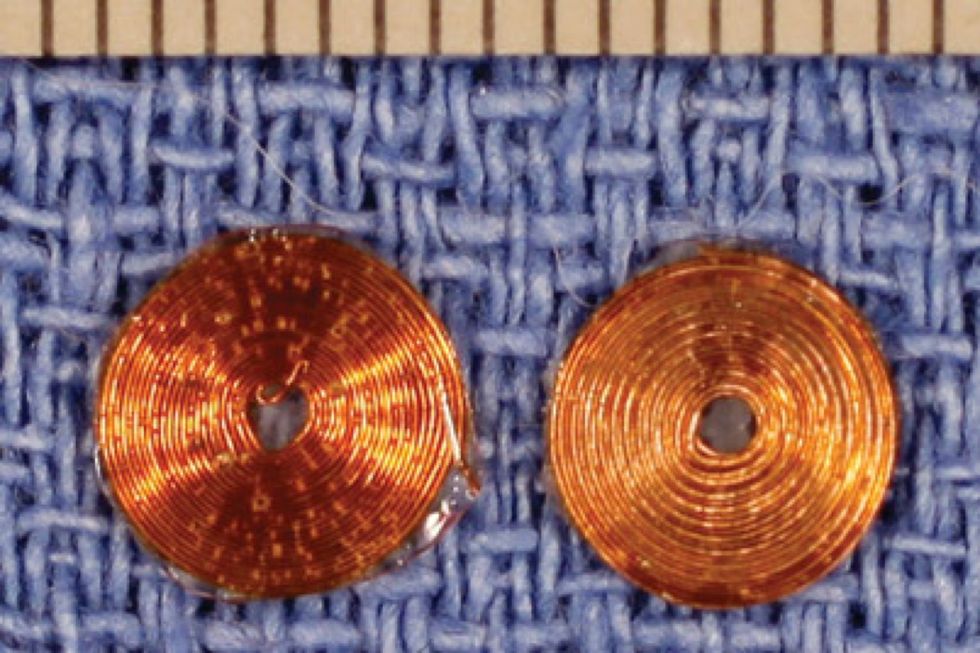
These two discs—which under magnification look like homemade pennies—are implantable sensors developed by researchers at the Rensselaer Polytechnic Institute, in Troy, N.Y. They are designed to wirelessly transmit data from inside a patient’s healing wound so surgeons can get real-time data about the state of the person’s recovery. The 4-millimeter-wide, 0.5-mm-thick sensor is powered by the same external device that captures the data.
Bungee jumping from a bridge must no longer be sufficiently thrilling. Here, stratospheric thrill seeker Felix Baumgartner prepares to jump out of the Red Bull Stratos aircraft from a height of 21 800 meters. In a future jump, Baumgartner will attempt to free-fall from 36 576 meters up and break the speed of sound before deploying his parachute.
People critical of today’s music argue that it doesn’t take a lot of talent to become a pop star. The popularity of Hatsuna Miku, whose albums have topped Japanese music charts, proves that you don’t even have to exist. Miku is a 3-D holographic avatar created by Crypton Future Media using Yamaha Corp.’s Vocaloid voice synthesizing technology. The virtual star’s voice was patched together from samples of Japanese voice actress Sake Fujita.
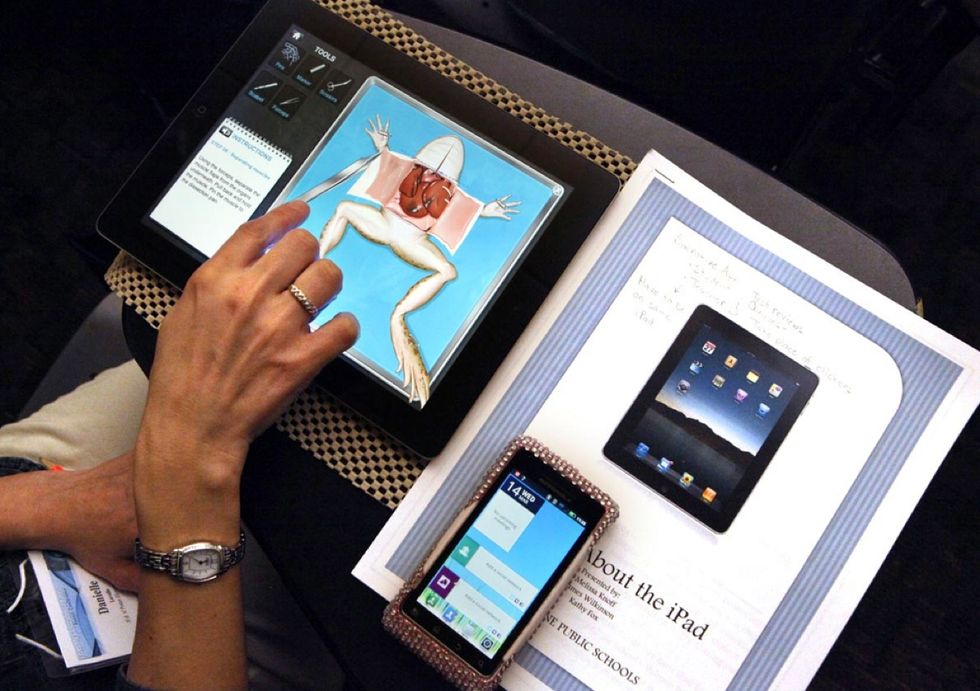
An elementary school teacher tries out an app loaded onto an iPad that allows her to dissect a frog without the “ick” factor that makes young biology students cringe. The app was one of many teaching technologies presented at the From My Classroom to Yours digital conference last month at the Richard Stockton College of New Jersey.
If you are viewing this page with an iPad or iPhone, click here to launch the slideshow:
http://spectrum.ieee.org/ns/slideshows/04W_SlideS_iCandy2012_ipad2a/index.html
Comments