Bill Stone's Excellent Underwater Adventure
Mexican robot paves the way for exploration of Jupiter's watery moon, Europa
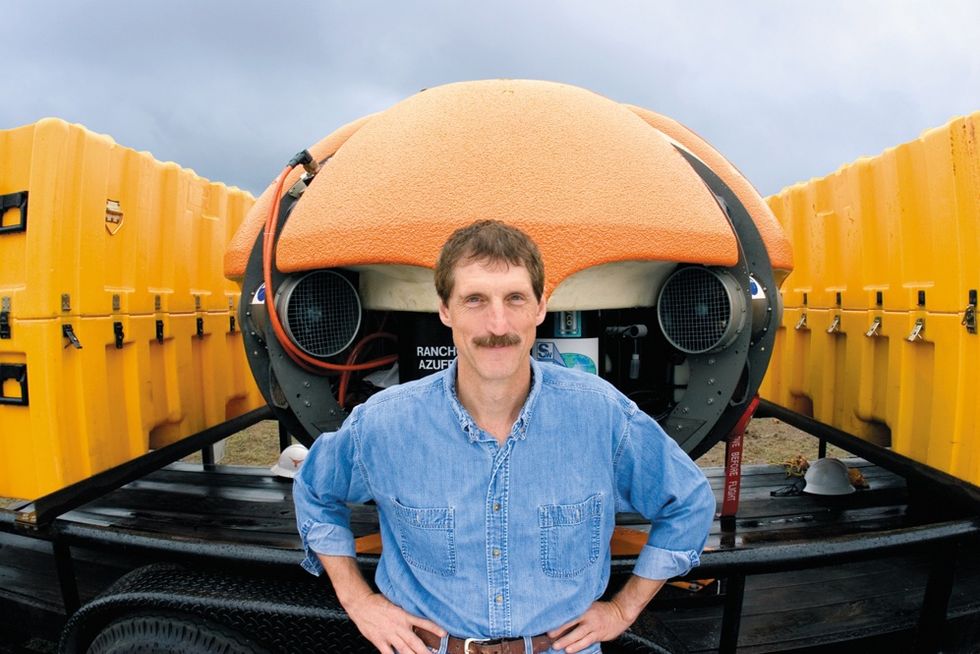
The Deep Phreatic Thermal Explorer, otherwise known as DEPTHX, is an autonomous underwater robot that was designed to explore water-filled sinkholes in Mexico. The machine is the brainchild of Bill Stone, an intrepid explorer/inventor who believes we can use such robotic probes to explore Europa, the watery moon of Jupiter. NASA funded the three-year, US $10 million project.
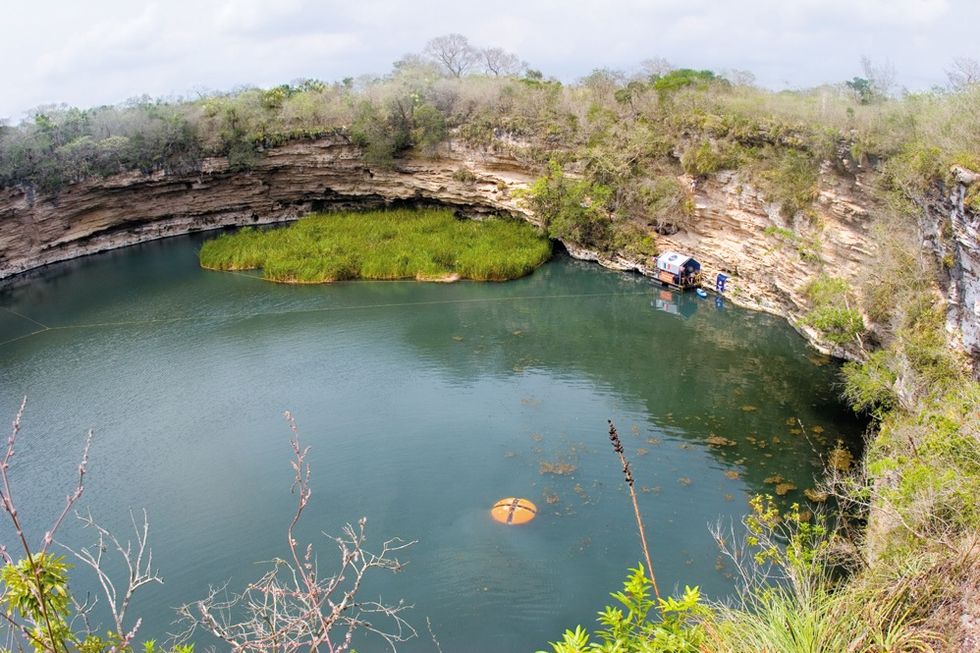
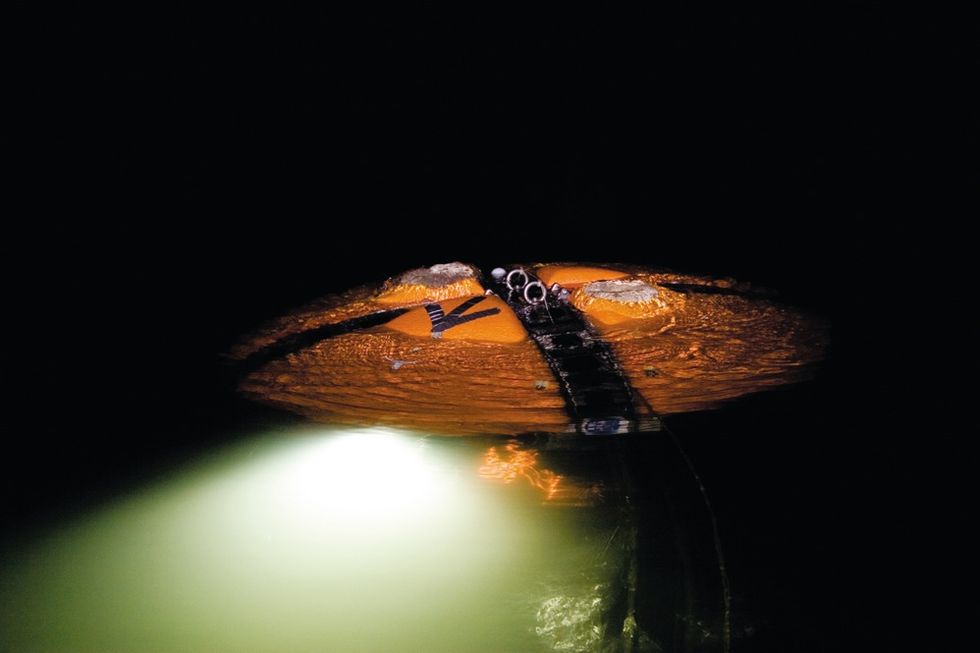
DEPTHX bobs in the warm sulfurous water of El Zacatón, a 318-meter-deep sinkhole located on a working cattle ranch, about 400 kilometers northeast of Mexico City. Corralled at the upper edge of the water are small grassy islands known as zacates. Ordinarily, the zacates would float freely on the water’s surface, but they’ve been rounded up and roped off to protect the robot.
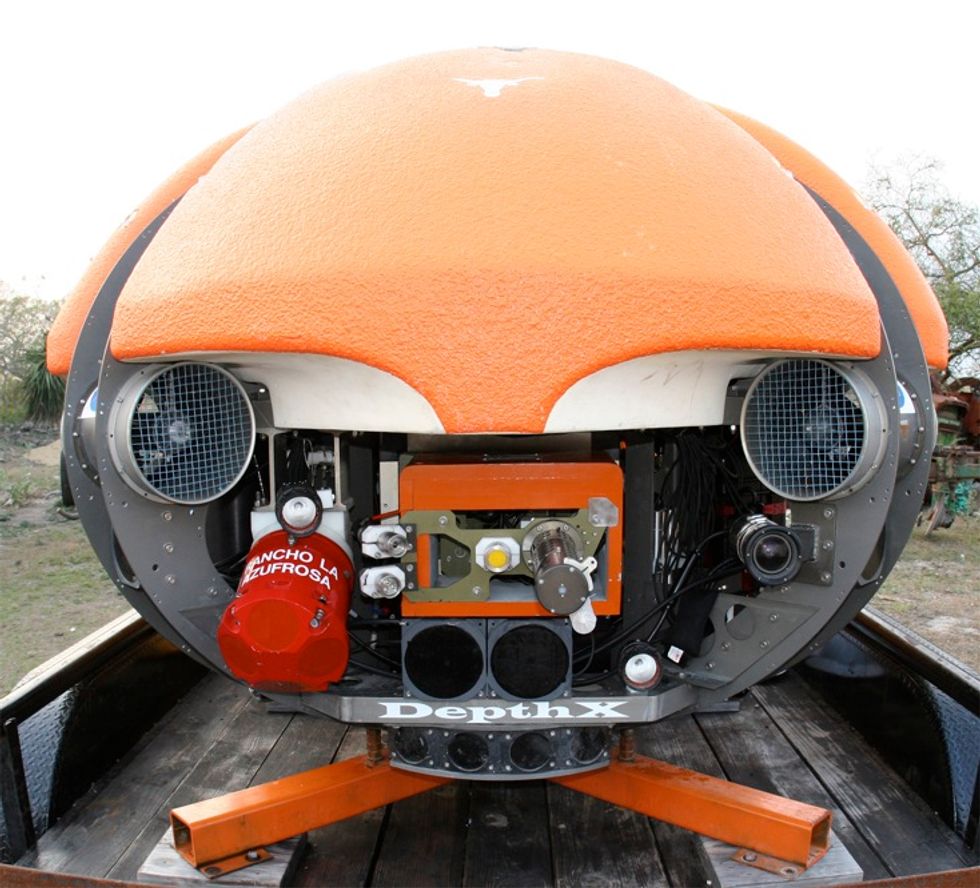
The orange syntactic foam that encases the robot’s upper body makes it look kind of like a giant half-peeled tangerine. But this is a serious piece of machinery. The 1.3-metric-ton machine has 36 onboard computers, video cameras, and a whole package of scientific instruments. A pair of lithium-ion battery packs lets the robot go for about 5 hours between recharges.
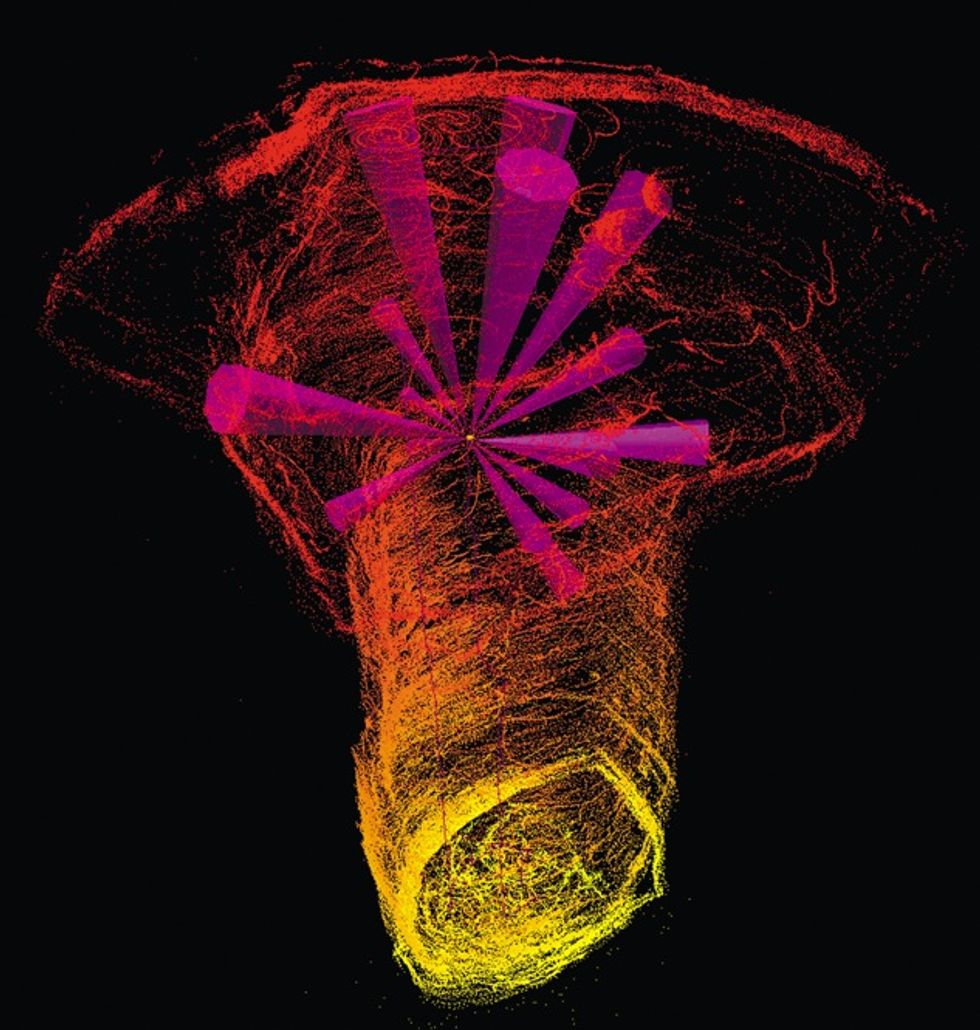
The robot fires its 56 sonar sensors to draw detailed three-dimensional maps of its surroundings. Each of the purple beams here represents a single sonar signal. The sonars fire about four times per second as the robot slowly descends to the bottom of the sinkhole. The robot keeps track of its own location within the 3-D map so it can find its way back to the starting point.
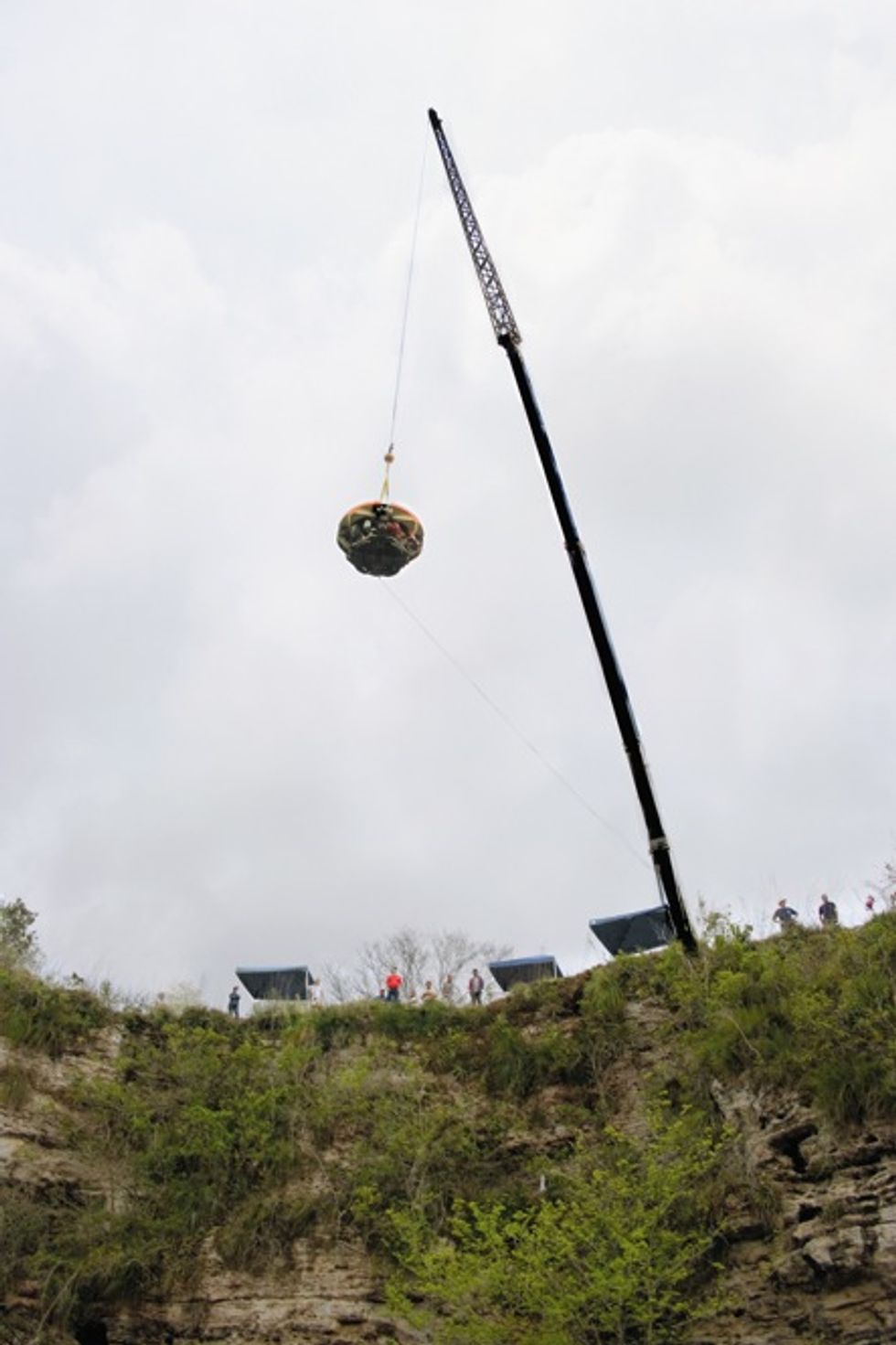
There’s a 25-meter drop from the lip of Zacatón to the water’s surface, so a construction crane is used to carefully lower the robot into the sinkhole. The commotion disturbs the bright green parrots that live in the limestone cliffs, and they screech their protest as they flap back and forth.
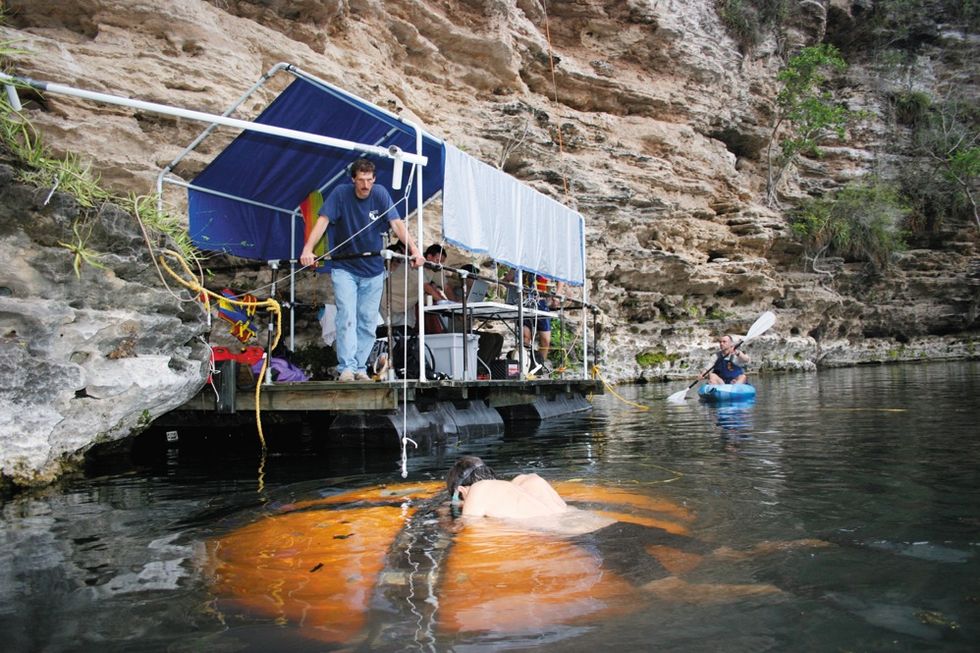
From the canopied dock that serves as the robot command center, Bill Stone looks on while John Kerr inspects the robot.
Dominic Jonak [right] and George Kantor, two researchers from Carnegie Mellon University, share a joke while on night duty on the dock. Although the robot usually does its exploring without any human guidance, the engineers are on hand to monitor its progress and fix any bugs that come up.
DEPTHX surfaces from a night dive at Zacatón. On this particular run, the robot operated from sundown to just past midnight.
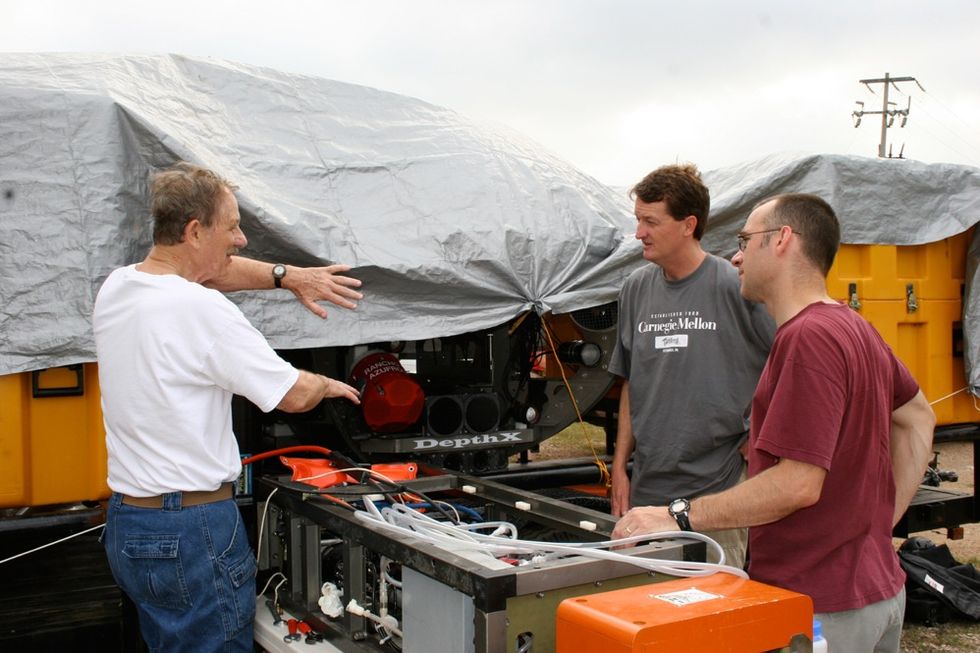
Ernest Frank [left] of Southwest Research Institute, discusses how to fix an oil leak in the robot’s sampling arm with John Spear [middle], a microbiologist at the Colorado School of Mines, and David Wettergreen, who led the software effort at Carnegie Mellon. When the robot is operating, the sampling arm extends out from the body about 2 meters and gathers solid and liquid specimens from the sinkhole.
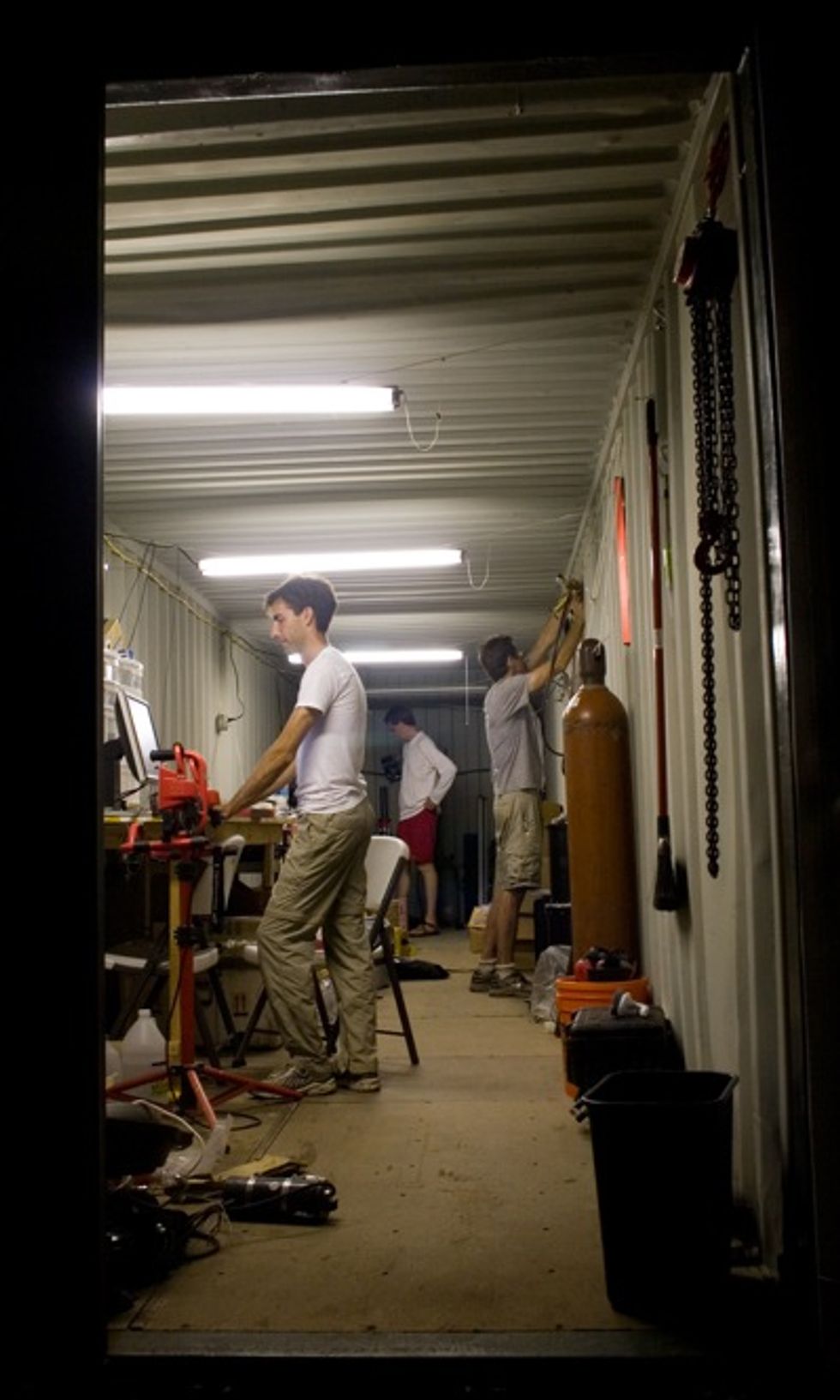
A 40-foot shipping container serves as the DEPTHX team’s repair shop and storage room at the ranch.
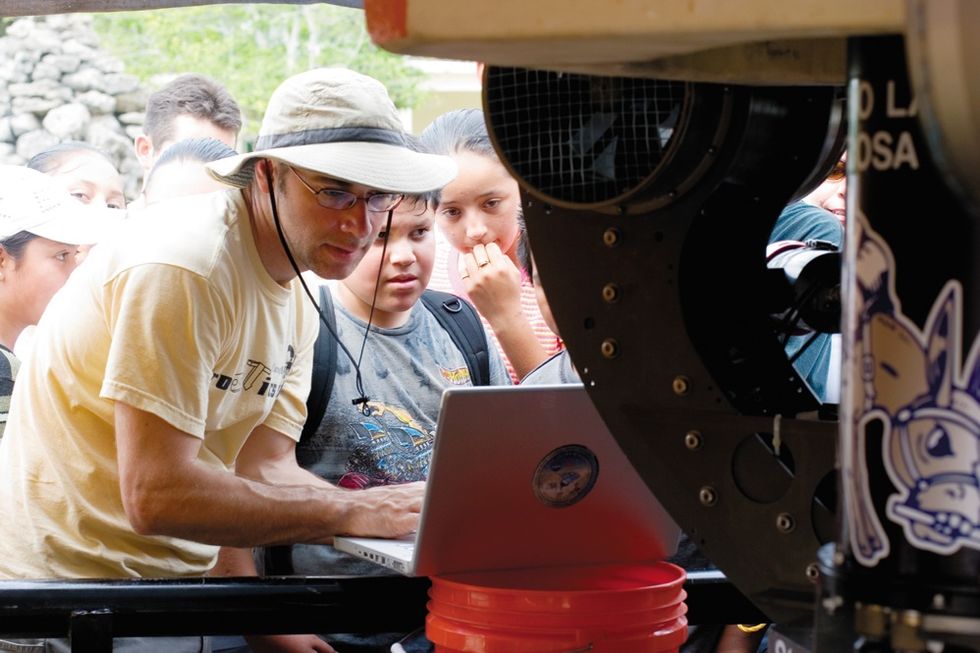
After the DEPTHX project received a blizzard of coverage from Mexican TV and newspapers, local schoolchildren and picnickers started showing up at the ranch to gawk at the robot. Here, David Wettergreen gives them a guided tour.
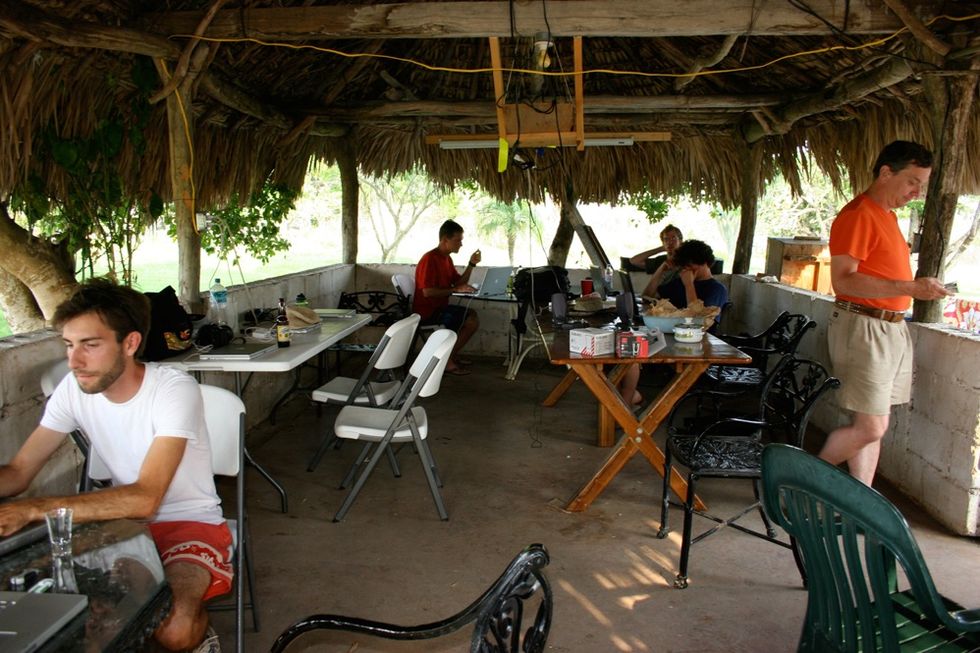
During downtime, team members gather beneath the grass-covered palapa, where they check e-mail, drink beer, play guitar, or just hang out.
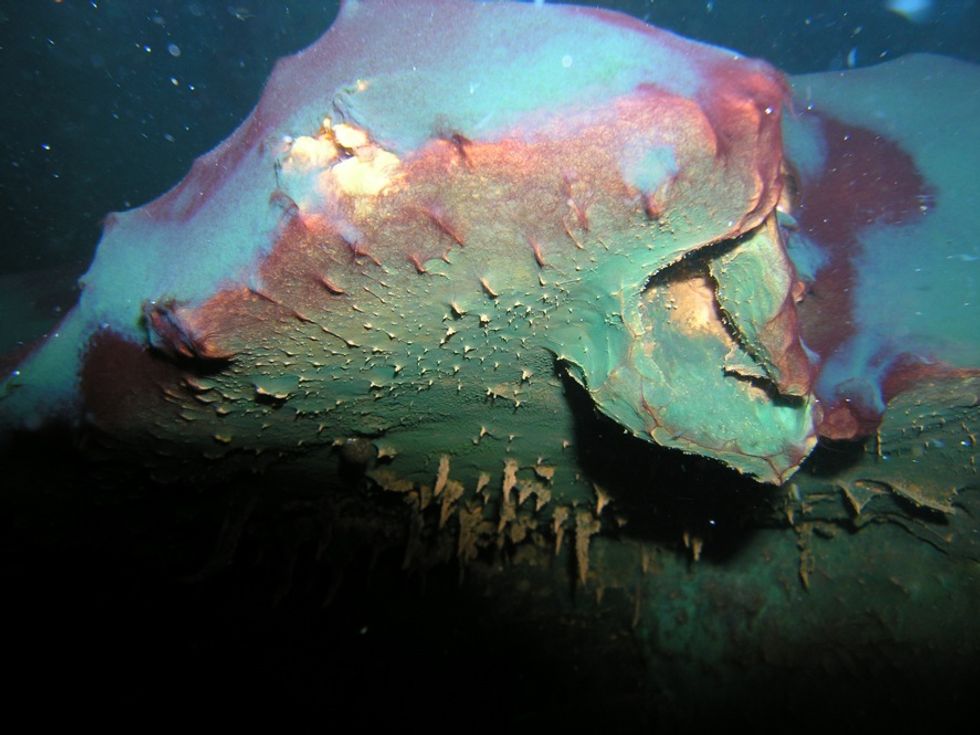
Zacatón and the other sinkholes nearby are teeming with life, most of it microbial. Microbiologist John Spear is now analyzing DNA extracted from samples the robot gathered last spring, in hopes of finding new kinds of bacteria. This photo, taken at a depth of 10 meters, shows sulfur biomats growing on the walls of Poza Caracol, just down the road from Zacatón.
Jupiter’s moon Europa hosts a vast ocean beneath its icy crust. Scientists say there’s good reason to believe something is alive in those waters. Someday, a robotic probe like DEPTHX could find out if they’re right.
Comments