For three decades, Rick Smolan—a former Time, Life and National Geographic photographer—has taken global cultural snapshots through his Day in the Life series of coffee table books that explore a time capsule of activity involving a country, discipline, or issue.
The projects—produced by the New York-based Against All Odds Productions—which Smolan runs with wife and co-author, Jennifer Erwitt, and COO Katya Able, take around 18 months and involve upwards of 200 writers and photographers around the globe.
Their latest book, The Human Face of Big Data, out this week, takes a more encompassing approach to a topic than its predecessors. Tackling the idea of Big Data—mankind’s ability to collect, analyze, and act on an unprecedented amount of information in real time—the book uses photos, essays, and articles (including one by yours truly) to examine the phenomenon, and how individuals and companies are harnessing it for human benefit, while raising concerns about data ownership and privacy invasion.
“Having now spent a year looking closely at this emerging world of big data, I hope the book will spark a global conversation about both the tremendous potential good and the concerns we all need to have about who owns data that you and I generate,” says Smolan. "Right now it's primarily companies and governments who are thinking about the uses of Big Data. It's really important that each of us also thinks about how this is going to affect our lives."
The project employs Big Data as a storytelling device and business platform. In the two months leading up to the book’s release, the Against All Odds team organized a three-city technology networking event and unveiled a website to gather digital behavior data from 300 000-plus anonymous volunteers. The results will be available free to researchers and academics next year. The project is self-published from sponsorship by several technology companies, primarily EMC2, along with Cisco Systems, VMWare, Tableau Software, Originate, plus FedEx. It’s the first coffee table book to use the Aurasma mobile app, which triggers related multimedia when readers hold smartphone and tablet cameras to yellow key graphics on its pages. There’s also an iPad app, with profits going to charity: water.

Hopeful But Wary
The book is a hopeful look at Big Data, highlighting its impact on agricultural efficiency, weather and earthquake prediction, fertility and genome mapping, space junk, crime solving, eradicating disease, and tracking endangered species, to name a few.
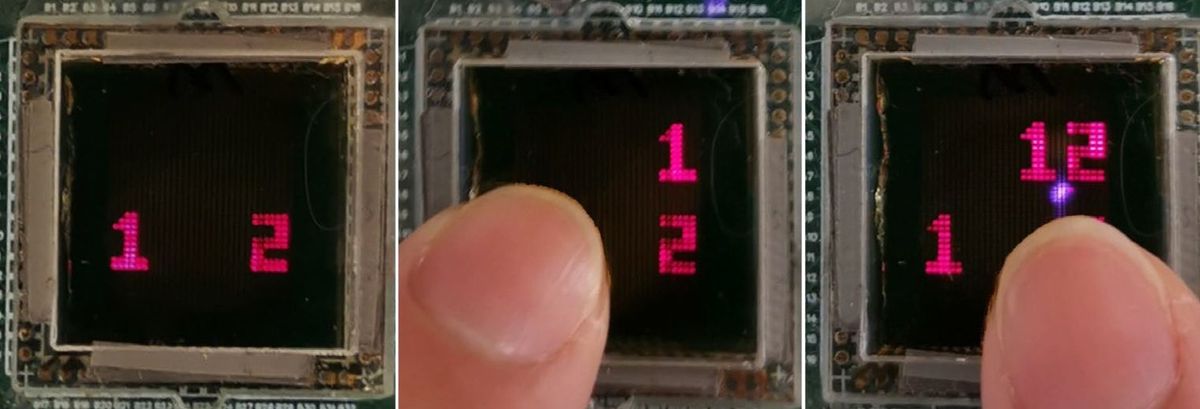
In one particularly striking example, The Artificial Retina—looking like something straight out of Star Trek—Weill Cornell Medical College’s Sheila Nirenberg used Big Data to circumvent certain types of blindness, such as that caused by damaged retinal photoreceptor cells. Her team employs high-speed, parallel processing to embed custom software into microprocessors and cameras to be built into eyeglasses. The camera images are translated into code (in the form of flashing lights) that can be transmitted by still healthy ganglion cells and understood by the brain.
But with hope comes concern. That's Smolan's take on J. Craig Venter’s Synthetic Genomics in La Jolla, Calif., which also relies on massive computer processing, to create genetic sequencing for new types of bacteria, algae, and plants to assist in industry and replace fossil fuels. “He is patenting new forms of life,” says Smolan. “While these new forms are being designed for human good, it does make you think of unintended consequences, like Frankenstein.”
Photo credits: Baby: ©Catherine Balet “Strangers in the light” (Steidl) 2012 / from The Human Face of Big Data; Artificial Retina: ©Joe McNally 2012 / from The Human Face of Big Data
OLED TVs, hitting store shelves in giant screen sizes, are likely to draw more consumer eyes than wallets in 2013, due to their cost of about US $10 000 for a 55-inch diagonal unit. That's a consumer problem. Manufacturers have another concern: potential shortages. Like LCD TVs, they rely on indium, a material in high demand for solar panels as well as displays. In OLEDs, indium is part of the indium tin oxide (ITO) used as the anode. The oxide is both conductive and transparent, making it perfect for displays.
NORUSCA II is the mother of all fisheye whole-sky cameras. The device can rapidly tune through the spectrum from 430 nm to 750 nm, using a 3.5 mm focal length, f/1.1 lens with a 180-degree field of view, to capture images on a high-resolution Princeton Instruments electron multiplying charge coupled device (EMCCD) camera.
The result was a
Since 2010, Stanford University has annually selected engineering heroes, engineers with some Stanford affiliation who have “advanced the course of human, social, and economic progress through engineering.”
The satellite giveth, and the satellite taketh away. While some space-borne probes seem to 
PTB researchers Nils Huntemann and Ekkehard Peik (with their collaborators at PTB and at the Institute of Laser Physics in Novosibirsk, Russia) are particularly interested in developing clocks based on ytterbium 171. The Yb ion boasts one particular transition (2S1/2—2F7/2), whose high-energy state has a natural lifetime of several years (desirable in a clock because random emissions pose less of a problem). In experiments reported in
There’s a catch, though. Even at the right wavelength, it takes an intense jolt to drive an electron into a forbidden state—and walloping the ion that hard disturbs the whole system. This general excitement increases the apparent frequency of the resonant sweet spot. This change in frequency is called “light shift,” (Imagine a belfry-size bell. Rap it sharply with a wooden mallet, and you’ll be rewarded with a deep, mellow “bong.” Whack it too hard with a sledgehammer, though, and you get an unhappy “clang.” The whole frequency response has climbed up the register.)