IEEE Spectrum logo Continue to site ➔
ADVERTISEMENT

Energywise iconEnergywise

A Truly Green Greenland in Human Time Arrests Mind

Perhaps nothing beats the Sahara for feelings of timelessness and unboundedness, but surely the world's icy deserts take second place in the metaphysical imagination. It's more than a little disconcerting to learn then, in the June 20 issue of Science magazine, that just 400,000 years ago--well into the era in which modern humans were evolving--the southern reaches of Greenland were not just green but covered with vast spruce forests. A second article in the same issue discusses two very sudden warmings Greenland experienced 15 thousand and 11 thousand years ago, while a perspective piece addresses the implications of Greenland's climate changes for tomorrow's world.

Beware of Those Green Jobs and Tax Claims

Today, June 18, General Electric issued a report claiming that U.S. subsidies for wind energy are more than repaid by added tax revenues accruing to the Federal government. Yesterday, the Clean and Safe Energy Coalition, with backing from a collection of politicians and dignitaries, unveiled an analogous study arguing that many thousands of new jobs will be created if the country embarks on a new round of nuclear power plant construction. In an economy beset by outsourcing, rising unemployment, and straitened tax bases, these are enticing prospects--and like any siren sounds, they should be treated warily at best.

GE, which has almost $2.5 billion invested in wind farms, says that in 2007, such farms produced a net benefit to the U.S. Treasury of $250 million, taking into account tax revenues from the farms themselves, vendors, and workers. CASE says that if the United States proceeds with construction of the 30 reactors currently under consideration, 12,000 to 21,000 new jobs would be added: each new reactor under construction could require as many a 4,000 workers at peak periods, and each operating reactor would provide 400-700 "high-paying" jobs.

Nobody denies that promotion of green energy projects can bring many benefits, including enhancement of the country's global competitiveness in emerging markets. But claims about how many jobs or how much net tax revenue such projects will generate are completely without merit unless energy projects are compared to each other.

The country needs more energy, and especially more clean energy, and somehow it will get it. It's interesting to ask how many jobs and how much revenue will be created, along all the alternative paths for generating the extra needed energy. But treating any one path in isolation from the others is essentially meaningless.

A Way Out of U.S. Nuclear Waste Impasse?

The issue of Science magazine published today, June 13, contains an important commentary about how the intractable nuclear waste problem might be solved. Isaac J. Winograd and Eugene H. Roseboom Jr, retired senior scientists with the U.S. Geological Survey, suggest creating the proposed repository for high-level nuclear wastes at Yucca Mountain in stages, starting with a pilot facility. Their views have some weight inasmuch as they take credit--or blame?--for having conducted the studies that led to the selection of the hugely contested Nevada site in the first place.

There are at least two ways of recounting the history that led to the current impasse. If you asked me, I'd tell you that in 1989 Luther J. Carter, a respected former news writer for Science magazine, wrote a book for Resources for the Future in which he said essentially this: if we're ever going to solve the nuclear waste problem, we have to just pick a site more or less arbitrarily, and then--damn the torpedos!--ram it through. What better location than the place where the United States had tested nuclear weapons all through the fifties, a place already thoroughly contaminated by radiation? (That's a caricature of Carter's views, to be sure, but I believe he put it pretty much like that to me personally, when I discussed the situation with him a few years later.) What Carter and RFF failed to take into account, in any event, is the degree to which Nevada opinion would rally in the interest of blocking a Yucca Mountain facility. As a result, Nevada's congressional delegation could be counted on to block creation of the repository at every opportunity, and any presidential candidate vying in a Nevada primary would be sorely tempted to pledge opposition to the project.

Winograd and Roseboom tell the story a little differently. More than a quarter century ago, they say, they proposed storing wastes "in areas with deep water tables, specifically within the several-hundred-meter-thick unsaturated zones common to the arid and semi-arid Southwest USA." That led directly to a focus on the Great Basin and, within it, to Yucca Mountain. Nonetheless, when Congress passed legislation in 1987 selecting the site for a repository, the bill immediately became known, as the authors say, as the "screw Nevada act." Technical study followed upon technical study, it soon becoming clear that scientists and engineers would never reach full agreement about long-term risks. Then came a virtual death knell on July 9, 2004, when the generally conservative U.S. Court of Appeals for the District of Columbia ruled that the integrity of the site would have to be guaranteed not just for 10,000 years--the standard up to the then--but for as much as a million years.

The appeals court decision put nuclear waste strategy into a dead-end. To get out, Winograd and Roseboom argue, "it behooves the earth science community . . . to inform the courts, the public, and legislators that . . . the fate of HLWs over times frames of hundreds of millennia is not knowable." To win back public confidence, they suggest, build a succession of repositories at Yucca Mountain, evaluate them one at a time, retrieve wastes as necessary, and ultimately SOLVE THE PROBLEM.

New York State Gets Behind Oxyfuel Carbon Capture

In a somewhat startling development, New York's governor David Paterson announced on June 10 that the state will support construction of an experimental "oxyfired" electric generation plant, in which coal will be burned in an atmosphere of almost pure oxygen, so that nitrogen emissions are eliminated and carbon capture simplified. Sweden's Vattenfall and France's Alstom are completing a similar demonstration plant in eastern Germany, as described in the "winners & losers" January issue of Spectrum, and Babcock & Wilcox has had a serious oxyfuel R&D program in the United States. But oxyfuel has not been the mainstream approach to carbon capture on this side of the Atlantic, and New York's Jamestown plant--if built--may be the world's first quasi-commercial demonstration of the technology.

Earlier this year, the U.S. energy department cancelled support for Future Gen, a public-private IGCC plant, in which coal is gasified, yielding a post-combustion mixture of carbon dioxide and hydrogen. That had been the overwhelmingly dominant approach to carbon capture in the United States. With FutureGen and IGCC facing increasingly uncertain prospects, the door appears to opening for alternative paths to carbon capture such as oxyfuel--though Spectrum bloggers have had radically different takes on the implications.

The Jamestown project, located in western New York's Chautauqua County, emerged from an industrial alliance of Praxair and Foster Wheeler with Dresser-Rand, E&E, Battelle, SUNY Buffalo, and AES. Praxair, a leading supplier of industrial gases, would provide both the oxygen supply and carbon capture technologies, while Foster Wheeler would build the fluidized-bed stream generators. New York State will invest up to $6 million to support development of the project, which could end up costing hundreds of millions of dollars to complete.

The governor's rather daring decision to put the state behind the project is all the more striking because Paterson only recently assumed the top job in the wake of a sex scandal that toppled his predecessor. His announcement this week drew praise from unions such as brotherhood of electrical workers and the boilermakers but criticism from environmental and public interest groups such as NYPIRG, Sierra Club, and the American Lung Association. They declared it premature, given that environmental reviews are not yet complete.

Whether or not the plant is ultimately built and succeeds, the decision to pursue it puts New York into a league with countries like Sweden that are moving aggressively to test carbon capture and storage technology. Already, as the governor's office reminded its constituents this week, New York is the most important member of the northeast Regional Greenhouse Gas Initiative, which has been developing this country's first cap-and-trade system for carbon, and it has adopted a renewables portfolio standard that seeks to make 25 percent of the state's electricity green by 2013. Its "15 by 15" initiative aims to cut energy usage, by 2015, 15 percent below business-as-usual projections.

IEA Energy Prognosis Confirms Stern Climate Review

The International Energy Agency, the Paris organization that reports to the advanced industrial countries, has just issued the latest of its biennial Energy Technology Perspectives, saying the world's present course is not sustainable. If current trends continues, we'll be consuming 70 percent more oil and generating 130 percent greater carbon dioxide emissions in 2050 than we are now. To get emissions back to present-day levels or lower by 2050 will require a necessary but achievable revolution in global energy technology, IEA director Nobuo Tanaka said last week.

The IEA report evaluates three scenarios and broadly confirms the controversial conclusions reached by Britain's Stern Review last year. Getting CO2 emissions back to present levels by 2050 would require that a price of $50 per ton be put on carbon emissions, and reducing them by 50 percent would imply a price of $200/t. Achieving the 50 percent reduction target would require a total of $45 trillion in new energy investments, equivalent to roughly 1.1 percent of average annual GDP during the next four decades.

The Stern Review found that to keep carbon dioxide levels in the atmosphere no more than twice as high as they were before the industrial revolution began, emissions levels would have to be about 25 percent lower in 2050 than they are now. Attaining that goal--which Stern would pay for itself in terms of damages avoided and risks averted--would cost about 1 percent of global GDP per year.

To achieve a 50 percent emissions cut by 2050, the IEA says the world each year would have to outfit 35 coal and 20 natural gas generating plants to capture carbon, at a cost of $1.5 billion each. It would have to build 32 new nuclear power plants and 17,500 wind turbines each year. The whole transportation sector would have to become more efficient by a factor of eight.

To achieve the 25 percent reduction needed to stabilize carbon levels at twice pre-industrial, the Stern Review said that the power sector would have to become 60-75 percent carbon-free. Exactly as the IEA now says, Stern said, "Deep cuts in the transport sector are likely to be more difficult in the shorter term, but will ultimately be needed."

Plug-In Priuses: Now from your Toyota dealer!

One of the challenges of converting your Prius to a plug-in hybrid--aside from the cost ($10K to $30K)--has been the garage-shop nature of the converters.

Hymotion, owned by lithium-ion cell maker A123 Systems, has now announced that its six initial installers include four Toyota dealerships. They're in Boston, Los Angeles, Minneapolis, and Washington, DC.

The conversion module still has to be ordered through the Hymotion website. But this now offers one-stop shopping for the Prius owner who wants to expand the car's full-electric running time, and juice it up from the wall socket at night--but doesn't want to haul the car to a third party.

One worry about the conversions, by the way, has been whether they void the manufacturer's powertrain warranty. While Toyota is clearly unhappy about any modifications to its very carefully engineered hybrid system, plug-in advocacy sites like Calcars report that many dealers either miss or ignore such conversions.

Another small step toward Plug-In Priuses, whether Toyota wants them or not ....

Climate Legislation Showdown

This week, the U.S. Senate opened discussion of the Lieberman-Warner Climate Security Act, which would institute a system of carbon trading in which emitters would buy or sell allowances, having received an initial allotment partly for free, partly in an auction. Though the bill is not likely tp pass Congress this year and is sure to be vetoed even if it does, it's considered almost a foregone conclusion that the new Congress will enact some kind of carbon trading bill next year and that the newly elected president will sign it. McCain cosponsored a lineal ancester of Lieberman-Warner, and Obama promised in his victory speech on Tuesday night, June 3, to forecefully address the climate issue.

Precisely because it seems so clear that climate legislation is on its way, business and labor are squaring off, seeking to influence and mold the bill that finally makes it to the president's desk. Yesterday, June 4, the U.S. Chamber of Commerce sent a letter to the Senate's members saying that Lieberman-Warner "fails to preserve American jobs and the domestic economy, does little to address the international nature of global climate change, and does not sufficiently promote accelerated technology development and deployment."

Citing six macroeeconic studies (without actually naming them), the chamber--the U.S. business community's main political representative--said that on any reckoning the bill would cost the United States "a staggering amount of money." It said the bill could cause the GDP to decrease as much as 3.4 percent, and that the average annual household cost of the bill could be between $1,000 and $6,700.

Those claims are not going unchallenged. The Natural Resources Defense Council has issued a study assessing "costs and opportunities " under Lieberman-Warner arguing that higher energy costs will be offset by improvements in energy efficiency, aggressive deployment of renewables, and--starting about 2020--extensive carbon capture and storage. "Lieberman-Warner CO2 recuction tarets are achievable with mimla increase in total discounted energy system costs," the report says.

The NRDC cooperated on a second report with CERES--an organization representing major institutional investors with assets that would be affected by carbon regulation--and two top California utilities. The report, an analysis of how the country's 100 largest electric utilities would be affected by carbon legislation, argued that auctioned allowances would provide funds for energy efficiency programs, clean energy technologies, and consumer benefits offsetting higher electricity costs.

On Tuesday this week, June 3, University of Massachusetts economists also issued a report taking issue with the chamber's claims. "Job Opportunities for the Green Economy," an analysis done in cooperation with the United Steelworkers and the Center for American Progress, evaluates six climate-fighting strategies in terms of how many workers in existing occupations could find new opportunities. For example, more rapid deployment of high-performance wind turbines could provide work for the country's 168,000 sheet workers. Affordable solar energy will increase employment for 150,00 "electrical engineers"--technicians, presumably, not, sorry to say, the engineers who read and support IEEE Spectrum magazine!

American Auto Upheaval Radically Changes GHG Outlook

Jim Hansen, the GISS/Columbia University modeler who has had such a huge influence on climate policy, often observes that action plans habitually fail to keep pace with the latest developments, sometimes to their detriment. A case in point he mentioned a few years ago when I was interviewing him for a book: the near-elimination of CFCs pursuant to the Montreal Protocol had a positive implication for climate, because CFCs--besides being ozone eaters--also are potent greenhouse gases. A similar case in point from today's news--the precipitous drop in U.S. large car sales.

By the end of April, as noted in an earlier blog post (below), record-high gasoline prices were beginning to have a discernible effect on U.S. driving habits. Now, with the publication of May auto sales data, industry leaders and analysts see a profound "structural shift" or "watershed" that is likely "permanent" and "irreversible." Among the dramatic developments noted in the press, starting with a report and commentary in today's New York Times:

â''Ã'¢ For the first time since 1992, the vehicle most sold in the United States in May was not an SUV or light truck

â''Ã'¢ the two most popular cars were the Honda Civic and Toyota Corolla, which helped Asian auto makers surpass the top three U.S. automakers in the U.S. market for the first time ever

â''Ã'¢ sales of SUVs and trucks having dipped below car sales in March and April, the May ratio of cars to trucks was 57:43

â''Ã'¢ U.S. auto sales fell 30 percent in May, and total 2008 sales may be below 15 million vehicles, compared to 17.4 in 2000

If Americans are starting to stop buying SUVs, with it costing up to $30,000 a year to fuel a top-end model, could their next step be to junk the SUVs they already own and switch to more fuel-efficient cars? If that happens, the impact on U.S. greenhouse gas emissions could be dramatic.

That's worth noting this week, as the Senate opens debate on legislation to cap and trade carbon emissions. The Warner-Lieberman draft bill would impose a federal tax on gasoline that would reach 40 cents a gallon by 2030. But with gasoline prices closing in on $4/gallon and likely to go even higher, the question of a federal tax could be moot. In fact, as noted in the earlier post, the higher prices could give the United States a mighty push toward carbon reduction, helping it get into step with international efforts to cut greenhouse gas emissions.

High Gasoline Prices Start to Bite into Driving, SUV Ownership

(May 7 post)

With U.S. gasoline prices now at an all-time record high, having climbed in fits and starts for five years, the logical results appear to be finally showing up in lower gasoline consumption and a distaste for large cars and light trucks. According to a report in the May 5 issue of Business Week, the number of vehicles on the roads dropped 1.4 percent last year, and gasoline consumption is expected to dip 0.7 percent this year. Sales of SUVs and pickup trucks plummeted 27 percent in the first quarter of 2008, with total auto sales down 8 percent.

The fundamental question, for consumers, business leaders, and policymakers, is whether oil and gasoline prices will continue to trend upward and stay there, or whether the current situation is just a blip. If high prices are here to stay, then of course those who replace their big cars with smaller ones sooner will come out ahead of the game, and those automakers who anticipate that behavior will be the winners. Ford Motor, which reported a surprisingly large first-quarter profit last week, is reported to be among those betting that high prices are here to stay [and General Motors has now adopted the same philosophy].

Ironically, if gasoline prices stay in the stratosphere, the United States may be off the hook when it comes to the atmosphere. Back-of-the-envelope calculations suggest that if one wanted to halve carbon emissions from the U.S. automotive sector--enough to get the country into step with international efforts to reduce greenhouse gases [without doing anything else]--gasoline prices would have to double from their average levels in the early part of this decade, which have been around $2.50. That calculus underlay a blue-ribbon report sponsored by Princeton's Woodrow Wilson School last year, which recommended increasing gasoline prices by $2.50 per gallon over a period of 10 years, as a matter of policy.

If the global oil market were to drive prices to $5 anyway, and American consumers start to believe they're really gong to stay there, then--arguably!--policy won't be necessary. [Would not be necessary, that is, to get the United States into step with the Kyoto regime, which it first embraced but then repudiated.] Over time, if econometric studies are to be believed, American drivers [at $5/gallon] will spontaneously use half as much gasoline and emit half as much carbon.

Despite Higher Costs Wind Rules Renewable Roost

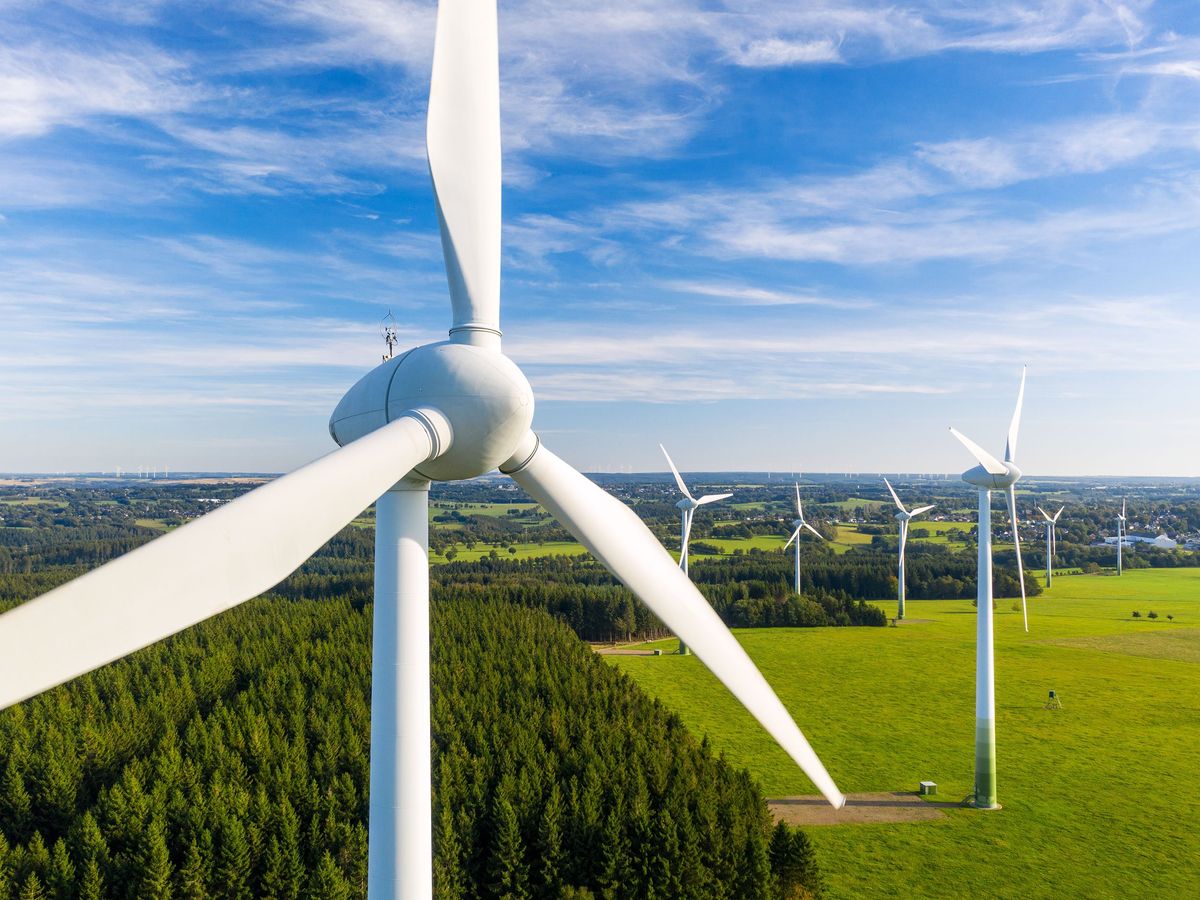
If you ask how much renewables can contribute right now to reducing carbon emissions and fossil fuel dependence, it's really just one renewable that counts: wind. Photovoltaic electricity is still far from competitive commercially, and as for the rest--thermal solar, geothermal, tidal energy, and so on--they only account for niche shares of the generation mix. Wind on the other hand already generates close to 1 percent of U.S. electricity and could provide as much as 20 percent by 2030, according to a recent government report.

That said, the gap between the installation costs of photovoltaic electricity and wind-generated electricity has narrowed some in the last couple of years, despite upward pressure on PV prices, mainly caused by sky-high demand in Germany. A recent report done at the Lawrence Berkeley National Laboratory confirms that higher wind installation prices account for the narrowing.

The LBL report finds that U.S. wind capacity increased 46 percent last year, amounting to a $9 billion investment. Wind installation costs, however, after dropping by about $2.7/Watt from 1982 to 2002--from roughly $4.2/W to $1.5/W--increased in recent years, plateauing at around $3/W. The main factor in the higher wind costs is the higher average cost of the turbines themselves, which has been driven up by the dollar's depreciation, high global demand, an escalation in raw materials costs that has affected almost all power equipment, and more advanced turbine designs.

Even at the higher installation costs, the price of wind-generated electricity has remained highly competitive in the United States, admittedly in large part because of generous Federal and state subsidies. To arrive at a true estimate of relative prices, those subsidies have to be weighed against the almost incalculable and controversial environmental, social, and political costs of fossil fuels that do not show up in coal, oil, and natural gas prices.

LBL's Annual Report on U.S. Wind Power Installation, Cost, and Performance Trends can be downloaded at the lab's publication site.

Stanford graduate students solve the silent Prius problem

2355512640_5a354fc579.jpgI live in a Prius neighborhood. In the short two-block walk to the local elementary school this morning, I counted six. In general, I think that's a good thing.

I also live in a "playborhood", that's a new word for a retro idea: a neighborhood in which kids play unorganized pickup games outside, sometimes (OK, a lot of times) in the street. In general, I also think this is a good thing.

But combine these two trends, and, in the eyes of a worried mom, you've got an accident waiting to happen. The kids are pretty good about listening for a car turning onto our street and scoot to the sidewalks. But a Prius operating in electric mode is virtually silent.

Besides being a threat to kids playing in the street, the silent car is a nightmare for blind pedestrians. Concern about silent car dangers led to the introduction of the so-called "Bell the Hybrid" Act, a.k.a. the Pedestrian Safety Act of 2008, HR 5734, introduced in April which, if it passes, would direct the Secretary of Transportation to establish a motor vehicle standard that would alert pedestrians to a car's approach.

That wouldn't be hard; there are a number of ways one could do this; heck, kids have

been clipping playing cards to make their bicycles buzz for generations. One suggestion is a radio transmitter that sends a signal to some sort of buzzer carried by the blind. That's unlikely to fix the kid-in-the-street hazard, however.

Another approach is already in prototype and going on the road this summer to conferences aimed variously at the auto industry or the vision impaired. Called the PANDA system, or "Pedestrian Awareness Noiseâ''Ã'ìemitting Device and Application," it comes from Enhanced Vehicle Acoustics, a corporate name for two Stanford University graduate students, Bryan Bai, an electrical engineering graduate student, and Everett Meyer, medical student. The PANDA system uses small speakers installed in the front wheel wells and under the back fender; a little box (the prototype sits in front of the gear shift) sends the sound to the speakers. The system designers say the noise isn't audible from inside the car; from the outside, it's just a little quieter than a normal combustion engine. You can hear it for yourself here or below.

Photo credit: auntjojo

Most Commented Posts

Energywise

IEEE Spectrum’s energy, power, and green tech blog, featuring news and analysis about the future of energy, climate, and the smart grid.

Contributors

 
Editor
Bill Sweet
New York City, USA
Contributor
Dave Levitan
New York City, USA
 
Contributor
Peter Fairley
British Columbia, Canada
 

Newsletter Sign Up

Sign up for the EnergyWise newsletter and get biweekly news on the power & energy industry, green technology, and conservation delivered directly to your inbox.

Advertisement
Advertisement
Advertisement
Load More