Energywise iconEnergywise

New York City Without Lights

Of course the other big New York City outages--the 2003 Northeast-Midwest blackout, the 1965 failure that affected seven northeastern states and Ontario, and even the city blackout of 1977 that led to some rioting and looting--were more widespread. But they arose from problems in the power system itself and were remedied, rather promptly, when those problems were addressed. This one, though limited to the lower part of Manhattan, was the result of a sucker punch delivered from without. Maybe that's one reason why the sight of the Wall Street area with its lights out (above) seems so sobering to those of us living here.

To be sure, the city and its employees have been doing a fine job of promptly fixing what can be readily fixed, while counseling patience with respect to the larger situation. Yesterday, twelve hours before the brunt of the storm reached the New Jersey coast, I woke up to find half a tree lying across my front lawn and stretching out into the street. This morning, the main body of the storm having passed, the whole street was blocked by a tree that had dropped across the intersection; tragically, at the height of the storm the night before, a young couple had died a block away when a tree fell on them. Under the circumstances I assumed it would be days or even weeks before the city got around to taking care of the tree in my front yard. Yet by mid-afternoon today some very efficient sanitation workers were feeding the branches into a dump truck.

That kind of experience, though reassuring, is also rather deceptive. Large parts of the city's indispensable subway system, two critically needed auto tunnels connecting Manhattan with New Jersey and Brooklyn, and the PATH rapid transit tunnels connecting lower Manhattan with New Jersey are all flooded, a combination of events unprecedented in not only in New York history but in U.S. history. While the Federal government is sending in U.S. Army Corp of Engineers specialists to help deal with the situation (10/29, 5:35 pm post), the experts in fact have no real experience with this kind of big-city  flooding. Meanwhile, nspections will have to be done over a huge area to determine just what has to be done to get the lights back on. Presumably, a great deal of electrical and electronic equipment was ruined and will have to be replaced.

A dramatic explosion at a large transformer installation on the East River--a brilliantly bright flash being viewed on television and computer screens around the world--evidently was not the cause of the lower-Manhattan blackout. The root cause of the blackout, say Con Ed officials (10/30, 4:54 pm post), was flooding of a feeder cable hub. But that may be only the root cause. A great deal of ancillary damage may have to be dealt with before computers and communications will be working again.

At Ground Zero, where reconstruction of the Trade Center site has been at a crescendo in recent months, the image of water pouring back into newly laid foundations was a grim reminder that there is more than one way you can get punched in the gut.


Airborne Wind Power Pioneer Corwin Hardham Dies at 38

Corwin Hardham, founder and CEO of airborne wind energy company Makani Power, died unexpectedly this week at age 38.

I met Hardham in early September this year, at the Airborne Wind Energy Consortium (AWEC) conference in Hampton, Virginia, for a story I wrote for Yale Environment 360. He was very obviously among the leaders in the room; in an increasingly crowded field, his company's airborne system is probably closest to industrial-scale deployment, with tens of millions of dollars in backing from Google and the Advanced Research Projects Agency-Energy (ARPA-E). When I spoke with Hardham, he was thoughtful and confident, and expressed strong belief that airborne wind power is ready to take off.

The Makani system, the design and engineering for which Hardham is primarily responsible, involves a rigid wing with on-board turbines and generators. The wing flies in vertical circles and sends the generated power back down a cable to the ground. The technology is already through its seventh iteration, and the current version has a generating capacity of 600 kilowatts (not far off from this massive turbine I visited in Texas). Hardham told me of Makani's plan to build a much bigger version: a five-megawatt behemoth, about as wide as the wingspan of a Boeing 747, ideally suited for offshore use.

There is a lot of energy flowing by high above our heads, and Hardham was one of the primary faces of the attempt to start harnessing it. As the front-page memorial on Makani's website shows, his loss is huge for the company, and for an industry that needs all the smart, driven people it can find.

Image via Makani Power

From Inside a Turbine: A Wind Power Museum Shows Tech Maturity

The most impressive thing about standing at the foot of a Vestas V47 wind turbine—or looking out from inside the turbine tower itself—is the thought that this model isn't even all that big. The V47 turbine at the American Wind Power Center, a wind energy museum in Lubbock, Texas, has a capacity of 660 kilowatts. But it is dwarfed by the 3- and 5-megawatt turbines that populate modern large wind farms.

The V47, which provides far more power than the center itself uses (they sell most of it back to the grid), in turn dwarfs the dozens of other windmills that dot the museum's grounds. There are modern micro-turbines spinning frantically atop 9-meter towers, plush varying sizes of the Eclipse-style windmills that used to dominate the Plains, and giant modern turbine blades lying on the ground, all centered around the massive V47 towering above. (To give a sense of its scale, the museum's staff says that when ice that forms on the blades in the winter begins to thaw, the turbine has been known to toss ice chunks clear across the property to the far side of the museum, dozens of meters away.)

But the most striking thing one notices during a visit here is that wind energy is clearly very, very old. Solar cells were conceived of in the 19th century, without practical uses for them until well into the 20th; the traditional windmills one imagines dotting the Dutch countryside were invented in the 12th century. The replica windmill at the Wind Power Center (top image) is a copy of one that would have been used in the 1600s.

We talk of wind energy as if it is a new thing that only needs to find its way off the ground in order to succeed, and of course there is always room to improve the technology. But harnessing the wind is not a new concept; wind turbines, especially land-based, industrial-scale devices, are a remarkably mature technology. The technical challenges as we scale up have more to do with the manufacturing process itself (i.e., it is not easy to make 80-meter long one-piece blades) than with figuring out how best to generate electricity from the wind. That is not to say, of course, that the wind industry isn't still nascent; if the government pulls support for wind farm development at the end of this year, as it is threatening to do, the boom in wind power could end up in a museum as well.

Japanese Lake Provides More Definitive Record of Carbon-14 Levels

Hardly ever now is energy strategy brought up without climate being mentioned in the very next breath. But it was only 13 years ago when an international team produced a record of atmospheric greenhouse gas concentrations and temperatures going back 420 000 years (illustration above). That chart, and its descendants, has been one of the most powerful elements of climate science. Climate change alarmists emphasize the lockstep relationship it revealed between greenhouse gases and temperatures. Climate skeptics emphasize puzzling leads and lags in the record, which sometimes suggest that temperature fluctuations caused changes in greenhouse gases, rather than the other way around.

A complicating factor has been the absence of a definitive record of carbon-14 concentrations in the atmosphere going back beyond 12 000 years or so, a record that could help corroborate or refute various theories about the last glacial period. This week, in Science magazine, an international team published a definitive account of yearly changes in atmospheric C-14 levels going back more than 50 000 years, based on sediments from a Japanese lake.

C-14 decays at a fixed rate, so its concentration in organic fossils can be used to date them. The rub is that atmospheric concentrations of C-14 vary from time to time, for a number of reasons. The new chart should—among other things—provide greater resolution for the periods in which the last glaciation and deglaciation occurred. It may also yield a more fine-grained history of solar activity, a complicating explanatory factor in climate changes.

Over a period of 52 800 years, Japan's Lake Suigetsu was surrounded by trees whose leaves dropped into the waters every year, leaving readily distinguishable layers. Because the lake bottom has been still and oxygen-free, those deposits have remained undisturbed for tens of thousands of years. The concentrations of C-14 found in the leaf layers yields a record that will improve dating of organics by as much as hundreds of years, according to Science.

Measurement of the carbon-14 concentrations was done using two independent methods at leading labs in Wales and Germany, the authors said during a press conference earlier this week. The team, led by C. Bronk Ramsey of Oxford University and Takeshi Nakagawa of the University of Newcastle, included representatives of those labs.

Besides yielding a well-calibrated record of radiocarbon levels and local terrestrial changes, Suigetsu will  permit high-precision direct correlation with other terrestrial climate records, says Nakagawa. "This allows us to see how changes in climate in different parts of the world relate to one another, and particularly where there are leads and lags. Information like this is very useful for studying climate mechanisms."

In a companion commentary published in the current issue of Science, Paula J. Reimer notes that the new record "stretches back over the full length of the radiocarbon age scale"—that is, it covers the entire period in which C-14 fully decays. "The results are invaluable for improving the accuracy with which radiocarbon dates can be converted to the calendar time scale," she concludes.


Rendering Greenhouse Gases Visible

Natural gas has no odor, but you can smell a leak thanks to the addition of an odorific mercaptam compound. Do carbon dioxide and other similarly odorless greenhouse gases (GHGs) require some analogous device to make their presence known and thus prompt evasive action? Yes, and for these ubiquitous gases, it will be a visual cue indicating the source and quantity of GHGs.

Consider the software unveiled this month by researchers at Arizona State University, which estimates GHG emissions in cities at the level of individual road segments and buildings. According to their report in the journal Environmental Science and Technology, the system mines public databases for broader statistics on energy use, local air pollution and traffic flows, then feeds those to traffic simulators and a set of building-by-building energy-consumption models. The resulting high-resolution maps present GHG emissions in a format that's both useful to policymakers  and comprehensible to the public.

“Cities have had little information with which to guide reductions in greenhouse gas emissions—and you can’t reduce what you can’t measure,” says Kevin Gurney, a senior scientist with ASU's Global Institute of Sustainability. “We can provide cities with a complete, three-dimensional picture of where, when and how carbon dioxide emissions are occurring.”

So far, maps for Indianapolis are complete and work is ongoing for Los Angeles and Phoenix. Ultimately the scientists hope to map CO2 emissions for all major cities across the United States.

ASU's effort to pinpoint emissions is part of a broader trend that I profiled in July for Earthzine, an online Earth observation journal, earlier this year. I noted a forerunner to ASU's software that has been operating for several years in Finland, where environmental consulting firm Benviroc’s CO2-raportti news portal presents weekly estimates of Finland's emissions by province and, increasingly, by city.

There are also more sophisticated systems that attempt to directly observe rather than estimate localized GHG emissions. Last year, for example, researchers at the Swiss Federal Laboratories for Materials Science and Technology used ground station detection data to model how much trifluoromethane (a gas whose 100-year warming impact is 15 000-times greater than that of CO2) were being released from each country in Western Europe. Their findings differed substantially from the emissions levels reported to the U.N. by several countries; Italy's reports appear to be 10 times too low, likely due to undeclared emissions from a refrigerants factory near Milan.

Such top-down reporting thus does more than simply raise consciousness about sources and causes of GHGs. It provides an independent means of verifying GHG emissions, something that could be critical to reignite diplomatic efforts to control and ultimate drive down GHGs. As ASU's Gurney puts it: “These results may also help overcome current barriers to the United States joining an international climate change treaty.”

What's Up With Coal?

Jason Plautz of InsideClimate News has an interesting and relevant article this week drawing attention to recent studies of why coal's role in U.S. electricity generation is declining, an issue that has come to have an outsized place in the presidential campaign. One such study, from the Brattle Group, finds that 77 GW of coal generation will be retired by 2017 under very strict environmental policies; in a somewhat laxer regime, 59 GW will be retired.

Yes, that's right: whether Federal policy is strict or relaxed, 59-77 GW of coal generation--the equivalent roughly of 59-77 nuclear power plants--will be taken out of service in the next five years. What is more, says the Brattle Group, its estimate of retirements has grown by 25 MW since it previously reported on the issue two years ago, and that is almost entirely because of the revolution in unconventional gas and the precipitous drop in natural gas prices.

By comparison, Plautz observes, regulations issued by the Environmental Protection Agency have had a lesser impact on coal because their future is so uncertain: Two key EPA pollution rules—the Cross-State Air Pollution Rule and the Boiler Maximum Achievable Control Technology (MACT) Rule—"are stuck in legal and regulatory limbo, and their impact on industry has actually lessened."

To be sure, those rules are not going to be stuck in regulatory limbo forever. The cross-state rule first was formulated in George Bush's administration and may, if things turn out that way, finally meet with Federal court approval in a Romney administration. Whether it is somewhat stricter or laxer, it will make burning coal even more unattractive relative to natural gas. As for MACT, the EPA claims that in its current guise it would produce economic and health benefits amounting to ten times the cost of its implementation, according to Plautz. It too, when it finally clears all hurdles, will make coal--or shall we say reveal coal as?—still less of a good deal.

Another First for a Connecticut Fuel Cell Maker

Several years ago, Fuel Cell Energy of Danbury, Conn., got our attention with news it would supply South Korea's leading independent power producer with 25.6 MW of fuel cell power plants over a ten year period. Now Fuel Cell Energy is getting our attention again, with a press release this week announcing it will install a 2.8 MW fuel cell plant at a water treatment facility in San Bernardino County, California, where the generating plant will run on biogas from the facility and produce electricity without emitting a significant amount of carbon or much in the way of pollutants (photo, above).

The fuel cell plant, from Fuel Cell Energy's DFC3000 line, is being sold to project developer and investor Anaergia, a renewable-energy-from-waste company in Burlington, Ontario,  which will sell power and heat from the plant to California's Inland Empire Utilities Agency, under a 20-year purchase agreement. The agency is not allowed to emit the biogas generated in water treatment directly into the atmosphere, and flaring it would release carbon dioxide and pollutants. So using the biogas as the feedstock for a fuel cell array is a very nearly ideal solution, from an environmental point of view.

This approach to handling biogas from water treatment helps California meet its renewable portfolio standards and qualifies the project for certain financial advantages, as a public-private enterprise.

This isn't all from Fuel Cell Energy. Today, the company announced that plans are being finalized for a 58. 8 MW fuel cell power plant in South Korea, which will be the world’s largest stationary fuel cell generating facility; it will “utilize ultra-clean and efficient fuel cell power plants sold by POSCO Energy [Fuel Cell Energy's utility partner in Korea],  based on [the Connecticut company's] designs and fuel cell components." Yesterday the company said it would be entering the second phase of a carbon-capture-and-sequestration project, as part of a U.S. Department of Energy program.

In the project, says a company press release, "the exhaust of a coal fired plant is directed to the air intake of a DFC power plant, which separates and concentrates the CO2 in the exhaust for commercial use or sequestration. Another side reaction that occurs when the fuel cell is used in this application is the destruction of some of the nitrogen oxide (NOx) emissions in coal plant streams as the exhaust passes through the fuel cell. This reduces the cost of NOx removal equipment for coal-fired power plant operators."

It is all good news for Fuel Cell Energy and for the future of power producing stationary fuels cells generally.

Dramatic Trends in U.S. Coal Consumption and Exports

With gasoline prices sky-high and climate policy low on the public agenda, you may be wondering why coal has such a singular place in the two presidential candidates' contrasting energy platforms. Let's go, as they say in sportscasting, to the videotape.

A week ago, the Department of Energy's Energy Information Administration (EIA) released its quarterly coal report, highlighting dramatic trends in U.S. coal production, consumption, and exports. Coal production was 9.4 percent lower than the previous quarter and coal consumption was 16.3 percent below what it was during the same quarter a year ago.

Second quarter U.S. coal exports, on the other hand, were 39.1 percent higher than in the second quarter of 2011. Without that increase, U.S. production in the second quarter would have been 19.9 percent lower than in a year earlier, rather than 9.4 percent lower. All three elements of the coal picture--consumption, production, and exports—are highly sensitive to Federal policy.

Production is down, to be sure, partly because of market forces—that is to say, because natural gas is so plentiful and cheap. But its contraction also is a result in significant measure of the Obama administration's strict air pollution policies (which have made it much more expensive to operate and maintain older coal plants), and because of expectations that future carbon-reduction policies will make coal even more unattractive.

Exports may be equally dependent on Federal policy. Will the next president go all-out to see that infrastructure is put in place to facilitate future coal exports? What if, to take an improbable but not impossible scenario, a president decided to actively discourage coal exports, on the ground that is bad for the global climate to burn coal anywhere?

All that market uncertainty is music to the ears of politicians who have the means to reduce it. That's why coal money has been pouring into the coffers of the Romney campaign, and why highways in the coal-rich regions of western Pennsylvania, West Virginia and eastern Ohio are lined with billboards trumpeting the benefits of "clean coal." Even on commercial-free PBS television or NPR radio, you won't likely make it through an hour without hearing a message boosting coal.

Out west residents in northwest Washington are bitterly divided over a proposed coal export terminal to be built at Cherry Point (photo). Native American leaders have joined with environmentalists and green-minded politicians in opposition to the facility, which they believe would be inimical to fishing rights and sacred sites. In Wyoming, the likely source of any coal exported from a future terminal at Cherry Point, production was down 16.8 percent in the second quarter of this year.


Activists Spend 28 Hours at Swedish Nuclear Plants Undetected


In an effort to expose nuclear plant security flaws, 70 Greenpeace activists descended on two nuclear plants in Sweden and broke in. The state-owned plant operator Vattenfall says security measures worked as they were intended and all were detained. But, oops, six people managed to spend 28 hours inside the plants, just hanging out on the roof until they called the media and exposed themselves.

It was a dramatic display of nuclear security issues, and Greenpeace says it lays bare the serious security gaps in what are obviously very sensitive sites. One Greenpeace Nordic campaigner, Isadora Wronski, even tweeted from inside the Ringhals nuclear plant:

Unfortunately, a message to Wronski has not been returned, so we're guessing she has been detained without use of a phone at this point.

Another activist who managed to stay undetected in the nuclear site, Lauri Myllyvirta, wrote on the Greenpeace blog about what this breach shows: 

I took part in this demonstration to draw attention to how little nuclear companies care about the health and safety of people, and how little they do to protect reactors from accidents. The gaps in safety recently revealed about Swedish nuclear reactors are an absolute disgrace and a cause for alarm. Nuclear operators have not prepared for obstruction of seawater cooling, for snowfall, or earthquakes of a magnitude that can occur in Sweden.

Sweden has 10 reactors at three plants, providing about 40 percent of the country's electricity. A referendum more than 30 years ago approved a phase-out of nuclear power, but a 2010 parliamentary vote instead voted to replace existing plants with new ones. The Ringhals plant, one of two where activists managed to hide out, has had its share of mishaps in recent years. In June authorities stopped a truck heading to the plant that had explosives hidden inside. And in 2011, a fire broke out inside the plant because—I'm not kidding—someone left a wet vacuum cleaner in the wrong place. After the explosives incident earlier this summer all three of Sweden's nuclear sites were supposedly put on "high alert." But it doesn't seem to have been high enough to keep Greenpeace from having a nuclear slumber party.

Image via Isadora Wronski

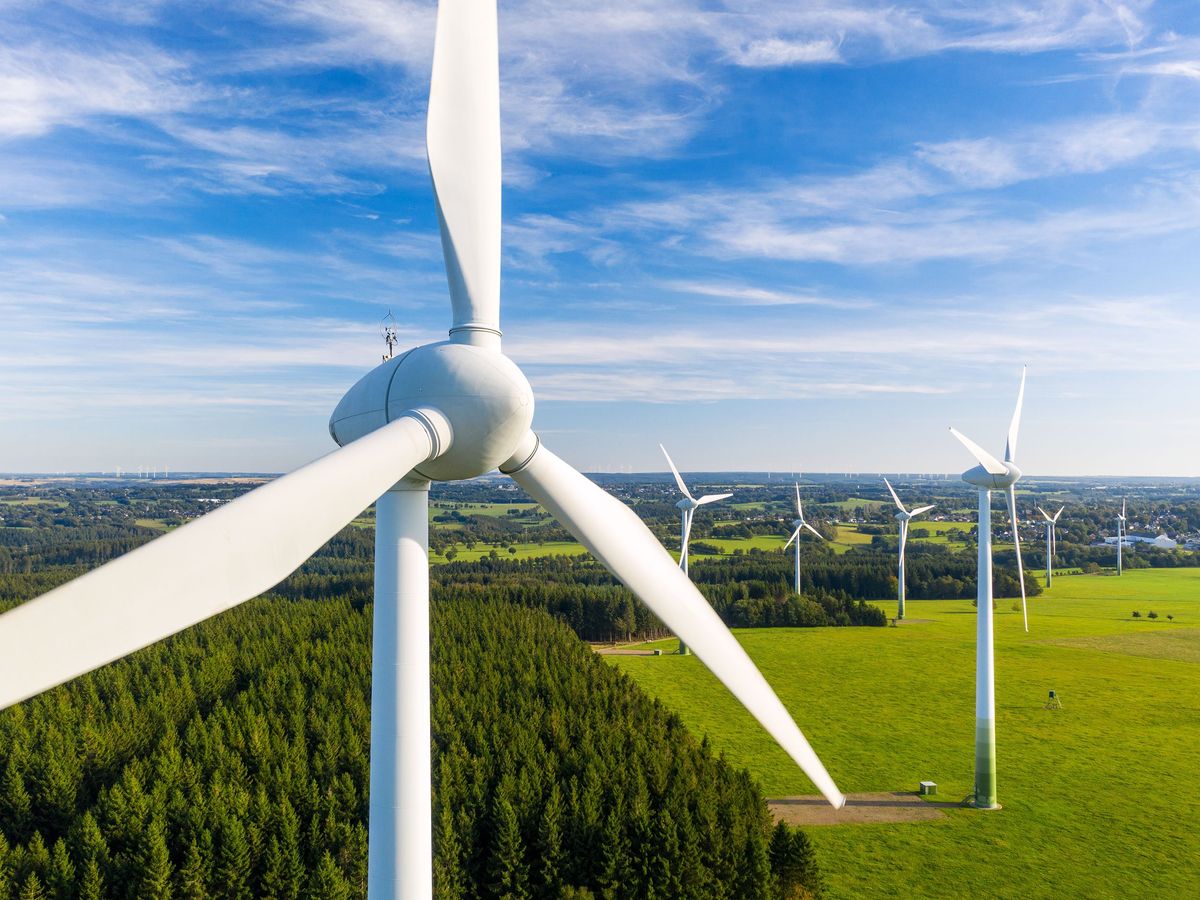
Huge Irish Wind Project Would Send 3000 Megawatts to the United Kingdom


Like many countries in Europe, Ireland has lofty renewable energy goals. One ambitious plan currently under discussion would feature construction of more than 700 wind turbines in central Ireland, with a capacity of 3,000 megawatts. The strange part, though, is that these turbines, built in the huge Bog of Allen, would be entirely independent of the Irish electricity grid. In fact, the entire point would be to send the power under the Irish Sea to the United Kingdom.

Element Power's proposed project, dubbed Greenwire, would cost as much as £6.5 billion ($10.4 billion). The "small clusters of onshore wind farms in the Irish Midlands" would connect to a set of redundant high-voltage direct current cables that would carry the power to two landing points in Pentir and Pembroke, both in Wales, where they would connect to the UK grid. If some financing issues involving energy subsides can be resolved, developers think the power could start flowing by 2018. They already have the grid connections in Wales secured for 2017 and 2018.

Element says the onshore turbines would save £7 billion for UK consumers compared to building an equivalent amount of wind power offshore, which is where much effort and money are being spent these days. It would also provide substantial income for Ireland, one of the countries central to the ongoing European Union debt crisis.

Ireland is also working hard to build up its own, not-for-export clean energy infrastructure. According to the Sustainable Energy Authority of Ireland's 2010-2015 strategic plan, the goal is to get half the country's power from clean sources within 15 years. Within 25 years, Ireland hopes to be totally green-powered and even be a net exporter of that clean energy, a goal that the Greenwire project would obviously support. The idea of moving renewable power around Europe has been gaining steam, including designs for an undersea grid that would connect Belgium, Denmark, France, Germany, Luxembourg, the Netherlands, Norway, the UK, and Ireland. And there seems to be a growing trend toward producing the power in a place that needs less but has more and actually using it in a country with big needs and lower capacity; the primary example is Desertec, an effort to massively build out solar installations in North Africa and ship the power to demand centers across the Mediterranean in Europe.

Ireland's wind resource is substantial, so the country of only 4.5 million people could easily end up a net exporter of power. The Greenwire project is a good first step, and building in the bogs is apparently not a problem, though they may want to look out for bog bodies.

Image via Greenwire/Element Power

Most Commented Posts

Energywise

IEEE Spectrum’s energy, power, and green tech blog, featuring news and analysis about the future of energy, climate, and the smart grid.

Contributors

 
Editor
Bill Sweet
New York City, USA
Contributor
Dave Levitan
New York City, USA
 
Contributor
Peter Fairley
British Columbia, Canada
 

Newsletter Sign Up

Sign up for the EnergyWise newsletter and get biweekly news on the power & energy industry, green technology, and conservation delivered directly to your inbox.

Advertisement
Load More