IEEE Spectrum logo Continue to site ➔
ADVERTISEMENT

Energywise iconEnergywise

Climate Modification Schemes Come into Sharper Focus

A year and a half ago IEEE Spectrum published a feature article making the case that geoengineeringâ''deliberate modification of the earthâ''s climateâ''will have to be part of the solution to global warming. In recent months thereâ''s been an avalanche of geoengineering articles, for which weâ''d like to take credit, except that the main pulse came not from us but from Paul J. Crutzen, the Nobelist who codiscovered the mechanisms behind the creation and destruction of stratospheric ozone. In an August 2006 article, Crutzen put his considerable prestige behind engineered climate modification, specifically the idea of pumping sulfur dioxide into the atmosphere to reflect sunlight and cool the earth.

Crutzen is a starting point for a feature in this monthâ''s Scientific American by science writer Robert Kunzig, who surveys three major approaches: pumping SO2 to create a â''stratospheric sulfate sunshadeâ''; telescope designer Roger Angelâ''s concept for building a sunshield out of small silicon nitride disks at the Earth-Sun Lagrangian; andâ''perhaps most arrestinglyâ''whipping sea salt up into the atmosphere to speed and enhance cloud formation over the oceans, using so-called Flettner ships.

Curiously, Scientific American prefaces its geoengineering feature with an editorialâ''an eloquent and well-reasoned one, to be sureâ''arguing that undue emphasis on climate modification puts the cart before the horse: â''Proponents . . . see geoengineering merely as a stopgap measure to buy time for emissions reductions, which may take decades to achieve. But what is the point of buying time? Every year that we put off those reductions makes our job that much harder.â''

This blogger agrees that emissions reduction must take priority. But wouldnâ''t it still make sense to have geoengineering tools at our disposal, to use if catastrophic climate changes start to take place, despite the worldâ''s efforts at emissions reduction? New Zealand ecologist Philip Boyd, in an article and interview, says we should critically evaluate the main geoengineering ideas now, throw away the ones that are plainly no good, and put the remaining ones in a â''climate change toolbox,â'' ready for use in a climate emergency.

If youâ''re looking for criteria to decide which geoengineering ideas make sense and which donâ''t, a good place to start is the May-June issue of The Bulletin of the Atomic Scientists, which listed â''20 reasons why geoengineering may be a bad idea.â'' (Risks of unintended consequences, which loom large in Kunzigâ''s article and SciAmâ''s critical assessment, rank only 20 on the list compiled by Rutgers ecologist Alan Robock.) The top two are the uneven regional effects to be expected from sulfate shielding and the continued acidification of the oceans that will take place irrespective of counter-warming measures.

A technical article that Robock wrote this year with two coauthors evaluated regional climate effects from injection of SO2 in the tropics and Arctic regions. They found that sulfate shields â''would disrupt the Asian and African summer monsoons, reducing precipitation to the food supply for billions of people.â''

Top French Nuclear Company Forms U.S. Components Venture

With almost a dozen companies seeking permits to built two and half dozen nuclear power plants in the United States, Franceâ''s Areva has formed a joint venture with Northrop Grumman to produce major plant elements such as reactor pressure vessels and steam generating systems. The subsidiary, Areva Newport News LLC, will be based at the Virginia shipping center, in a new 300,000-square-foot manufacturing facility that Areva will build with Northrop Grumman Shipbuilding, whose business has been in decline.

On the face of it, the decision by Areva and Grumman reflects confidence that reactor construction will soon revive in the United States, after a three-decade-long hiatus. The U.S. Energy Act of 2005 provides $18.5 billion in loan guarantees and electricity production subsidies to the first companies to build new nuclear power plants. Areva reports that its French heavy manufacturing facilities already has a five-year backlog of orders, with nuclear power plants being built or on order in France, Finland, and China.

Solar System Test Center Gets New Parents

Earlier this year when I visited Arizona Public Serviceâ''s STAR Center in Tempe, a Phoenix suburb, it was an arresting and yet somewhat forlorn sight: at a desert highway intersection, not far from the campus of Arizona State University, there was a field full of large and very large arrays covered with various kinds of photovoltaic materials and PV cells, some quite weird shaped, all pointing toward the sun. The barren environment, the absence of any human beings noticeably paying any attention (except for me and my guide), the blazing heat, the strangeness of the shapes, and their evident longing for lightâ''all combined in a feeling of orphanhood.

Evidently it wasnâ''t just my overheated imagination. TUV Rheinland Group, which describes itself as â''the world leader in independent testing and assessment services,â'' has announced itâ''s joining with Arizona Stateâ''s Photovoltaic Testing Laboratory to give STARâ''the Solar Test and Research Centerâ''new parents and parental guidance. In essence, ASUâ''s Photovoltaic Testing Laboratory, established in 1992, and STAR, going back to 1985, will now be part of a global test and certification network run by TUV Rheinland, a $1.5-billion corporation.

At a time when solar standards are more important than ever, the reinvigoration of STAR should make a difference. The U.S. governmentâ''s Renewable Energy Research Laboratory in Golden, Colo., will remain the worldâ''s premier center for testing claims made about PV efficiencies. But for claims about durability of systems and their performance in the field, STAR now stands a chance of really getting on its feet and taking a lead.

China's Explosive and Inadequate Wind Boom

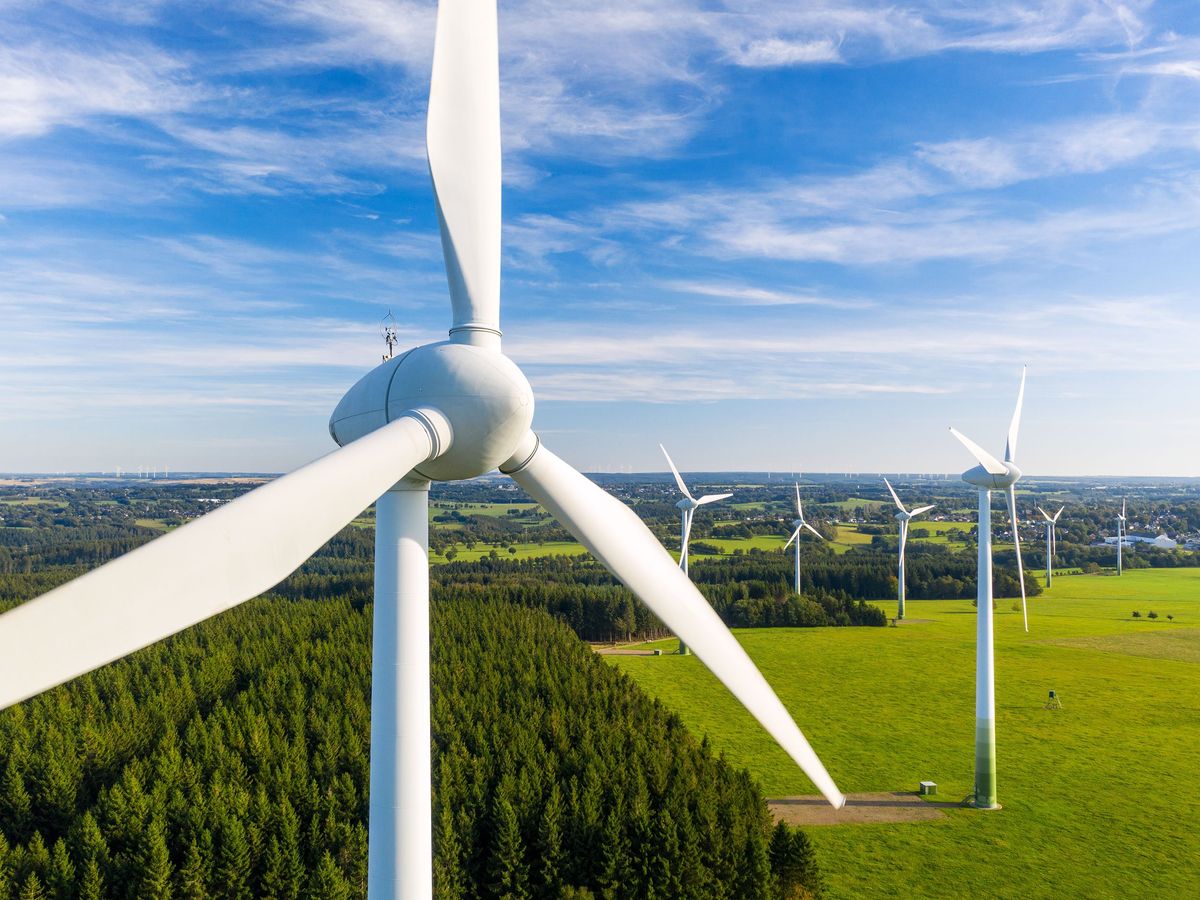
China's dramatic jump into wind power installations and manufacturing provides a glimmer of hope amidst what is otherwise a terribly polluted picture of unsustainable environmental devestation driven largely by coal-fired power generation. But just a glimmer.

Cambridge, MA-based consulting firm Emerging Energy Research affirmed the wind sector growth last week, issuing an analysis that puts China on track to hit 135,000-megawatt of wind capacity in 2020; EER expects China to lead the world in annual wind installations by 2011. EER's 135-gigawatt prediction for 2020 marks a big jump up from the already optimistic prediction by Chinese Wind Energy Association secretary general Haiyan Qin that closed our May 2008 reporting on China's wind sector -- namely that his members would have no trouble doubling the official 30 GW national goal for 2020.

And still the wind sector remains dwarfed by the heft and growth of China's coal-fired power sector. In 2006 alone, China commissioned 102 GW of new coal-fired power stations, a power bloc that exceeds the United Kingdomâ''s entire electric power system. In other words it will likely take a decade of world-leading growth in wind power installations before China's total installed base of wind turbines can put out more power than the coal plants it added in 2006.

Factor in the intermittent output from the wind turbines and the comparison looks that much more lopsided (averaged out over a year, wind turbines produce at their peak capacity only 30% of the time). The result is toxic air that probably kills upwards of a million people per year in China, and is a leading contributor to global greenhouse gas emissions.

Cleaning up the coal-fired plants provides a more likely handle for cutting the local air pollution. According to a survey of coal plant operators issued by MIT's China Energy Project in August -- Greener Plants, Grayer Skies? -- China's coal-fired power plants have the means to capture acid rain and smog forming pollutans, as well as particulates. The authors determined that most of the new plants being added in China employ decent technology, including pollution controls. The problem, they conclude, is that these controls aren't turned on.

Why break the law and leave pollution-trapping scrubbers and baghouses lying dormant? They consume energy, which cuts into revenues, and China's inadequate environmental enforcement is incapable of enforcing compliance.

Could Beijing's extension of controls on auto traffic post-Olympics signal the new ethic of environmental protection needed to activate those scrubbers and start detoxifying China's air? One that could even, some day, include carbon capture to start trimming China's world-leading greenhouse gas emissions? Those may sound like terribly hopeful notes, but they're at least as realistic as relying on wind power to do the job.

Clean Coal's Mountainous Upstream Blindspot

Gasification-based IGCC power plant technology offers a powerful means of cleaning up local air pollution from coal-fired power and, via carbon capture and storage, its carbon footprint. I have argued in past that it should be legally mandated for new power plants burning coal because (1) air pollution laws require use of the best emissions controls available, (2) carbon capture and storage will be economically viable under emerging carbon caps and taxes, and (3) adding new carbon emissions from coal is unjustifiable given the critical need to stabilize atmospheric levels of CO2.

But let's be clear on one thing: IGCC and carbon capture can substantially clean up the coal-fired power plant, but they can't deliver "clean" coal. That's because extracting coal to feed the power plants is, in itself, a dirty business -- at least as it is currently practised. Last week I witnessed this firsthand at two West Virginia mines where mountains are literally dismantled to reveal their hidden coal seams, then piled back to a rough approximation of their original contours or left flat for development. I visited the mines as part of the Society of Environmental Journalists' annual conference, held this year in the heart of coal country in Roanoke, Virginia.

Mountaintop removal mining, as this practice is called, accounts for about a third of Appalachian coal production but contributes a considerably larger share of Appalachian coal burned in power plants (conventional deep mines yield more metallurgical coal used in steel mills). They are, without question, environmentally and culturally destructive. Thousands of cubic meters of rock, sand, and soil dumped into valleys bury ephemeral stream beds; wildlife are displaced; sludge impoundments from coal-cleaning operations threaten groundwater and communities; and residents of the mountains suffer internal devestation as the lands that define their existence are blasted into oblivion. For a sense of scale download this 5MB panorama of the mine pictured above by National Geographic executive editor Dennis Dimmick.

Can the coal industry do better? Yes. For example, reclamation experts from Virginia Tech told the tour that mountaintop mines are adopting a new reforestation approach that could restore the mountains' ecology within two generations. That's huge improvement over current practices where grasses and shrubs take over, leaving the land in what Virginia Tech forestry professor James Berger called a state of "arrested succession."

Will the industry ever make coal mining socially and environmentally sustainable? Appalachian activists who have fought 'Big Coal' for decades doubt it. For one thing, the coal companies enjoy undivided support from state legislators and governors in coal states. That's why West Virginia author and political activist Denise Giardina told the SEJ conference attendees that she was "rooting for global warming" to stop coal. "I think it will force us to change," said Giardina, who made it clear that IGCC power plants sequestering CO2 weren't the kind of change she had in mind. Quite the opposite in fact: "If we ever have clean coal," said Giardina, "you can kiss the mountains goodbye."

I'm going to need more time to reflect on what I saw and heard last week. The scale of carbon reductions required and developing nations' right to develop may yet justify the ongoing use of coal. But, at the very least, it is more clearer to me than ever that cleaning up our energy systems must start with energy efficiency and less extractive forms of renewable energy. We are all, as willing users of coal-supplied power grids, contributors to Appalachia's plight everytime we turn on the juice.

Storied author, poet and social critic Wendell Berry put that message to the SEJ conference in the bluntest of terms: "It's awfully hard to remember when you push that button that you are authorizing mountaintop removal."

For more on mountaintop removal mining check out this week's article by the Associated Press which I believe was inspired by the SEJ mountaintop mining tour.

U.S. States Get Graded on Reverse Electricity Metering

By common consent, rapid adoption of renewable energy resources by homes and small businesses depends on the availability of whatâ''s called net meteringâ''the ability, technically and legally, to sell surplus energy back into the grid. Only if local jurisdictions guarantee that option will homes and small businesses find it profitable to install solar panels, erect a small wind turbine, or drill to tap geothermal energy. A new report from the Network for New Energy Choices assesses the state of the union in terms of net metering, grading progress or regression in all 50 U.S. states.

The report finds that three states in particularâ''Arizona, Illinois, and Floridaâ''have made major progress in setting standards and rules for net metering, and that 15 others have made significant progress. Texas, in a section about â''worst practices,â'' is singled out for criticism, its having formulated a progressive law only to let special interests torpedo it. New Jerseyâ''s standards and rules get extensive attention in a section about â''best practices.â''

Some states are taken to task for setting unduly low caps on the size of electrical systems eligible to feed back electricity into the grid, and for creating unnecessary bureaucratic impediments. New Jersey is praised for simplifying procedures, eschewing unnecessary safety requirements, allowing relatively large entities to feed back electricity, and for adopting model interconnection standards developed by the Interstate Renewable Energy Council and the National Association of Regulatory Utility Commissioners.

Mexican Oil Security an Issue for U.S. Too

An article posted this week by Energy Centralâ''s Energy Pulse draws attention to unaddressed security problems facing Mexicoâ''s oil industry. Oil revenues account for about a quarter of Mexicoâ''s exports and 40 percent of the governmentâ''s income; since nationalization of the industry in 1938, management of Pemexâ''more or less the fifth largest petroleum company in the worldâ''has always been an immensely sensitive issue. But itâ''s not just a local problem. Mexico is the worldâ''s sixth largest exporter of oil and a major supplier to the United States. If there were a disruption in one of Pemexâ''s oil fields, the results would likely show up at U.S. gasoline pumps before appearing at Mexicoâ''s ownâ''where, by the way, prices arenâ''t posted, evidently because they hardly ever change.

For the last few years, output has been declining at Mexicoâ''s immense offshore Cantarell field, which after Saudi Arabiaâ''s Ghawar field is the worldâ''s most productive. Daily national production is two thirds what it was four years ago. This implies, the Energy Pulse article points out, that the future production will have to shift to geographically more extensive onshore fields, which will be more vulnerable to attack by local insurgents or international terrorists. Yet the country has no coherent plan to protect the fields, and monitoring of the countryâ''s airspace is notoriously leakyâ''a matter of longstanding complaint from the Yankees to the North, who have worried mainly about drug smuggling.

What to do? Closer cooperation with Mexicoâ''s sometimes overbearing neighbor to the North could expose Mexico to greater threats from insurgents and terrorists and make its oil fields less rather than more secure. Yet itâ''s hard to see how Mexico would be able to secure its airspace and strengthen border controls without greater cooperation with the United States. So Mexican energy security policy will be a conundrum and a challenge not just for Mexicoâ''s leaders but for the next U.S. president as well.

Last spring, when Mexican president Felipe Calderon sought to allow more private investment in the oil industry, he encountered sharp protests that emptied the countryâ''s Congress. During a visit, I found the plaza in front of the Congress building eerily empty, and police warned me away. Graffiti asserted the sanctity of constitutional provisions that declare the countryâ''s oil resources sacrosanct and prohibit foreign investment.

MexElecReform.JPEG

Peak Lithium: EVs' Dirty Little Secret?

Electric vehicles web-journal EV World has done the English-speaking world a favor by translating an excellent Peak Lithium story written last week by Le Monde journalist Hervé Kempf. What is Peak Lithium you ask? The notion that a wholesale shift to EVs powered by lithium batteries in response to peaking petroleum production could just as quickly exhaust the global supply of lithium metal.

Kempf credits a May 2008 study by consultancy Meridian International Research -- The Trouble with Lithium 2 -- as the source of growing concern over peak lithium; the study concluded that reasonable increases in lithium production over the next decade will generate enough of the light, energetic metal to produce batteries for only 8 million batteries of the sort that GM plans to use in its Chevy Volt plug-in hybrid.

But he does his own homework, providing an accessible introduction to the geological distribution of lithium and its likely magnitude. I say 'likely' because Kempf shows that industrial secrecy makes it difficult to assess the probability of a peak lithium scenario prematurely squelching the electrification of the automobile.

As George Pichon, CEO of French metals trader Marsmétal puts it in Kempf's piece, the world of a lithium metal is "un monde fermé."

Alas, its a just little less closed today thanks to Le Monde and EV World.

Return of the Solar Power Tower

Last week Spectrum Online ran my profile of Andasol 1, a solar thermal power plant that's set to startup in Andalucia with the largest installation built expressly for storing renewable energy: a set of molten salt storage tanks that will hold enough heat energy to run its 50 MW steam turbine for 7.5 hours after dark. This week brought decisive evidence that another solar thermal design that makes even better use of energy storage -- a so-called 'power tower' whereby sunlight is focused on a central tower -- will also have its moment in the Andalucian sun.

The project, dubbed Gemasolar, will employ sun-tracking mirrors covering an area equal to 40 soccer fields to focus light at the top of a roughly 120-meter-high tower. There the sunlight will heat a solar receiver full of molten salt. In contrast, Andasol 1 (like most of the solar thermal plants under construction in the U.S., Spain, North Africa and the Gulf) uses thousands of square meters of trough-shaped mirrors to focus light on a synthetic oil; energy is stored via heat exchangers that transfer the synthetic oil's heat to a molten salt.

One advantage of the power tower is thus obvious: heating salt directly eliminates the need for heat exchangers, reducing installation and operating costs. Another lies in the fortuitous thermodynamics of heating molten salts, whose maximum safe temperature of 565 C is about 165 C higher than the synthetic oil's.

Sandia National Lab researchers verified these power tower advantages in the second half of the 90s, but also suffered through a series of operational difficulties. Five years ago the European Commission provided funding for the Gemasolar project (then known as the Solar Tres) to demonstrate that the difficulties could be overcome, but the project foundered on legal issues and changes in Spain's renewable energy law. But engineering continued and this March the project sprung back to life when its lead proponent, Spanish engineering firm Sener, clinched a solar thermal joint venture with Abu Dabi's alternative energy program.

With Abu Dabi's deep pockets Gemasolar's financing just might survive the current financial crisis. Siemens confirmed that the tower was moving forward this week by disclosing that it would supply the steam turbine to convert the tower's solar-generated heat into up to 19 MW of electricity for the Spanish grid.

For further details on Gemasolar, see this frank telling of its origins, design and goals on Sener's website. For details on a competing power tower design that directly produces steam, see this white paper from Spains' Abengoa Solar.

Deja? Are Hybrids Already Passe?

Plugs are definitely vogue at this week's Mondial de l'Automobile in Paris. So where does the hybrid vehicle fit into the picture? It may not, according to Renault. The French carmaker says that electric vehicles, not hybrids, are needed to deliver the emissions reductions that governments and customers demand.

Renault says that it is engineering a pair of battery-powered electric vehicles (EVs), to be produced starting in 2011, that it claims will be cheaper to build, cost markedly less to power, and produce far less carbon dioxide. Today they unveiled a partnership with utility géant Electricité de France to "establish electric cars as a viable and

attractive transport solution for consumers."

And Renault is not the only major automaker planning to produce commuter-oriented EVs. Mitsubishi Motors and Daimler both announced plans in Paris last week to accelerate commercialization of small EVs -- Mitsubishi with its i-MiEV minicar and Daimler with a battery version of its popular Smart Fortwo. Volkswagen's promo materials in Paris confirmed it would join the EV club, producing a tiny commuter EV called the Up! in 2010 with a top speed of 130 kilometers/hour and roughly 100 kms of range.

Ok you say. EV's are à la mode. But what of the hybrid option? The question is partly semantic. Hybrid technology is everywhere if you count the mild hybrids, which employ a small but potent electric battery to save gas by rebooting the combustion engine on a green light instead of idling through the red; some can also recuperate energy during breaking by recharging their battery. This technology is going mainstream: Renault competitor PSA Peugeot Citroën said it alone will install 1 million stop-start systems by 2011. VW spokesperson Martin Hube said his company viewed stop-start as just an evolution of internal combustion drive. "You can call it a mild hybrid but it's just a smart technique," says Hube. "That's nothing new."

No automaker questions whether full hybrids like the Prius or GM's plug-in Chevy Volt that can drive on either electricity or gasoline are something new. But while several showed full hybrid concept cars in Paris, fewer talked up plans to build one. Perhaps they've made the same calculation as Renault: it's not worth the trouble to cram high-energy motors, batteries and an engine into a vehicle when one can go straight to the full EV instead.

Most Commented Posts

Energywise

IEEE Spectrum’s energy, power, and green tech blog, featuring news and analysis about the future of energy, climate, and the smart grid.

Contributors

 
Editor
Bill Sweet
New York City, USA
Contributor
Dave Levitan
New York City, USA
 
Contributor
Peter Fairley
British Columbia, Canada
 

Newsletter Sign Up

Sign up for the EnergyWise newsletter and get biweekly news on the power & energy industry, green technology, and conservation delivered directly to your inbox.

Advertisement
Advertisement
Advertisement
Load More