IEEE Spectrum logo Continue to site ➔
ADVERTISEMENT

Energywise iconEnergywise

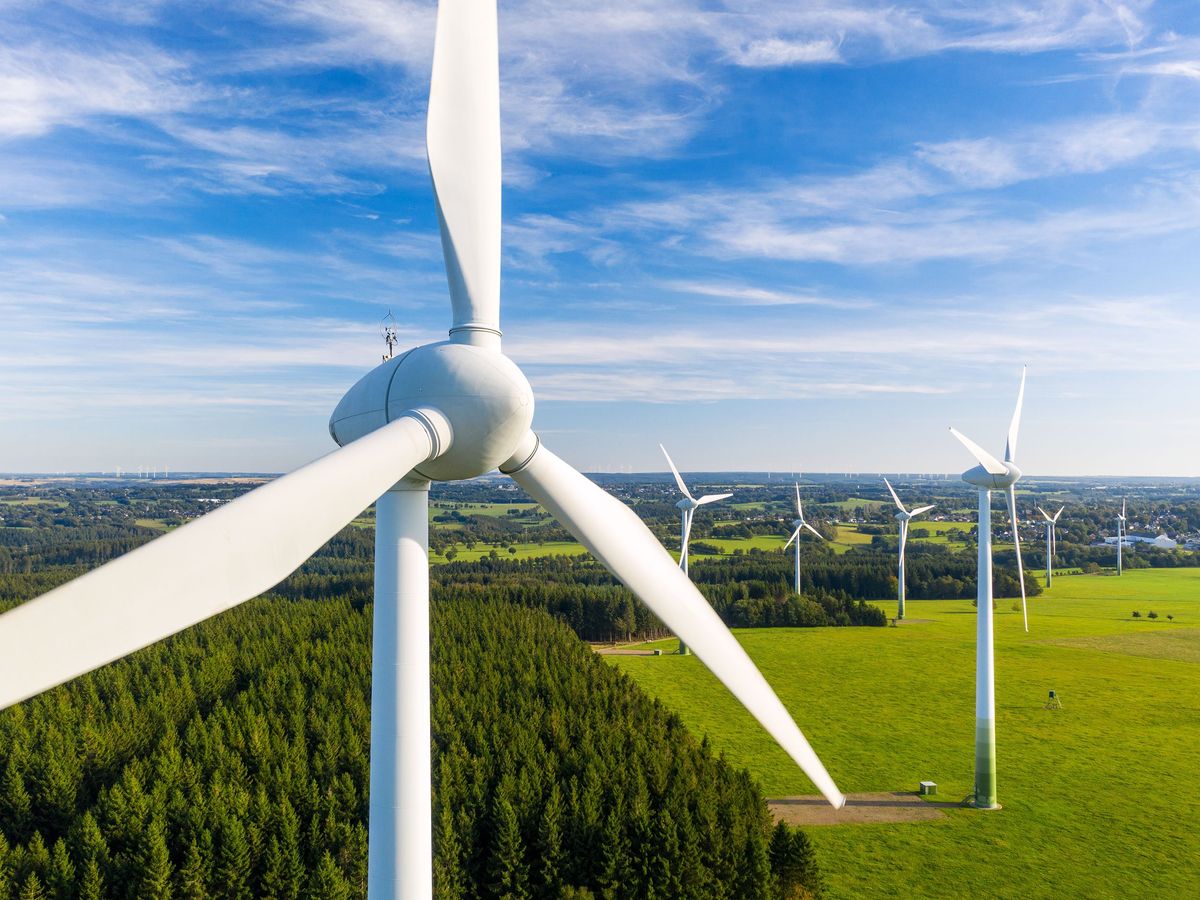
German Renewables Reach 25 Percent

The latest issue of the IEEE Power & Energy magazine (March-April) is devoted to photovoltaics, with substantial articles on the U.S. SunShot vision, integration of solar energy in one important U.S. grid, the solar picture in Germany, development of performance metrics on the basis of a 1 MW Tennessee plant, and the PV outlook in post-Fukushima Japan.

Even to somebody who has been keeping a pretty close eye on Germany, the German numbers astound. According to the article by Jan von Appen et al., total photovoltaic capacity in German is 31 GW, equivalent to 6-10 standard nuclear power plant installations, allowing for solar's intermittency. With much of that capacity concentrated in the relatively sunny South (which by the way is not all that sunny, by some standards), and with many recent installations at the distribution level, the challenges to grid management are formidable, as the authors explain.

Small and medium-size installations of less than 30 kV have dominated Germany's solar expansion in recent years, so that 70 percent to total PV capacity is now connected to the low-voltage grid. "In some low-voltage grids," they say, " the installed PV capacity can even exceed the peak load by a factor of ten."

Renewable energy now meets about a quarter of Germany's average electricity consumption, and at times photovoltaics alone satisfy as much as 40 percent of peak demand.

To be sure, Germans pay a fairly high price for what some might dismiss as a quixotic quest for political correctness in energy generation. German home rates, at 28 euro-cents per kilowatthour in 2012, were almost twice the residential rates in nuclear-rich France, for example.

Arguably, however, Germans are positioning themselves to do just what President Obama says he'd like to accomplish in the United States--to be a major global player in the technologies of the near future. And this is a game, let it be said, that Germans are extremely good at playing.

It's not just a matter of basic engineering excellence, which everybody knows about. Germans also excel at execution in high tech, as a recent article in the Wall Street Journal pointed out. And it's not just that either. Germans also excel at maintenance and follow-through.

Ride a German high-speed train and you won't be impressed only by the high speed. You'll notice that everything works, from the toilet paper rolls to the door handles. And you'll be struck that everything is clean as a whistle. You won't likely have, sad to say, the same experience on an Amtrak Acela.

Vanadium Redox Gaining Ground in Energy Storage

The vanadium redox flow battery is not a phrase that comes tripping off the tongue. It certainly is not a household phrase. But it's a technology we are going to be hearing more about in grid-scale energy storage, as it is coming around the outside track at an accelerating speed.

Two weeks ago, at IEEE's fourth annual Innovative Smart Grid Technologies Conference (ISGT, a relatively small but well-focused event), one of the most interesting presentations concerned a novel vanadium reflow battery that is being put through its paces in a northwest European town. Meanwhile, a German vanadium flow battery innovator has teamed up with an American vanadium electrolyte producer in a strategic alliance.

The developments are noteworthy because while grid-scale energy storage is crucial to the long-term future of intermittent renewables like wind and solar, the really promising candidate technologies can probably be counted on one hand.

In a panel on "international viewpoints" at ISGT, Hongfeng Li of Prudent Energy described the try-out of the company's trademarked VRB-ESS vanadium redox flow battery in a part of Europe (probably Germany) where the grid is required to buy wind energy at 9 eurocents per kilowatt-hour and photovoltaic energy at 20 cents/kWh (presumably in a feed-in tariff system). The objective was to determine whether the flow battery could help reduce the town's dependence on the grid and provide some support for it. The finding was that the VRB-ESS could yield revenue and improve grid performance.

This month, the State Grid Corporation of China will commission a 2 MW/8MWh VRB-ESS battery system, as part of the Zhangbei National Wind/PV/Energy Storage and Transmission Joint Demonstration Project, says Li.

Read More

How Big is the U.S. "Electricity Gap"?

Income inequality in the United States has been a big conversation point recently, especially with the viral success of a video showing in striking graphical form just how badly distributed the nation's wealth really is. Now, Opower, a social engagement company that helps people reduce electricity use, decided to see if that gap extends to our homes' energy use. The answer is yes, though it doesn't approach the scope of financial inequality.

According to Opower, the top 1 percent of residential electricity users consume 4 percent of the total. Those biggest users average 33 654 kilowatt-hours per year, compared to 7 198 kWh per year for the bottom 90 percent of users. There are some fun ways of quantifying this, of course: "One day of combined residential electricity usage across the top 1 percent of US households (comprising approximately 3.1 million people) is roughly equal to one year of total electricity consumption in the African country of Sierra Leone (a nation of 5.5 million people)." The choice of comparator there could certainly be questioned, but it is striking nonetheless.

In some ways, the news here is that the gap between the biggest and smallest users is so modest. That is, we might have expected it to be much bigger. The top 1 percent of people in the U.S. rake in 17 percent of income, and possess an astonishing 35 percent of all the country's wealth. A good measure to use here is the Gini coefficient: a value of zero indicates complete equality (for $100, say, 10 people each have $10), and a value of one indicates the opposite (where one person has all $100 and the others have none). According to Opower, the Gini coefficient for income in the U.S. is 0.47, while for residential electricity use it is 0.34, a far more egalitarian distribution.

And if you drill down a bit into the electricity gap it actually seems to get smaller: the largest one percent of homes, averaging around 6400 square feet, use 2.5 times as much electricity as the average American home, at 1600 square feet (24 500 kWh/year vs. 9500 kWh/year). That means about 5.9 kWh/year per square foot for an average home, and 3.8 kWh/year per square foot for the mega homes, a more efficient rate. As the report points out, there are a few reasons for this, including the fact that some big items like a refrigerator don't scale linearly. A house five times the size of the average won't necessarily have five more fridges. People who can afford the big houses are also more likely to be able to afford energy-saving adjustments like triple-paned windows and better insulation.

The point here is that improving overall electricity use patterns in the country probably shouldn't focus on the big users (in contrast to, say, lowering the deficit by taxing higher incomes more). Of course, it's worth nothing that Opower has a vested interest in that conclusion, since they would like their particular methods for energy savings to spread as far as possible; but it does make sense.

The report does highlight some outstanding questions, including the possibility that the inequality gap is underestimated because some houses are a second home and the owners actually use more than just their primary residence's share. Still, it seems clear at least that electricity is not so unevenly used as some other resources in the U.S.

Image via Dean Terry

A Clever But Questionable Approach to Geoengineering

Technology Review editor David Rotman has an unusually reader-friendly article in the issue just out  on what goes by the name, loosely, of "geoengineering"—deliberate efforts to modify earth's atmosphere to counteract the effects of greenhouse gases. In the March issue, Rotman profiles MIT scientist David Keith, a former atomic physicist, and his idea of injecting sulfuric acid into the upper atmosphere, where the sulfur aerosols would reflect incoming solar radiation back into space.

"One of the startling things about Keith's proposal," writes Rotman, "is just how little sulfur would be required. A few grams of it in the atmosphere will offset the warming caused by a ton of carbon dioxide, according to his estimate."

The idea of pumping sulfate aerosols into the atmosphere is not new as such. What does seem novel in Keith's scheme, however, is the disarmingly simply method he proposes for putting them there: Customize standard Gulfstream business jets and have them fly 20 kilometers up to disperse sulfuric acid, which will combine with water to form the reflective sulfate aerosols.

What's not to like in this scenario? The main objections are just those that my fellow energy blogger David Levitan has identified in this space: The impossibility of accurately predicting what the regional impacts of the sulfur pumping would be, and the complete absence of any understanding of its impact on ocean acidification, one of the most serious consequences of carbon dioxide buildup. "It's not possible to use existing models to know how geoengineering might affect, say, India's monsoons or precipitation in such drought-prone areas as northern Africa," Rotman concedes in the end.

For balance, Technology Review also has in its current issue an excellent short commentary piece that makes the case for energy conservation and efficiency (an editorial strategy Scientific American also has adopted when addressing the delicate subject of geoengineering). It won't be enough to just keep trying to marginally reduce our immense greenhouse gas emissions, writes Jane Long, who chairs a California future energy committee and co-chairs the Bipartisan Policy Center's geoengineering task force. "Our first step should be to to commit to never building another energy-inefficient city, building, vehicle, or industry."

Image: Don Bayley/iStockphoto

From the Gut: "Intestinal" Design for Vehicle Natural Gas Tank

We often refer to the nuts and bolts of our machines as "guts," but this is taking it to another level. A company called Otherlab is working toward a new kind of natural gas tank for vehicles, based on an "intestinal" design. No, it's not "digesting" the fuel any differently from today's natural gas-powered vehicles, but it does wrap around the car's other "organs" much in the way that the body's digestive organs nestle into whatever space is available in the human trunk.

Essentially, the idea is to have the fuel tank be a series of small, high-pressure cylinders in the place of a single big cylinder. The small tubes would allow for conformability: car makers could shape the tanks to fit in any number of spaces and designs, as opposed to the bulky needs of a standard natural gas tank. Otherlab was at the ARPA-E Innovation Summit last week, where they made their case during the mildly crazy Future Energy pitch session; the company is an ARPA-E awardee, and has received a relatively small $250 000 grant to develop the technology.

Otherlab says the conformable tanks could be made from either stainless steel or carbon fiber, a difference that would change the weight and cost parameters. In general, making natural gas a viable transportation fuel is limited by its energy density: it has about 30 percent less energy by volume than conventional gasoline does, which so far has kept it to a niche part of the vehicle market. According to ARPA-E, "if successful, Otherlab's intestinal natural gas storage system would allow an increase in the storage density, safety, and space utilization and give automotive designers more freedom in vehicle design." They also point out that in theory at least, natural gas vehicles produce 10 percent less greenhouse gas emissions than traditional gas-powered vehicles.

Read More

New Appointments at U.S. Energy Department and EPA

President Obama announced on Monday his new appointees to lead the U.S. Department of Energy and the Environmental Protection Agency: Ernest J. Moniz at DOE, and Gina McCarthy at EPA. In his remarks, reported the Wall Street Journal today, Obama said the said the two would lead efforts to "do everything we can" to combat climate change. At EPA, McCarthy previously headed up the air quality division, where she formulated rules to regulate greenhouse gases as air pollutants, curtail pollution from coal-fired power plants, and set standards for new coal plants that in effect will make it impossible to build them without incorporating radically new technology.

Moniz, a professor at the Massachusetts Institute of Technology who has a PhD in nuclear physics,  is very well known in energy circles as a leader of MIT policy studies and as the former top scientist in Bill Clinton's energy department. Among other things, Moniz was a major player in the 2010 MIT study that vigorously embraced natural gas. That attitude will not make any waves in the Obama administration, which equally has embraced gas. His advocacy of innovation in nuclear power may be of greater import. At the time he was serving in Clinton's DOE, he told IEEE Spectrum that we needed to "raise the headlight beams" in nuclear--which we took to mean that we need to look further ahead, more sharply.

That could be good news for developers of smaller, modular, more inherently safe reactors, like those described in the August 2010 issue of Spectrum—a subject outgoing Energy Secretary Chu had little or nothing to say about in his voluminous parting remarks to colleagues.

Photo: MIT Energy Initiative

_______________________________________________________________

Postscript: Shortly after this was posted, the Nuclear Energy Institute's president and CEO issued a statement welcoming the appointment of Moniz, noting his service on the administration's blue-ribbon Commission on America's Nuclear Future, and citing specifically the commission's recommendation that a group of consolidated spent fuel storage facilities be built while a permanent solution to the nuclear waste storage problem is developed.

Carbon Dioxide and Temperature Levels Are More Tightly Linked

Since the late 1990s, perhaps the most vivid and compelling image of the connection between changes in CO2 and changes in global temperatures has been the chart--in a series of increasingly refined versions, now going back a million years--showing the two variables rising and falling together through a succession of ice ages. The rub has been that the changes in carbon dioxide have appeared to lag changes in temperature, rather than lead them (as one would expect if they were causing the temperature changes), and that the lags can be as long as thousands of years. In a paper that appeared on March 1 in Science magazine, a team of scientists report that using new techniques and reanalyzing data, they have virtually eliminated that puzzling temperature/CO2 lag for the last ice age termination, the one most highly resolved..

The underlying problem has to do with uncertainties in estimation of annual changes in carbon dioxide levels. Yearly temperatures are inferred directly from changes in the isotopic composition of water deposited annually in snowfall; yearly accumulations are fairly easily distinguished because each year the top surface of the snow melts and then refreezes, forming a kind of crust called "firn." But the air bubbles in which carbon dioxide is trapped tend to diffuse through the crust, making it difficult to match up the bubbles wit the years in which they originally were trapped. As a companion commentary to the Science article explains, "Over the top 50 or 100 m of an ice sheet, the snowpack (firn) gradually becomes denser before it becomes solid ice containing air bubbles. Air diffuses rapidly through the firn, and the trapped air is therefore younger than the surrounding ice. In places with little snowfall, the age difference can be several thousand years. The age difference cannot be reconstructed perfectly, leading to uncertainty in the age of air…"

In the work reported on Friday, the multi-national team of European scientists used a proxy to better estimate the time of air bubble formation in the Antarctic core EPICA Dome C. Whereas the original analysis of that core had found changes in carbon dioxide lagging temperature changes by an average of 800 years in the last deglatiation, plus/minus 600 years, the new analysis halves the lag and cuts the uncertainty by a factor of three. "Their analysis indicates that CO2 concentrations and Antarctic temperature were tightly coupled throughout the deglaciation, within a quoted uncertainty of less than 200 years," says commentator Edward J. Brook, of Oregon State University, Corvallis.

How much of an impression will the new results make? Will they materially change the chemistry of the debate over human-induced climate change and climate policy? Doubtful.

For one thing, in part because of the complexity of the scientific methods used in both the original study and the new re-analysis, it will be easy for stubborn skeptics to believe that the scientists have simply picked a method that gives them the result they want. Second, much as one hates to trot our a tired cliche, the new results may raise more questions than they settle. Even if the changes in the two variables are indeed much more tightly linked, what co-factors are responsible for the whole pattern?

Brook puts it like this in the concluding paragraph of his commentary: "The ultimate question is what mechanisms influence both Antarctic climate and CO2 concentrations on such intimate timescales. Many have been discussed, and many are plausible, including changes in CO2 outgassing from the ocean due to changes in sea ice, changes in iron input to the ocean that influence CO2 uptake by phytoplankton, and large-scale ocean circulation changes that cause release of CO2 to the atmosphere. Deciding which are viable has proven difficult…"

Image: iStockphoto

Coal is Dead, Gas is King: Politicians Talk Fossil Fuels at ARPA-E Summit

The Advanced Research Projects Agency–Energy (ARPA-E) funds innovative projects on wind and solar energy, electric vehicles, biofuels, grid tech, and yes, carbon capture and natural gas technologies. But when the politicians show up here at the ARPA-E Energy Innovation Summit in Washington, D.C., it's those fossil fuels that end up dominating the conversation.

In a way, the continued prominence of coal and oil seem like background noise to the high-end technology conversations that fill the hallways at ARPA-E. But coal still accounts for around 40 percent of U.S. electricity, and in spite of increasing EV adoption oil is still powering nearly every vehicle in the country. Thus, when prominent politicians, including New York Mayor Michael Bloomberg and Senators Lamar Alexander (R–Tenn.), Lisa Murkowski (R–Alaska), and Ron Wyden (D–Ore.), speak at an energy conference, the background noise becomes the signal.

Mayor Bloomberg spent the bulk of his talk going hard at coal. "King coal is dead," he said, citing the recent closure of a coal plant just outside Washington as just one evidentiary piece of the case he was building. "It was upwind from Congress, so you would have thought they would have done something about it earlier." (Zing!) Bloomberg said the death of coal was being driven by the need to address climate change and the low price of natural gas. He acknowledged that India and China aren't quite so done with the dirtiest of fuels, but his speech was surprisingly optimistic, given some of the ongoing battles over coal export terminals on the west coast. By most accounts, coal plants are unlikely to be built in the U.S. now, but that doesn't mean we will suddenly start leaving it in the ground in Appalachia and Wyoming.

The Mayor also expressed optimism about natural gas. Actually, pretty much every politician expressed optimism about natural gas. To be sure, ARPA-E funds some interesting work on gas, especially its use as a transportation fuel; but there is no question its place in politics right now is far more central. And even someone as smart and progressive on energy as Bloomberg has his blinders on when natural gas is in the picture; until we can store renewable energy better, he said, "you will always need backup power sources." First of all, ask scientists—like, say, the DOE's National Renewable Energy Laboratory—and renewables can supply much of our energy with tech that exists right now. Second, the mayor might want to walk the Technology Showcase floor at this ARPA-E summit; it is littered with storage companies and ideas; if natural gas backup plants are needed at all, they won't be for long. Wyden, in fact, spent much of his speech zeroing in on storage, and just how transformative advances in the area will likely be in the near future.

Read More

Energy Storage Front and Center at ARPA-E Summit

The Technology Showcase at the Advanced Research Projects Agency–Energy Innovation Summit in Washington, D.C., is dotted with projects from companies, national labs, and universities that aim to change how we produce and use energy. They're all ARPA-E awardees, meaning they fall under a number of broader project categories, but what's clear from wandering the floor is how many of them are related to energy storage. A few examples of innovative energy storage projects that ARPA-E is helping get off the ground:

Beacon Power: Scaling up the flywheel

Flywheels are an old idea, so why has ARPA-E given Beacon Power more than $4 million? Because this is no ordinary flywheel. "The improved design [pictured] resembles a flying ring that relies on new magnetic bearings to levitate, freeing it to rotate faster and deliver 400 percent as much energy as today's flywheels." Well then.

ARPA-E categorizes the tech as still in the "proof of concept" stage, but Beacon does have at least one large installation of flywheel storage up and running in Stephentown, N.Y. It has built a 20-megawatt plant on 3.5 acres that lets the New York ISO improve its grid frequency regulation.

Sun Catalytix: The artificial leaf growers go for megawatt-scale storage

This company has gotten plenty of press in the last few years, including from us. But that was for work on the so-called "artificial leaf," a small solar device that mimics photosynthesis. Sun Catalytix has spun off some of that research into work on new chemistries for flow batteries, which they say will be able to scale up to grid-level storage. So far they've built kilowatt-scale devices, and are aiming for megawatts.

Energy Storage Systems: An all-iron flow battery

More flow batteries: Energy Storage Systems leaves behind traditional flow battery materials like vanadium in favor of earth-abundant iron. That is not a trivial change: it drops the per kilowatt-hour cost from around $400 to less than $200. Craig Evans, the company's president and CEO, told me they have a 1 kilowatt prototype now, and will scale up as part of the requirements of their ARPA-E award by the end of the year. And interestingly, ESS isn't the only ARPA-E awardee working on all-iron flow battery tech; Case Western Reserve University is also working toward a $200/kwh battery.

Halotechnics: Molten glass (yes, glass) energy storage

Solar thermal systems often now use molten salts to store energy: heat up the salts during the day, and when the sun goes down use that stored energy to keep the power flowing. Halotechnics' ARPA-E-funded project involves abundant glass, instead of salts, that can stay stable hundreds of degrees past other materials and are potentially much cheaper.

There are, impressively, dozens of other storage projects as well. If this trend keeps up, the common talking point regarding the lack of storage options for renewable energy won't have much stable ground under it.

Image: Beacon Power

Sixteen New Iranian Reactors

Ordinarily it would be big energy news if one of the world's larger emerging market economies were to announce plans to build sixteen nuclear reactors, representing a substantial fraction of such undertakings. Sixty nuclear power plants are under construction worldwide, and about 160 are planned.

But here's the rub: The country that announced last week that it would build 16 new reactors is Iran. Given the long-standing impasse over Iran's uranium enrichment program and well-founded suspicions that its leadership wishes to attain a "breakout" capacity to build nuclear weapons, the reactor plan could be nothing but a cover for a covert military program.

In principle, the so-called P5+1 talks with Iran that resumed yesterday could cast light on that issue and ultimately legitimize Iran's nuclear energy program. But are there any real prospects of the talks succeeding?

On Monday, in a discussion of Iran hosted on Monday by the Arms Control Association and broadcast on C-SPAN, career ambassador Thomas Pickering said he would be "willing to put a little money on a positive outcome." However, former Iranian nuclear negotiator Hossein Mousavian, currently at Princeton University, said that for the Iran talks to be successful, the United States would have to adopt a respectful rather than threatening attitude and stop coupling peaceful rhetoric with escalating sanctions. Meeting those hypothetical conditions, which Mousavian also spelled out in the Financial Times, would not be trivial.

Read More

Most Commented Posts

Energywise

IEEE Spectrum’s energy, power, and green tech blog, featuring news and analysis about the future of energy, climate, and the smart grid.

Contributors

 
Editor
Bill Sweet
New York City, USA
Contributor
Dave Levitan
New York City, USA
 
Contributor
Peter Fairley
British Columbia, Canada
 

Newsletter Sign Up

Sign up for the EnergyWise newsletter and get biweekly news on the power & energy industry, green technology, and conservation delivered directly to your inbox.

Advertisement
Advertisement
Advertisement
Load More