IEEE Spectrum logo Continue to site ➔
ADVERTISEMENT

Energywise iconEnergywise

Will Envia Be the Envy of Lithium-Ion Car Battery Makers?

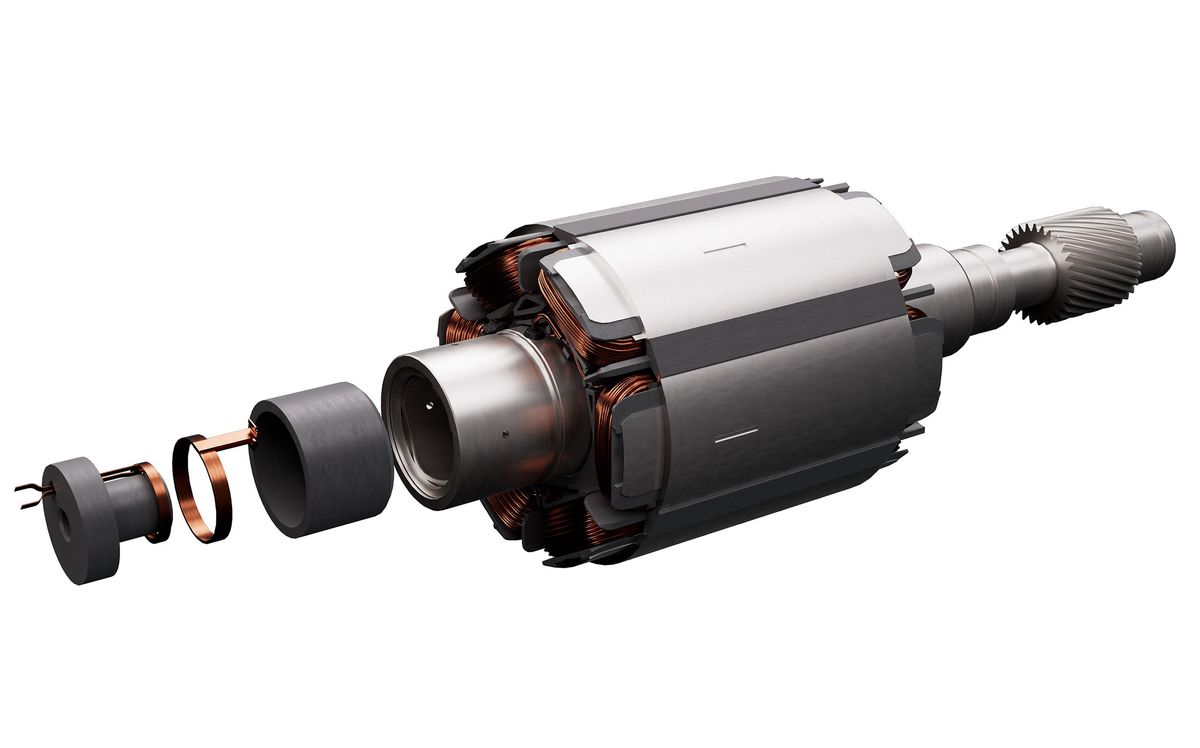
Envia Systems, the Bay Area startup with a name well crafted to inspire jealousy, succeeded in doing just that with its claim, yesterday, that it has developed a lithium-ion battery with an energy density of 400 watt-hours per kilogram and an ability to deliver energy at a cost of $125 per kilowatthour. If that boast is validated, which the company says GM is in the process of doing, the battery's energy density is two or three times better than what is otherwise available now and its cost perhaps half of the usual. At the very least, Envia's achievement ought to give lithium ion batteries developed for hybrid and electric cars a new lease on life, as the San Jose Mercury News observed in a report.

Nevertheless, the company's claims and their implied implications ought to be treated with some caution. Though Envia has had the support of ARPA-E and the U.S. Advanced Battery Consortium, and though it publicized its claims at an ARPA-E conference yesterday, the advanced research agency for energy has not posted a press release about the event on its own website. (A one-paragraph ARPA-E summary of what Envia is and what it is trying to do preceded yesterday's conference.)

According to the Mercury News report, a battery pack made with Envia's technology could give a car a range of 300 miles at a cost of $25,000. That is still not all that cheap. (My Mini Cooper, if the reader will pardon my introducing a personal detail, has a range of 400 miles and the whole car cost $20,000.)

Last, and hopefully least, there is the improbable but not impossible prospect that current high oil prices will turn out to be a mere blip, and that Americans will soon be living in a world once again in which gasoline is cheaper than bottled water. If counter to mainstream opinion that turns out to be the case, hybrid and electric cars will be of course dead again.


Georgia Reactor Project Seems Set for Big Federal Loan Guarantee

From the ferocity of the opposition to the Vogtle nuclear power plant project in Georgia, the first U.S. reactor project to get a construction permit in decade, you might think that the future of U.S. nuclear energy depends on it. In fact, the project seems set to get a Federal loan guarantee amounting to more than $8 billion, but even if it goes forward on that basis--which is by no means assured--this does not mean that the gates will be opened to a flood of other new nuclear power plant projects.

M.V. Ramana, a specialist on nuclear energy at Princeton University’s Program on Science and Global Security, wonders whether nuclear power "will ever make it in states with deregulated [electricity] markets." That is, there seem to be hints of a nuclear renaissance only in states that have old-fashioned vertically integrated utilities like Georgia's Southern Company, which have a guaranteed base of customers and can persuade regulators to charge consumers up-front for very high construction costs.

South Carolina Electric and Gas is awaiting and probably soon will obtain a combined construction and operating license for two new Westinghouse AP-1000 reactors at its Summer site. But it probably is the only other new project close to a go-ahead. Everywhere, high construction costs, long construction times, and competition from dirt-cheap natural gas make nuclear projects a hard sell. And wherever a specific plant is proposed local considerations also come into play.

Plans to build a GE-type advanced boiling water reactor near San Antonio, though close to getting regulatory approval in principle, took a big hit from Fukushima because of high Japanese involvement in the project. (Toshiba is now its main funder.) In Iowa, citizens are taking umbrage at the notion their average electricity bill might rise by $8 per month for 12 years, to finance a nuclear plant MidAmerican Energy proposes to build at the Duane Arnold site in Linn Country--and that estimate seems to be based on a rather optimistic guess about what the plant will cost. A proposed nuclear plant in Utah would require taking 64 billion liters of water annually from the Green River, even though the facility would use a relatively sophisticated once-through cooling system.

Alaska's North Slope Holds Somewhere Between Zero and 2 Billion Barrels of Shale Oil

Oil drilling has gone on for years on Alaska's remote North Slope, but it has been limited to conventional resource extraction. More recently, however, with the ongoing success (economically, at least; environmentally is another story) of unconventional extraction of shale oil and natural gas in the lower 48 states, there is increasing interest in expanding fossil fuel extraction in Alaska. And now the U.S. Geological Survey has released its first ever assessment of "continuous" oil and gas in the North Slope region.

Continuous oil and gas refers to fossil fuels that are still locked up in rocks like shale; conventional resources involve oil or gas that has migrated away from the source rocks. The new USGS report found technically recoverable oil resources of between zero and 2 billion barrels. Natural gas resources lie somewhere between zero and 80 trillion cubic feet, and liquid natural gas between zero and 500 million barrels.

Those zeroes obviously make the range enormous, but they're in there for good reason. No actual drilling for these types of resources has ever been attempted on the North Slope, and it is impossible to know for sure what could be extracted before the process actually begins. According to the USGS: "The shale formations assessed have generated oil and gas that migrated into conventional accumulations, including the super-giant Prudhoe Bay field. It is also probable that these shale source rocks likely retain oil and gas that did not migrate, but only drilling can concretely confirm this or not."

For a bit of comparison: The Willison Basin currently undergoing a huge extraction boom in North Dakota contains about 3.6 billion recoverable barrels of oil; the Marcellus Shale formation, home to another boom in Pennsylvania, Ohio, New York, and other states, has more than 88 trillion cubic feet of shale gas.

The USGS, of course, makes no statements on whether or not we should actually go after these potentially huge fossil fuel resources in Alaska. There are always risks associated with drilling, and many critics say that if major incidents occur in such remote areas they will be much harder to contain and clean up than elsewhere. And there is already precedent: earlier this month a natural gas well blew out on the North Slope near the mouth of the Colville River, spilling drilling mud and methane.

The Obama Administration has generally been friendly to drilling proponents, opening up Alaska's national petroleum reserve to extraction and promising an all-of-the-above energy strategy in his most recent State of the Union address. Whether the shale gas boom spreads all the way to Alaska's North Slope remains to be seen.

Image via USGS

Have German Solar Subsidies Failed?

The current issue of Slate, the pioneering e-magazine launched years ago by Microsoft and now owned by The Washington Post, has an article about "how Germany wasted $130 billion on inefficient solar power subsidies." What makes the article notable is that its author is Bjorn Lomborg, the self-proclaimed "skeptical environmentalist" who has sometimes been remarkably credulous about solar prospects. In his highly controversial book (The Skeptical Environmentalist), Lomborg seemed to think that concerted global action to abate greenhouse gas emissions was unnecessary and ill-advised, partly because photovoltaics would pretty much automatically solve the climate problem (to the extent there is one).

In the article, which seems to be well-argued and well-supported, Lomborg reports that German firms installed 7.5 gigawatts of solar energy last year in response to the federal government's generous subsidies. This capacity growth was twice the level the government considered desirable and so much that the average German's annual electricity bill will rise by $260. Lomborg cites a report in Der Spiegel, Germany's leading news magazine, indicating that government leaders now see the solar subsidy program as a "money pit."

Germany, as Lomborg observes, is not one of the world's sunnier countries; it was in large part because of this rudimentary fact that Spectrum, some years ago, declared a central solar generating station in Bavaria "a foggy notion." That 10-megawatt facility was a particularly egregious case, but the general picture is not positive either, if Lomborg has his facts right. Despite a cumulative $130 billion in government subsidies, says Lomborg, solar energy accounts for only 0.3 percent of Germany's installed capacity and will cut greenhouse gas emissions only 1 percent over the next 20 years. Meanwhile, among advanced industrial countries, Germany has the second-highest electricity prices.

Implications of PG&E's Smart Meter Opt-out

Two weeks ago California's Public Utilities Commission authorized PG&E to allow its customers to decline installation of smart meters. Smart meters have been widely controversial, partly because of concerns about privacy and security--the meters could provide a window into what customers are doing in real time and make homes vulnerable to break-ins and theft, for example. In PG&E's plan, "PG&E customers who want to opt-out of smart meters will be required to pay a one-time $75 fee and a monthly charge of $10. Low-income customers will pay an initial fee of $10 and a monthly charge of $5," reports the San Jose Mercury News.

So far it appears that only a small fraction of PG&E's customers are taking the opt-out, less than one hundredth of a percent, according to the Mercury News. If, however, a much larger fraction were to reject what's called in the industry Advanced Metering Infrastructure or AMI, the implications for customers generally would be quite negative. For one thing, AMI can give utilities the ability to immediately detect and scope distribution-level outages, on the basis of "last gasp" communications from meters. That is, when a meter loses power and stops communicating, the utility knows that the meter's particular location is suffering an outage.

For another thing, AMI would enable utilities to provide customers real-time feedback about their energy consumption, and suggestions about what they might do to reduce their electricity costs. The general idea is to employ data mining techniques in order to analyze electricity consumption data and to identify patterns of interest to utility companies and their customers, as explained in the latest issue of the IEEE Smart Grid eNewsletter. By associating activities with energy use and costs, intelligent systems can be devised to automatically control home environments so as to improve energy efficiency and cut expenses,

Scientific American Ranks Energy Storage Technologies

The March issue of Scientific American, available online and on newsstands, contains a very useful article describing and assessing five energy storage technologies. The magazine assembled a panel of experts and had them rank the five in terms of scalability, cost effectiveness, and energy efficiency. On a scale of 5, pumped hydro and compressed air get scores of 4 or close to 4, while three others--advanced batteries, thermal storage, and home hydrogen are deemed to "require some kind of breakthrough."

Some of the details, to be sure, are open to debate. Home hydrogen, which typically would involve splitting water, gets such low scores one wonders why it is on the list at all. Thermal storage, on the other hand, is already being done on a large scale in very sophisticated installations, so that one wonders whether breakthroughs really are still needed. The article mentions thermal concentrating plants in Sicily and southern Spain, which also have been nicely described by Robert Service in the Nov. 18, 2011 issue of Science magazine; the panel gives thermal storage ratings of 3.6, 3.6 and 3.0, which would seem to put it right on the edge of competitiveness.

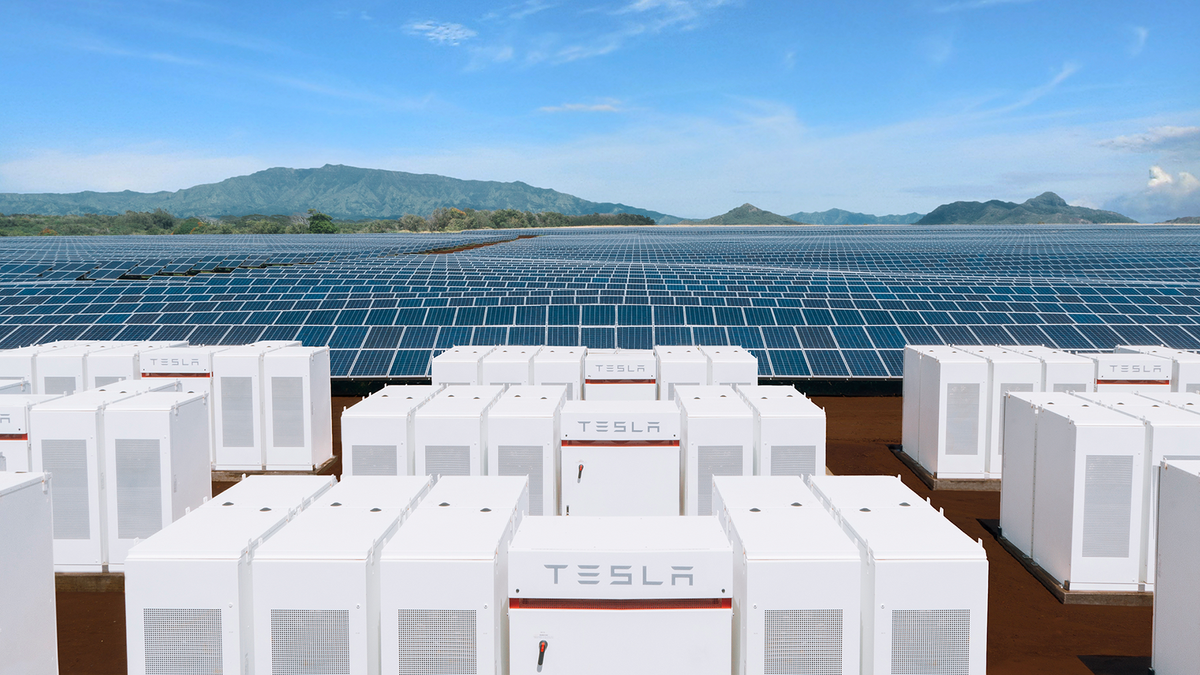
Backup energy storage devices traditionally could be arrays of lead acid batteries or, more recently, lithium ion batteries. More advanced batteries include the sodium sulfur type that may be put in a grid-scale installation in Baja California, as the January issue of Spectrum described. Or they could be flow batteries, like the vanadium type described in a recent Spectrum blog post. The SciAm panel gives advanced batteries ratings of 3.6, 2.0 (for cost effectiveness), and 3.8, indicating that a lot of (exciting) work remains to be done before such devices will be widely competitive.

To complete the list: pumped hydro is not a niche technology, with total capacity equivalent to 10 percent of total generating capacity in Japan, 5 percent in Europe, and 2 percent in the United States. Despite the buzz around compressed air, on the other hand, there is just one major installation in the United States and one in Germany, among others.


Iran Confirms Threat to Cut Off Oil Exports to Europe

The New York Times has just reported Iran's official confirmation that it is threatening to cut oil exports to six European countries. Earlier rumors of such a threat sent oil prices to a six-month high. Why is this important? Because, as the authors of a recent Nature article said (and as I myself have said in this space), "It seems clear that it wasn't just the 'credit crunch' that triggered the 2008 recession, but the rarely-talked-about 'oil price  crunch' as well." Near-term, if the Iranian crisis spins out of control, the effect could be plunge the advanced industrial countries back into recession; long-term, permanently high oil prices would severely limit growth prospects.

A positive element in the current picture is Iran's declared willingness to resume nuclear negotiations with six counterparties (the so-=called P5 + 1), but pessimists worry that once again it may be just playing for time--talking to ease international pressure, only to resume suspect activities as soon as the pressure is off. Meanwhile, tensions between Iran and Israel have been sharply rising, as a handful of top Iranian nuclear scientsts have been assassinated, its enrichment facility was infected by the immensely ingenious Stuxnet virus, and its major missile test facility mysteriously blew up, killing the country's top rocket scientist. Earlier this week there were reports of assassination attempts on Israelis in three foreign countries, one of the attacks closely resembling from a procedural point of view two assassinations of Iranian scientists and engineers in Tehran.

The most recent round of escalation began with the release by the International Atomic Energy Agency of a report in November, finding that Iran had a full-fledged nuclear warhead development program up until 2003 and very likely has continued with some elements of that program.

Oil Prices at Six-Month High, Long-term Outlook Highly Uncertain

Photo: Satellite image of Strait of Hormuz, through which one third of the world's traded oil passes each day [NASA].

World petroleum prices hit a six-month high on Tuesday this week, on reports that Iran may preemptively cut exports to six European nations, ahead of sanctions that are to take effect on July 1. Though the Iranian government denied that it intended to stop exports to France, Greece, Italy, the Netherlands, Portugal and Spain, some experts think that it planted the rumor of cuts to test the market's sensitivity. “It is all a conjecture; but for sure everyone is very nervous,” a senior oil trader told the Financial Times.

At US$ 119.99 per barrel, yesterday's top price was the highest since August last year, when the International Energy Agency released oil from its reserves in response to reduced exports from the turmoil in Libya. The IEA has said that it is prepared to release oil again if required to by the situation in Iran or in reaction to other supply disruptions. Near-term, the world oil market is sure to remain highly sensitive to developments arising from Iran's nuclear program and intentions. Existing UN sanctions are beginning to seriously hurt the Iranian economy, which could prompt Tehran to negotiate or retaliate. Iran and Israel appear to be assassinating each other's citizens, and the Israeli government has been openly pressuring Washington for military action. And though the Obama administration been pretty firm in resisting that pressure, the situation is explosive.

Longer-term, expert opinion differs radically about whether the world petroleum market will always be highly sensitive to supply disruptions, or whether the world is about to enter a period of oil surpluses. Writing in Nature magazine on January 26, two scientists argued that the market is at a tipping point, because production has failed to react to higher oil prices over the last five years. "Production at existing oil fields around the world is declining at rates of about 4.5 percent to 6.7 percent per year," they wrote, and increased production from Venezuelan and Canadian oil sands will not be big enough to keep pace with growing world demand.

Espousing exactly the opposite point of view, a senior policy expert at London's Kings College has said that oil prices are much more likely to fall than rise, starting this year. In the Financial Times on January 17, Nick Butler wrote that oil supplies are plentiful, with surplus capacity running at more than 4 million barrels per day (mbpd) and set to rise to 8 mbpd by 2016. "High prices over the past five years have encouraged new developments across the world and given new life to established fields." Meanwhile, though demand in China continues to rise sharply, it is down significantly in the United States, Europe, and Japan. The IEA, says Butler, has sliced its 2030 global demand estimate from 130 mbpd to barely 100 mbpd.

Being neither a geologist nor a global oil market analyst, I am agnostic, and being a mere journalist, I'm grateful I have no excess capital to risk one way or the other.

New Nuclear Reactors Get the Go-Ahead

Last week the U.S.  Nuclear Regulatory Commission issued a construction permit for two new reactors at the Southern Company's Vogtle complex, near Augusta, Georgia. Though the decision does not herald the once-trumpeted "nuclear renaissance," it is significant on several scores. It is the first new construction permit to have been issued by the NRC for a reactor since 1978. It inaugurates a streamlined licensing procedure, meant to expedite approvals for plants built to pre-certified standardardized designs. And the design in question, the Westinghouse AP1000, has passive safety features meant to make it more immune to the kinds of misadventures experienced in the Three Mile Island and Fukushima accidents.

A reservoir of water for emergency cooling is located above the core, so that water can be injected without active pumping, and natural convection can cool an overheated core.

Still, even though Southern Company and its partners already have spent hundreds of millions of dollars preparing the Vogtle site, this is no guarantee the plant will ever be finished, as critics have observed. The history of the nuclear age is littered with half-finished reactor projects.

Certainly, despite the generous Federal government loan guarantees that make it possible to find financing for the $14 billion project, Vogtle will not spark a new wave of reactor construction. Large nuclear plants still are too expensive and take too long to build for them to be attractive candidates to achieve energy independence or greenhouse gas reductions.

Vogtle will take on the order of a decade to complete. Meanwhile, as reported here last week, offshore wind farms in the UK of comparable total capacity--roughly a gigawatt--are being installed in less than a year.

And still looming over the whole industry, despite decades of debate and attention, is the still unresolved question of final spent fuel disposal. The plan for a permanent repository at Yucca Mountain in Nevada having come unglued, a blue ribbon panel recently recommended selection of a new candidate site on the basis of a more consensual political process. Energy Secretary Steven Chu has said that several  nuclear fuel repositories may be required.

The chairman of the NRC cast a lone dissenting vote against Vogtle on the ground that post-Fukushima seismic security concerns may not be adequately taken into account--another nagging issue.

Until all the fundamental issues concerning nuclear energy have been fully addressed, it is scarcely conceivable that a real renaissance will occur, and that the number of new reactors under construction will exceed the number being decommissioned. At most, the Vogtle decision helps keep the U.S. nuclear industry alive and hoping for better days.

U.K. Switches on World's Biggest Offshore Wind Farm

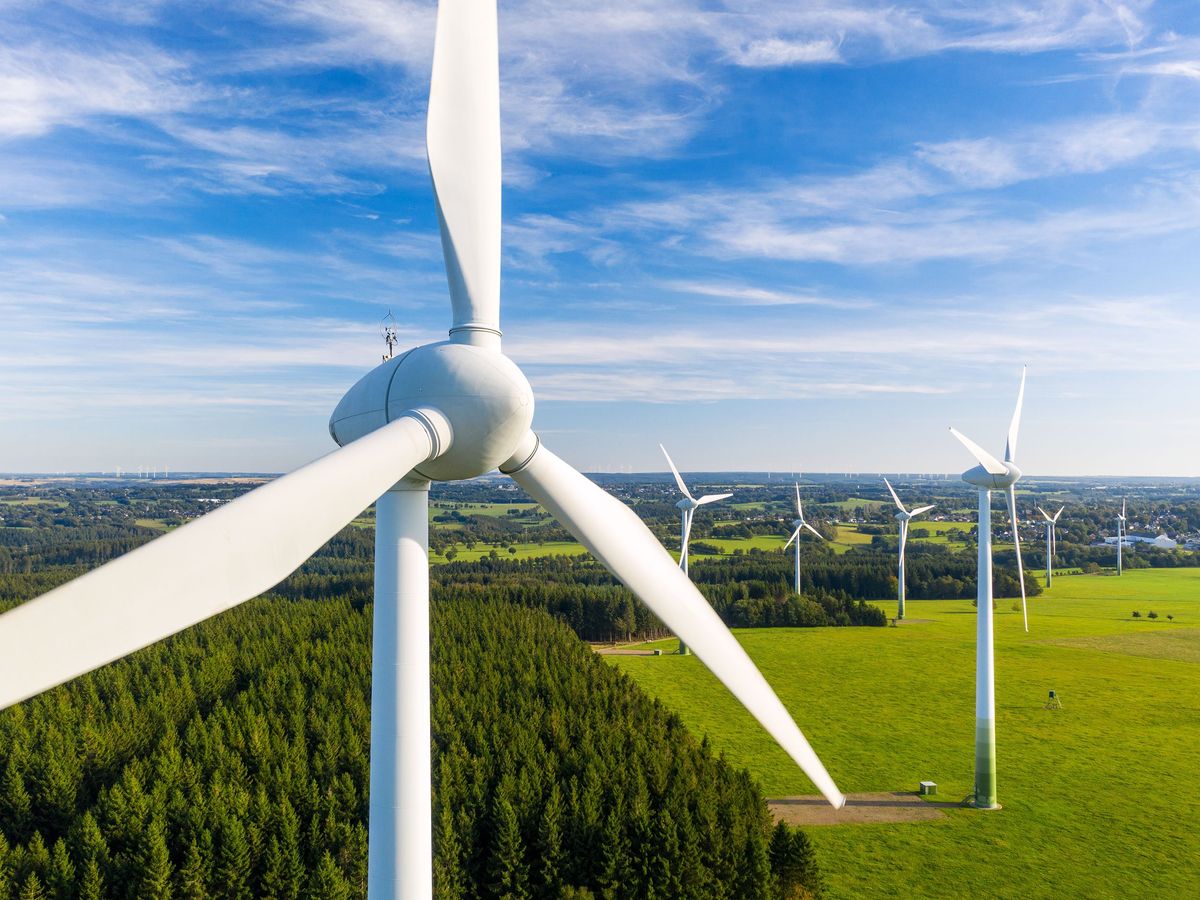
The United Kingdom added a big chunk of offshore wind power to its already substantial portfolio when the Walney wind farm in the Irish Sea went online this week. The farm has 102 turbines and a total capacity of 367 megawatts, giving the U.K. a total of more than 1.5 gigawatts of installed offshore power.

The Walney facility (pictured) cost $1.58 billion to build and is owned by a consortium of energy companies including DONG Energy, which owns around 30 percent of all offshore wind power in Europe. They claim that the second portion of the Walney project was built faster than any other offshore farm ever, with all cables and turbines installed in less than six months. Just for comparison, the "first" offshore wind farm in the U.S., Cape Wind, has been in the works for more than a decade, and has yet to plant that first turbine in the water in spite of federal approval and victories in a number of disputes and lawsuits.

Walney's claim as the biggest in the world -- it can power up to 320,000 homes -- will not likely last very long. The London Array off the coast of Kent is scheduled to come online by the end of 2012, and it will dwarf Walney. Just in the project's first phase, 175 turbines will sport a capacity of 630 MW, enough to power two-thirds of all the homes in Kent. Phase two will eventually bring it up to a total of 1 gigawatt capacity. DONG Energy owns 50 percent of this project as well.

The Obama Administration continues to take steps toward improving the possibilities for offshore wind in the U.S., but the quick progress much of Europe manages on this is a constant reminder of how slow U.S. has been. Recent positive environmental reviews and attempts to streamline permitting processes may lead to new offshore wind leases being granted by later this year, but until the first turbine starts spinning this will remain a blight on the U.S. push for renewable energy.

Image via DONG Energy

Most Commented Posts

Energywise

IEEE Spectrum’s energy, power, and green tech blog, featuring news and analysis about the future of energy, climate, and the smart grid.

Contributors

 
Editor
Bill Sweet
New York City, USA
Contributor
Dave Levitan
New York City, USA
 
Contributor
Peter Fairley
British Columbia, Canada
 

Newsletter Sign Up

Sign up for the EnergyWise newsletter and get biweekly news on the power & energy industry, green technology, and conservation delivered directly to your inbox.

Advertisement
Advertisement
Advertisement
Load More