IEEE Spectrum logo Continue to site ➔
ADVERTISEMENT

Energywise iconEnergywise

New Cell a Step Forward For See-Through Solar

A new type of polymer solar cell adds to the growing field of transparent solar technology, and offers reasonably impressive efficiency for such a device. Researchers at UCLA have created a cell that absorbs primarily infrared light, allowing much of the visible spectrum to pass through; the cell is 66 percent transparent, with an energy conversion efficiency of 4 percent.

The 4 percent rate seems low compared to the 15 to 20 percent for standard solar panels, but transparent cells are generally stuck in such low ranges. And if the new cells are cheap to produce and actually install on windows, 4 percent won't sound so terrible. The new work's lead researcher, UCLA materials science and engineering professor Yang Yang, said in a press release that "they can be produced at high volume at low cost."

According to the group's paper, polymer solar cells have reached a record efficiency of 10.6 percent, at least suggesting that the materials could compete with more standard solar technology. The new cell involves a photoactive layer sandwiched between transparent electrodes. The photoactive layer is made of a near-infrared light-sensitive photovoltaic polymer (if you must know: poly(2,6'-4,8-bis(5-ethylhexylthienyl)benzo[1,2-b;3,4-b]dithiophene-alt-5-dibutyloctyl-3,6-bis(5-bromothiophen-2-yl)pyrrolo[3,4-c]pyrrole-1,4-dione, or, in the interest of brevity, PBDTT-DPP). From the paper: "PBDTT-DPP is a low band gap polymer with strong photosensitivity in the range of 650-850 nm." The top transparent electrode was made from silver nanowire composite films, allowing for solution processing -- a cheap method for fabricating solar cells.

The researchers created 40 of the cells to ensure reproducibility, and found efficiencies ranging between 3.6 and 4 percent. Transparent solar has gotten a lot of attention in recent years, given the obvious appeal of having every sun-facing window producing power even while you stare through it. The economics of covering every skyscraper in energy-producing glass might not work for a while, but there is undeniable potential: in 2010, buildings accounted for 41 percent of all electricity consumption in the U.S.

Image via ACS Nano/UCLA

Report: Fukushima a "Speed Bump" on the Road to Massive Nuclear Power Expansion

The worst nuclear disaster since Chernobyl still is echoing loudly through the industry, less than a year and a half after the earthquake and tsunami did their work on the Fukushima plant. But a biennial report on uranium resources and nuclear development thinks that 20 years hence, those echoes will have faded. According to the UN's Nuclear Energy Agency and the International Atomic Energy Agency nuclear power will expand between 44 and 99 percent by 2035, with a total added capacity between 165 and 371 gigawatts.

To be sure, some countries, notably Germany, which has pledged to shut down all of its 17 reactors by 2022, are headed in the opposite direction. Even if they follow through, however, this might not make a dent in the industry overall growth. The report, known informally as the Red Book, predicts nuclear will expand between 125 and 185 percent in East Asia, with heavy construction in China, South Korea, India, and Russia. (Notably though, the low end of that prediction does not include the possibility that Japan will fully disavow the use of nuclear in Fukushima's wake.)

It seems striking that a disaster that captured the world's full attention might have so little lingering effect. Gary Dyck, the head of nuclear fuel cycle and materials at IAEA, told Reuters that "we see [Fukushima] as a speed bump. We still expect huge growth in China." That's a hell of a speed bump; after Chernobyl in 1986, global nuclear capacity growth did slowfairly dramatically, though this could be attributed to a number of factors.

One thing that won't hold up nuclear growth is fuel supply. The Red Book, which focuses on uranium mining and availability, indicates that total identified resources have grown 12.5 percent since 2008. Costs of production have also increased, but overall the "total identified resources are sufficient for over 100 years of supply based on current requirements." And it could be even longer if a few very rich people are right about the potential of some novel nuclear reactor designs. The future of nuclear power might be a bit rosier than it has seemed over the last 18 months.

Image: Nuclear plant at Qinshan, China, via Jeremy Whitlock/AECL

Algeria Joining North African March Toward Solar Power

The Desertec Foundation likes to point out that only six hours' worth of energy hitting the world's deserts is enough to power everything on the planet. For a full year. The group's main focus is an ambitious plan to line the northern Sahara Desert with solar installations, and send much of the power back across the Mediterranean to Europe. Recently, Algeria joined Morocco and Egypt as partners in the effort as it tries to transition toward a renewable future.

Algeria wants to install 650 megawatts of solar energy by 2015, and a stunning 22 000 MW by 2030. Toward the end of 2011, the Algerian national utility Sonelgaz signed a memorandum of understanding with Desertec to export much of that solar output, and now the country is looking to really start building it. The energy engineering subsidiary of Sonelgaz, CEEG, has started accepting tender bids to build various solar and wind projects; Forbes reports this is part of an ongoing effort to diversify an energy portfolio that has seen steadily declining production of oil and gas in recent years.

North Africa has some of the highest insolation (solar radiation energy) rates in the world. Sonelgaz estimates that in the part of the country covered by the Sahara—86 percent of the total area—there are about 3500 hours of sunshine each year. This yields an insolation rate of 2650 kilowatt-hours per square meter per year, similar to or even better than the best areas in the California deserts that dominate U.S. solar installation sites.

With fossil production in Algeria perhaps leveling off, adding alternate energy sources to the power system is going to be crucial. In the last few years, power consumption has skyrocketed, jumping nearly 50 percent from 21.6 billion kilowatt-hours in 2002 to 31 billion in 2009. But the total numbers there are dwarfed by the potential to bring power across the sea to Europe; Desertec estimates that the necessary installations will require 2500 square kilometers of desert surface area (two-hundredths of one percent of the area in the Middle East-North Africa region) in order to provide 17 percent of all Europe's electricity in 2050. Time to start building. 

Image: Maureen/Wikimedia Commons

United Arab Emirates Set to Build First Nuclear Power Plant

The United Arab Emirates will be the first among Gulf region Arab states to build a nuclear power plant after getting past an important permitting barrier this week. The UAE's regulatory body, the Federal Authority for Nuclear Regulation, will grant a license for the country's first two nuclear reactors to be built near the Saudi Arabian border.

Emirates Nuclear Energy Corp. will spend $20 billion to build the power plant, construction for which has been contracted out to Korea Electric Power Corp. A total of four 1400 megawatt reactors are planned for the site eventually, and ENEC wants the first to be running within five years. By 2020, they want to provide as much as 20 percent of the country's power.

The UAE is one of only a handful of countries actively moving toward nuclear energy in the wake of last year's Fukushima disaster in Japan. France (and its 58 reactors accounting for 75 percent of electricity generation) isn't backing off, and China may jump from fewer than 20 up to 100 reactors running by 2020. As for the United States, no particular position has been taken after Fukushima beyond some additional safety checks, but reactor plans in Georgia and elsewhere will theoretically move forward sometime soon.

Beyond those countries, though, the general trend has been a full sprint in the opposite direction. The most high profile nuclear defector is Germany, which has been joined in planning to close reactors or simply abandoning plans to build some by Belgium, Switzerland, Mexico, and the Netherlands. Japan itself shut down all of its 55 reactors for a few months before restarting recently, though long-term plans aren't likely to feature nuclear power very prominently.

While France's position makes sense, why would a small country like the UAE dive into an extremely expensive and now quite fraught industry, especially given the region's oil wealth? The AP says that the country imports natural gas to generate power and has actually struggled to meet demand as wealth and prosperity there have increased. Energy Information Administration data indicates a net import of 327 billion cubic feet of natural gas in 2010, in spite of production in the UAE of 1.8 trillion cubic feet that same year. Electricity capacity in the country also suggests an impressively growing need: installed capacity has risen from just over 9 gigawatts in 2002 all the way to more than 18 gigawatts only six years later, while consumption rose from 40 to 70 billion kilowatt-hours over the same period. In that context, four nuclear reactors -- or even the first two approved in this week's regulatory action -- will make a big dent in growing demand.

Image: Dubai at night, via Federico Ravassard

Green War Games

The "world's largest maritime exercise" has a bit of an environmentally friendly sheen to it this year. The U.S. Navy unveiled its "Great Green Fleet" during the Rim of the Pacific (RIMPAC) war games this week, featuring fighter jets and several ships running on mixes of conventional fuel with various types of biofuels. The military has long been out in front of much of the U.S. government when it comes to energy initiatives, realizing early on that reducing the use of oil is a logical step to take for many reasons.

Secretary of the Navy Ray Mabus was on board the USS Nimitz on Wednesday, an aircraft carrier that took on 180 000 gallons of 50-50 fuel. The mix includes jet fuel along with algal oils and recycled cooking grease. Not, of course, to run the Nimitz itself -- the carrier is nuclear powered -- but for use in F/A-18E/F Super Hornets and other aircraft. Several other vessels, including the USS Chafee, the USS Chung Hoon, the USS Princeton, and the USNS Henry J Kaiser will also participate in the green fleet demonstration. The surface vessels will burn 350 000 gallons of a mixture of renewable diesel fuel and standard marine diesel.

Mabus has set a goal of getting fully 50 percent of the Navy's energy from "alternative sources" by 2020. Even more aggressively, by 2015 he wants the commercial vehicle fleet to reduce petroleum use by 50 percent. Such numbers would sound far-fetched in civilian life, but the military might be well suited to actually reaching these goals. There are still controversies over the actual environmental impacts of various types of biofuels, of course, and critics say the Navy's specific ideas are economically impossible, but it's a step in the right direction.

The demonstration going on right now in the waters near Hawaii is just a showcase for the viability of using alternative fuels in large-scale naval operations. RIMPAC, which dates back to 1971, includes 22 countries engaging in more than a month of war games exercises. More than 40 ships and submarines are involved, along with hundreds of aircraft and 25 000 military personnel. According to the Navy, the point of RIMPAC is to help "participants foster and sustain the cooperative relationships that are critical to ensuring the safety of sea lanes and security on the world's oceans," but at least for a few days and on a few ships it's also about transitioning to cleaner energy sources as well.

Image: Navy Secretary Ray Mabus observes transfer of biofuels to the USS Princeton during RIMPAC 20. Via US Navy.

ARPA-E Looks to Natural Gas for New Vehicle Technologies

The Advanced Research Projects Agency – Energy (ARPA-E) announced its latest round of funding recently, with $30 million going toward 13 projects looking into natural gas vehicle technologies. Some buses and trucks already run on compressed or liquified natural gas, but this represents a very small fraction of the overall vehicle fleet.

ARPA-E's new program, called MOVE (Methane Opportunities for Vehicular Energy), will focus on building gas tanks that are lightweight and cheap enough to be commercially viable, along with development of "natural gas compressors that can efficiently fuel a natural gas vehicle at home."

According to ARPA-E, "Today’s natural gas vehicle technologies require tanks that can withstand high pressures, are often cumbersome, and are either too large or too expensive to be suitable for smaller passenger vehicles." Among the newly funded projects looking to solve these issues is the development of a conformable gas tank with a foam core, which REL, Inc. says will allow bigger storage capacities than current tanks at one-third of the cost. The company will receive $3 million for the project.

In the same vein, Texas A&M University will receive another $3 million to develop highly adsorbent materials to be used in low-pressure natural gas tanks. "These low-cost materials enable low-pressure natural gas to efficiently adhere to their engineered porous structures, storing gas at very high energy densities," according to ARPA-E. Other projects will try to develop methods for cheap and safe refueling of natural gas vehicles at home, including a single-piston refueling system out of the University of Texas at Austin.

The Obama administration has expressed support for natural gas vehicles in the past, at least in part because of the huge reserves of shale gas being drilled out at record rates in Pennsylvania, Ohio, and elsewhere around the country. The DOE points out in a press release that shale gas production has grown from five percent to 30 percent of the country's natural gas production in just five years. Though natural gas is clearly considered a priority by the administration, Obama has also set a goal of having one million electric vehicles on the roads by 2015.

Image: Compressed natural gas pump, via Mario Roberto Duran Ortiz

Jim Rogers, Duke and the Future of Nuclear

In the wake of the Duke-Progress merger, which has shaken the image and reputation of CEO Jim Rogers, attention is shifting to how prospects for a nuclear renaissance in the southeastern United States may be affected.

The merger creating the nation's largest electricity utility combined companies that are long on baseload generation capacity, consisting in the case of Progress mainly of coal and nuclear and in the case of Duke, coal and hydro-power. Because that capacity is largely built and paid for, the companies, centered in the Carolinas, have been delivering some of the nation's cheapest electricity, in the vicinity of 4-6 cents per kilowatthour. (This partly accounts for why Facebook, Apple, Google, Wipro, Disney, and AT&T, among others, have all been building data centers within one sliver of North Carolina.) The market heft of the consolidated Duke, headquartered in Charlotte, N.C., and the inexpensiveness of the electricity it provides, gives it the leeway to determine the future of several contested nuclear power projects.

The manner in which the merger was executed, and its background, may however somewhat limit CEO Jim Rogers's freedom of action. Up until the day the merger was finalized, the expectation and understanding had been that Progress's CEO Bill Johnson, not Duke's Rogers, was to manage the new mega-company. But then, in a boardroom coup that left directors, investors and regulators scratching their heads, Progress's leader was deposed and Rogers installed in his place. Rogers was immediately summoned to account for what happened to North Carolina regulators.

One issue on which Rogers and Johnson were known to differ was how to proceed with Unit 3 of the Crystal River Nuclear Power plant, a Progress facility located on the Florida's Gulf coast well north of Tampa (photo, above). That plant has been out of service for several years, following damage to its concrete outer containment vessel incurred when new steam generators were being installed. Johnson was determined to proceed with expensive repairs and get the plant back into operation, while Rogers took a more skeptical view.

The combined company operates six nuclear power plants with twelve reactors in the Carolinas and Florida, and it has plans to build three more plants and six reactors. (Progress had plans on the books to build a plant in Florida and another one in North Carolina, and Duke planned one in South Carolina.) Not long before the merger of Progress and Duke, Johnson said, "Our size and scale, once combined, position us well for nuclear generation." Immediately following the merger and Johnson's ouster as CEO, Rogers told regulators that concern about the cost of fixing Crystal River was a consideration. ""We had expressed clearly to them that we really needed, as a new board, to consider whether to retire or replace," Rogers said.

On the face of it, the ouster of Johnson and the installation of Rogers would seem to signal that the company's board has opted to tilt against nuclear. But before you put any money on that bet, remember that Rogers styles himself as a kind of energy statesman, and that statesmen not infrequently do the exact opposite of what they say or imply they will do when campaigning for office. For those willing to absorb a conference fee, an opportunity to assess the situation in the Carolinas will come up in October, when the Fourth Annual Nuclear Construction Summit takes place in Charlotte. By then, the situation at Duke should have settled down some, and it may be clearer where Rogers is headed.


Lessons From Last Week's Power Outages

A friend in Northern Virginia reports that there were two particularly bad things about the outage that left him and some 750,000 other people without power last week. “The temperature hovered around 100 degrees with high humidity all six days; and for the first couple of days, all of the nearby stores, bars/restaurants, gas stations, etc. were powerless and therefore closed.“

What and how did he eat? For the first couple of days, he “carefully grazed off of the food in the fridge, hoping that the undisturbed freezer would retain its low temperature until the power came back on.  But by the end of the weekend, we declared the food a total loss.” His wife having had the good fortune to be out of town, he sought refuge in his D.C. office much of the time.

On a larger scale, one of Amazon’s major server facilities went down, leaving cloud customers like Netflix, Instagram, Perest, and Heroku without access to their databases.

How can we do better in the future?

Smart grid technologies surely will help. For example, in a big pilot project in the area about Harrisburg, Pa., improved distribution management tools, automated control devices, and high-speed communications will enable managers to identify in a matter of seconds what parts of the grid are in trouble and crews need to be sent.

“At a high level,” writes Steve Gelatko, distribution asset manager for PPL Electric Utilities in Allentown, “we will be tracking the number of interrupted customer minutes we will be able to avoid each year. As we roll out new phases and capabilities of the distribution management system, we will be able to reduce the number of minutes interrupted. When the system is fully operational, we expect the number to be 1.5 million smaller per year in the Harrisburg area.”

Gelatko’s article appears in the July issue of IEEE’s monthly smart grid e-newsletter. In another article in the same issue, authors connected with Georgia Tech and Southwire describe how software they have developed could provide much better real-time readings of temperature and sag on transmission lines. Traditionally temperatures have been estimated by means of ampacity tables that are calculated from expected average weather conditions and values that have been considered valid for a whole season. But in reality, weather conditions vary over much shorter time intervals. The new software will provide more accurate and timely estimates of a cable’s position and thermal state.

However timely and accurate the information coming into control centers is, in the final analysis, management will only be able to address problems to the extent well-trained technicians are available. That is an acute problem today and will remain so for the foreseeable future. During the Mid-Atlantic outages last week, the local utilities recruited crews from as far away as Canada to help out. New York City’s Con Ed technicians were unavailable because of a lockout that had them marching in picket lines rather than working in cherry pickers.

U.S. Weather Extremes and Climate Change

The PBS Newshour has posted a interview that Judy Woodruff conducted with Kevin Trenberth, a top modeler at the National Center for Atmospheric Research (NCAR) in Boulder, Colo., on the extreme weather conditions we've been seeing both the U.S. Southwest and, this last weekend, in the Middle West and Mid-Atlantic states.

Referring to the heat and dryness recorded in the Southwest in recent months, Trenberth said “there is no parallel to this." Particularly alarming, he said, was the complete disappearance of mountain snow seen in early June, something ordinarily witnessed only in late August, if then. Normally snow caps lasting into the a summer would reflect light, while water from gradually melting snow would cool the atmosphere, acting as a "great air conditioner." Compounding the absence of snow, Trenberth added, was the survival into the spring and summer of bugs that eat away at trees, making them drier and more vulnerable. All in all, the stage was set for raging wildfires, which came earlier and have been much more concentrated than usual.

Meanwhile, Trenberth continued, evaporation of warmer waters in the Gulf have powered storms like the massive derecho that swept from Illinois to Maryland last Friday night. Don't forget, said Trenberth that the oceans have a strong "memory" of global warming--they store heat and release it in the form of vapor. So altogether, "You look out the window and see climate change in action. This is the way it gets manifested… We're going outside the realm of conditions previously experienced."

This is not the first time we have taken note here of Trenberth's insights and views. Eighteen months ago, Spectrum ran interviews with Trenberth on IPCC reform and a followup addressing the issue of why discussion of climate change gives rise to such vitriol.

In the Newshour piece, Woodruff asked Trenberth about some two thousand U.S. weather records said to have been equalled or broken in the last week. He observed that weather records are constantly being broken. But, he noted, normally, record highs more or less match record lows. A decade ago we began to see highs greatly exceed lows, at the time by a factor of two to one, he said. This year the ratio has been ten to one.


Japan Restarts Nuclear Reactor as Report Lays Blame for Fukushima

After a two-month hiatus from nuclear power, Japan restarted one of its 50 functional reactors on Thursday just as a report on the Fukushima disaster strongly criticized nearly everyone involved.

The reactor restart, at the Ohi plant in Fukui prefecture in the western part of Japan, comes after widespread protests over nuclear plants' safety. But Japanese officials say they need at least some nuclear power in order to stave off blackouts over the summer, and insist that the Ohi reactor has passed substantial safety tests before the restart.

The new report, from an independent commission of experts, though, will do little to assuage fears surrounding the continued use of nuclear energy. In panel chairman Kiyoshi Kurokawa's preface to the report, he calls the Fukushima crisis a "profoundly manmade disaster -- that could and should have been foreseen and prevented." Kurokawa's message is a striking look inward:

"What must be admitted -- very painfully -- is that this was a disaster "Made in Japan." Its fundamental causes are to be found in the ingrained conventions of Japanese culture: our reflexive obedience; our reluctance to question authority; our devotion to 'sticking with the program'; our groupism; and our insularity."

In other words, even as the report lays blame at the feet of Fukushima operator TEPCO, regulators, and higher levels of government, there is also an underlying notion that it was a cultural failure rather than a series of individual failures. "Had other Japanese been in the shoes of those who bear responsibility for this accident, the result may well have been the same," Kurokawa writes.

The commission of 10 included two medical doctors, two lawyers, a seismologist, a chemist, several other university professors, and a former U.N. ambassador. It interviewed 1167 people and conducted more than 900 hours of hearings to determine what caused the disaster and what can be done to prevent another. One important conclusion is that "TEPCO was too quick to cite the tsunami as the cause of the nuclear accident.... We believe there is a possibility that the earthquake damaged equipment necessary for ensuring safety." This implies that Japanese reactors not at risk from a tsunami could still face some sort of similar disaster. The Ohi reactor that just came online, for example, may sit atop an active fault line.

The report's recommendations, though, stick largely to government issues and regulatory oversight rather than offering technical safety advice. Among them are reforms in the methods for crisis management, substantial changes to TEPCO's and other nuclear operators' systems, and new nuclear energy legislation that clearly defines operator and government roles.

This critical internal examination comes as countries around the world continue to back off the use of nuclear power. But the Ohi restart highlights that nuclear power is too ingrained in the energy picture around the world to disappear any time soon.

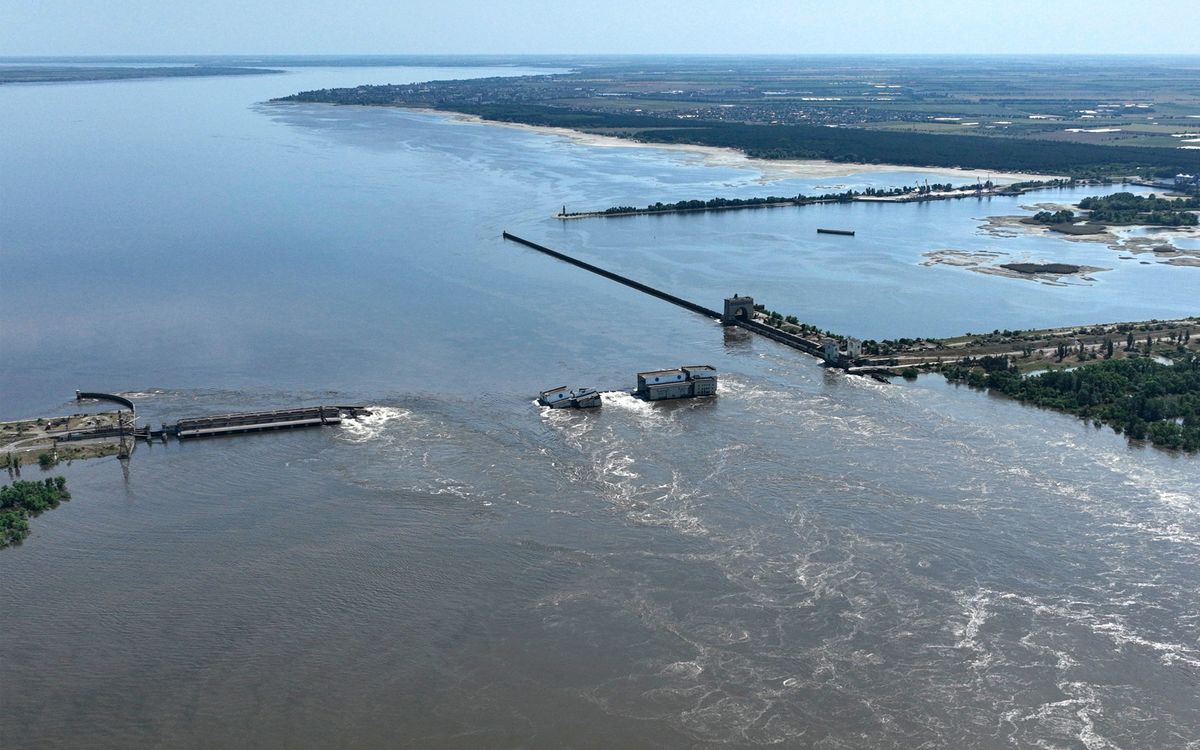
Image: Digital Globe/Wikimedia Commons

Most Commented Posts

Energywise

IEEE Spectrum’s energy, power, and green tech blog, featuring news and analysis about the future of energy, climate, and the smart grid.

Contributors

 
Editor
Bill Sweet
New York City, USA
Contributor
Dave Levitan
New York City, USA
 
Contributor
Peter Fairley
British Columbia, Canada
 

Newsletter Sign Up

Sign up for the EnergyWise newsletter and get biweekly news on the power & energy industry, green technology, and conservation delivered directly to your inbox.

Advertisement
Advertisement
Load More