IEEE Spectrum logo Continue to site ➔
ADVERTISEMENT

Energywise iconEnergywise

Thriving U.S. Wind Industry Faces More Uncertain Future

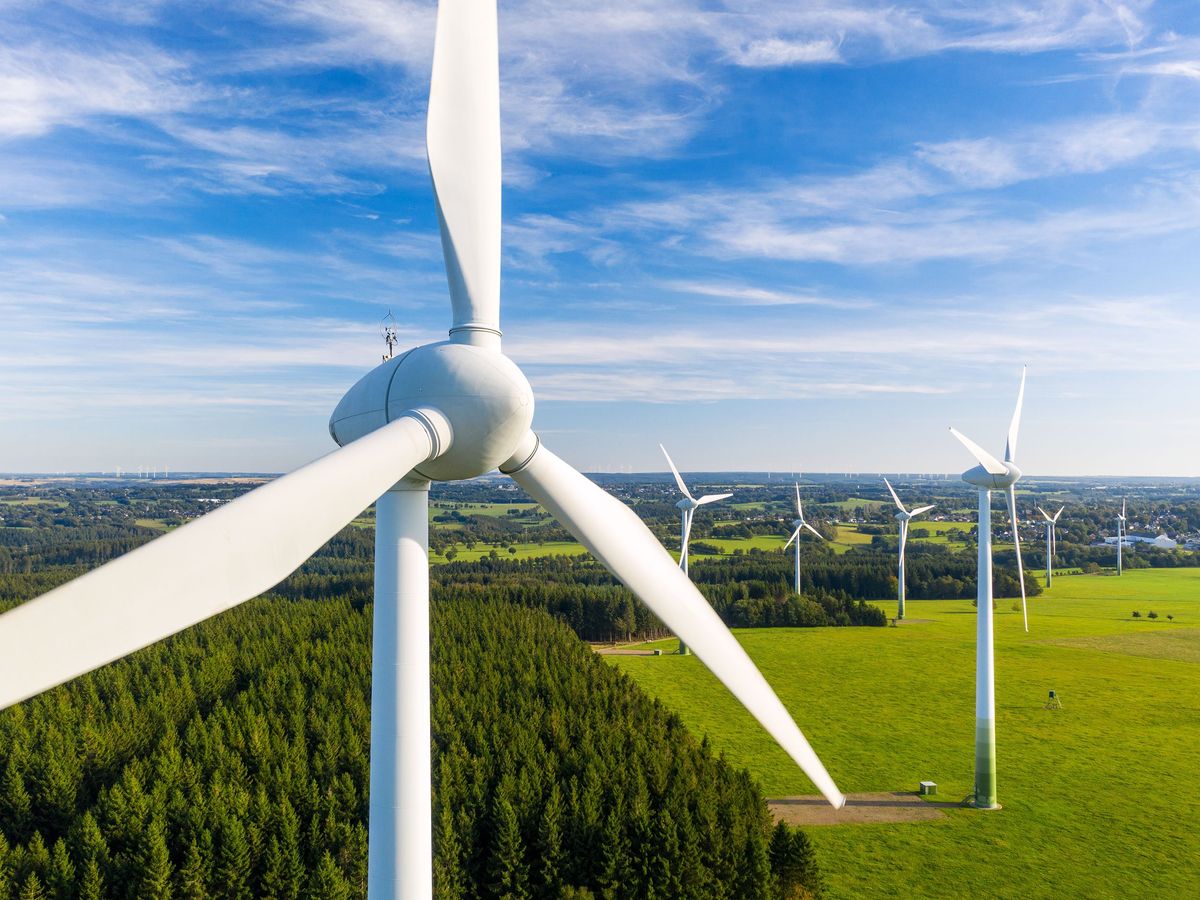
The latest comprehensive assessment of U.S. wind generation, by researchers at the Lawrence Berkeley National Laboratory, finds the immediate situation to be very positive, but worries that the industry may be riding a wave that is cresting. At 6.8 GW, additions to U.S. wind generating capacity in 2011 were 31 percent higher than the year before and represented close to a third of new U.S. generating capacity. That made wind a close second to the booming U.S. natural gas generating industry. What is more, two thirds of wind turbine components were supplied by manufacturers in the United States, that fraction having grown steadily in recent years.

The downside is that a variety of incentives--a production tax credit and investment credits contained in the 2009 stimulus bill--are set to expire at the end of this year, even as U.S. manufacturers face stiffer foreign competition.

With turbines getting larger all the time--the 2011 average, at 1.97 MW, was 174 percent higher than in 1998-99--capacity factors (the ratio of actual output to theoretical maximum output) have been trending upwards. At the same time component costs have been trending downwards, and yet those trends have been slow to result in lower project installation costs or lower wholesale prices for wind-generated electricity, the report finds. The average 2011 wind electricity cost of US $74/MWh (or 7.4 cents per kilowatthour) is not radically different from what costs were a decade ago.

Though the immediate outlook for U.S. wind is highly uncertain, about 50 GW is now installed (47 GW at the end of last year), with 219 GW in possible new projects awaiting consideration in grid interconnection queues. (Those are projects that wind developers have proposed to grid operating authorities.) If all of those projects or an equivalent amount of similar projects were approved and built over the next two decades, which does not seem implausible, total wind capacity at around 250 GW would be about two-and-a half times total nuclear capacity, and wind would be in a position to generate about a fifth of the nation's electricity--roughly the same as nuclear's current share--a scenario the U.S. Department of Energy declared to be credible several years ago.

U.S. Drought Calls Corn Ethanol Mandate Into Question

It's not often the Wall Street Journal sings the praises of the United Nations and global bureaucracies, but that's just what it did last week, in an editorial citing calls by organizations like the U.N. Food and Agriculture Organization (FAO) for an end to corn ethanol subsidies. "Remove provisions of current national policies that subsidize (or mandate) biofuels production or consumption,." advised the FAO and ten other international organizations, after the G20 advanced industrial countries asked them to take a position in 2010.

What prompted the Journal's article is of course the drought that has been ravaging the U.S. corn crop and threatening soybean and wheat harvests as well. U.S. livestock producers are lobbying the Environmental Protection Agency to temporarily suspend the Renewable Fuels Standard, as consumers fret over just how much rising corn ethanol prices are contributing to the summer run-up in gasoline prices.

U.S. Agriculture Secretary Tom Vilsack has said that the impact of the corn crisis on U.S. grocery prices will be surprisingly modest, as money going to farmers represents but a small fraction of the prices we see on grocery shelves. But the global effects of scarce food may be more severe. The G20 countries have called for a meeting this fall to assess what can be done to mitigate the drought's ill effects.

"G20 officials emphasized the planned meeting was not a sign of panic," reports the Financial Times of London. "On the contrary, they said, it would be an attempt to avoid the kind of policies, including export restrictions and hoarding that in 2007-08 transformed a shortage of agricultural commodities into the first full-blown food crisis in 30 years with riots in two dozen countries."

The U.S. Agriculture Department, in its most recent assessment, found that corn yields are at their lowest since 1995, and that the world as a whole faces shortages of maize, wheat, and soybeans, partly because Russia and Kazakhstan are also suffering drought conditions that are affecting their respective wheat crops.

Showing something of a tin ear, the U.S. corn ethanol lobby has taken the position that the impact of the drought on gasoline prices will be small, and that there is no need for the EPA to waive the renewable fuel standard. With 40 percent of U.S. corn crops already going to ethanol production, the biofuel industry is now calling for the blend in gasoline to be raised from 10 percent to 15 percent.

Yet best estimates are that higher corn prices accounted for roughly a quarter of July's 16-cents-per-gallon increase in U.S. gasoline prices. With experts predicting that gas prices could go up another 20 cents per gallon before the end of summer, the escalating cost of automotive fuel threatens to become a national campaign issue, with uncertain consequences.

Least affected, ironically, is the American farmer—or, if you prefer, U.S. agribusiness. This is partly because those with corn to sell are benefiting handsomely from the sharp increases in prices; those without are generally insured against crop failure, with the U.S. government as insurer of last resort. Though one may wonder what the impact of the current crisis will be on the long-term cost and availability of insurance, those living in the U.S. plains states do not seem to be worrying. On a recent drive through the country's drought-struck plains states, one heard and saw just one refrain on the local radio stations and in the town newspapers: "We've coped before and we'll cope again."

Photo: Withered corn in Elk Point, a small town in southeastern South Dakota near the Iowa and Nebraska borders.


A Bold Attempt to Make Cement Production a Carbon Sink

With last month having turned out to be the hottest July in U.S. history, planet Earth having experienced four highly unusual heat waves in the last decade, and Arctic sea ice at a record low, evidence is mounting that human-induced global warming must be loading the dice. Yet the United States remains without an explicit climate policy, and the world remains deadlocked over how to approach greenhouse gas reduction. So it would be nice if somebody appeared with a magic sword capable of cutting through that Gordian knot.

News writer Robert Service, in the August 10 issue of Science magazine, describes one significant attempt to forge such a sword. Since 2002, an engineering innovator named Brent Constantz, currenlty a consulting associate professor at Stanford University, has been developing a process that would make cement manufacturing a net consumer rather than a net emitter of greenhouse gases. The potential implications are huge. After energy, cement production is the world's second largest source of carbon emissions. Roughly speaking, according to Service, the world makes about 15 billion tons of cement and concrete each year and 32 billion tons of aggregate (mixtures of cement, concrete, sand and gravel). Production of each ton of concrete releases one ton of carbon dioxide.

In 2007, with support from Khosla Ventures, Constantz (in photo above) got the opportunity to test his ideas with the creation of a company, Calera, and the construction of a cement factory near a California seaside power plant. There, in a 33.5 meter tower, a CO2-rich flue gas mixed with seawater droplets to form the calcium and magnesium carbonates that would be the stuff of cement. The net result, said Calera and Constantz, was net consumption of a half ton of carbon dioxide per ton of concrete produced, rather than a ton emitted.

It was a bold and exciting claim. At last, it seemed, there was a possible solution to carbon buildup in the atmosphere that might be commensurate with the scale of the global problem. But there turned out to be a hitch. Ken Caldeira, an eminent climate scientist affiliated with the Carnegie Institution for Science at Stanford University, divined that binding of the carbonates with sea water could scarcely take place unless the seawater was doped with akalines, which would not be cost-free by any means. "Caldeira was right," Service reports. "It turned out Calera engineers were adding sodium hydroxide or other strong bases to their seawater to make it more alkaline, driving its pH as high as 12 or 13."

Confirming that account in an e-mail message, Caldeira says that Calera "had shown figures with seawater and CO2 as inputs and cement and water as outputs, which would be the chemical equivalent of a perpetual motion machine. . . I don't know whether at first they thought they had invented a perpetual motion machine and only later realized that they would need to find bases (i.e., sources of alkalinity) or whether they knew this all along but just weren't forthcoming."

However that might be, Calera soon gave up on the novel cement-making process and has shifted its focus to other endeavors, resulting in the departure of Constantz, who wished to persevere with his ideas for making environmentally friendly cement out of seawater. He is now developing a process, inspired by corals, that greatly speeds the binding of seawater carbonates with CO2. The process still depends, however, on addition of chemical bases.

The moral of the story of this attempt to find a magic bullet carbon sequestration technique, like others before it, would seem to be that it is never as easy as it looks at first.

The Service article is part of a larger Science magazine package devoted to novel waste handling technologies. Another article, just as thought provoking, describes attempts to develop microbial fuel cells and other microbial electrotechnical technologies (METs) that could draw energy from waste waters in treatment facilities. Again, the potentlal is huge. So far, however, experiments are taking place only at a scale of about a liter, and the authors caution that METs may never pan out.


Correction and note (Aug. 16, 2012):

Aggregate, consisting of sand and gravel, is a constituent of concrete.

Caldeira, coincidentally, is the author of an article in the September issue of Scientific American about the long-term and very-long-term effects of global warming. His arresting observations are well worth consulting.


U.S. Drought Calls Corn Ethanol Mandate Into Question

It's not often the Wall Street Journal sings the praises of the United Nations and global bureaucracies, but that's just what it did last week, in an editorial citing calls by organizations like the U.N. Food and Agriculture Organization (FAO) for an end to corn ethanol subsidies. "Remove provisions of current national policies that subsidize (or mandate) biofuels production or consumption,." advised the FAO and ten other international organizations, after the G20 advanced industrial countries asked them to take a position in 2010.

What prompted the Journal's article is of course the drought that has been ravaging the U.S. corn crop and threatening soybean and wheat harvests as well. U.S. livestock producers are lobbying the Environmental Protection Agency to temporarily suspend the Renewable Fuels Standard, as consumers fret over just how much rising corn ethanol prices are contributing to the summer run-up in gasoline prices.

U.S. Agriculture Secretary Tom Vilsack has said that the impact of the corn crisis on U.S. grocery prices will be surprisingly modest, as money going to farmers represents but a small fraction of the prices we see on grocery shelves. But the global effects of scarce food may be more severe. The G20 countries have called for a meeting this fall to assess what can be done to mitigate the drought's ill effects.

"G20 officials emphasized the planned meeting was not a sign of panic," reports the Financial Times of London. "On the contrary, they said, it would be an attempt to avoid the kind of policies, including export restrictions and hoarding that in 2007-08 transformed a shortage of agricultural commodities into the first full-blown food crisis in 30 years with riots in two dozen countries."

The U.S. Agriculture Department, in its most recent assessment, found that corn yields are at their lowest since 1995, and that the world as a whole faces shortages of maize, wheat, and soybeans, partly because Russia and Kazakhstan are also suffering drought conditions that are affecting their respective wheat crops.

Showing something of a tin ear, the U.S. corn ethanol lobby has taken the position that the impact of the drought on gasoline prices will be small, and that there is no need for the EPA to waive the renewable fuel standard. With 40 percent of U.S. corn crops already going to ethanol production, the biofuel industry is now calling for the blend in gasoline to be raised from 10 percent to 15 percent.

Yet best estimates are that higher corn prices accounted for roughly a quarter of July's 16-cents-per-gallon increase in U.S. gasoline prices. With experts predicting that gas prices could go up another 20 cents per gallon before the end of summer, the escalating cost of automotive fuel threatens to become a national campaign issue, with uncertain consequences.

Least affected, ironically, is the American farmer—or, if you prefer, U.S. agribusiness. This is partly because those with corn to sell are benefiting handsomely from the sharp increases in prices; those without are generally insured against crop failure, with the U.S. government as insurer of last resort. Though one may wonder what the impact of the current crisis will be on the long-term cost and availability of insurance, those living in the U.S. plains states do not seem to be worrying. On a recent drive through the country's drought-struck plains states, one heard and saw just one refrain on the local radio stations and in the town newspapers: "We've coped before and we'll cope again."

Photo: Withered corn in Elk Point, a small town in southeastern South Dakota near the Iowa and Nebraska borders.


A Bold Attempt to Make Cement Production a Carbon Sink

With last month having turned out to be the hottest July in U.S. history, planet Earth having experienced four highly unusual heat waves in the last decade, and Arctic sea ice at a record low, evidence is mounting that human-induced global warming must be loading the dice. Yet the United States remains without an explicit climate policy, and the world remains deadlocked over how to approach greenhouse gas reduction. So it would be nice if somebody appeared with a magic sword capable of cutting through that Gordian knot.

News writer Robert Service, in the August 10 issue of Science magazine, describes one significant attempt to forge such a sword. Since 2002, an engineering innovator named Brent Constantz, currenlty a consulting associate professor at Stanford University, has been developing a process that would make cement manufacturing a net consumer rather than a net emitter of greenhouse gases. The potential implications are huge. After energy, cement production is the world's second largest source of carbon emissions. Roughly speaking, according to Service, the world makes about 15 billion tons of cement and concrete each year and 32 billion tons of aggregate (mixtures of cement, concrete, sand and gravel). Production of each ton of concrete releases one ton of carbon dioxide.

In 2007, with support from Khosla Ventures, Constantz (in photo above) got the opportunity to test his ideas with the creation of a company, Calera, and the construction of a cement factory near a California seaside power plant. There, in a 33.5 meter tower, a CO2-rich flue gas mixed with seawater droplets to form the calcium and magnesium carbonates that would be the stuff of cement. The net result, said Calera and Constantz, was net consumption of a half ton of carbon dioxide per ton of concrete produced, rather than a ton emitted.

It was a bold and exciting claim. At last, it seemed, there was a possible solution to carbon buildup in the atmosphere that might be commensurate with the scale of the global problem. But there turned out to be a hitch. Ken Caldeira, an eminent climate scientist affiliated with the Carnegie Institution for Science at Stanford University, divined that binding of the carbonates with sea water could scarcely take place unless the seawater was doped with akalines, which would not be cost-free by any means. "Caldeira was right," Service reports. "It turned out Calera engineers were adding sodium hydroxide or other strong bases to their seawater to make it more alkaline, driving its pH as high as 12 or 13."

Confirming that account in an e-mail message, Caldeira says that Calera "had shown figures with seawater and CO2 as inputs and cement and water as outputs, which would be the chemical equivalent of a perpetual motion machine. . . I don't know whether at first they thought they had invented a perpetual motion machine and only later realized that they would need to find bases (i.e., sources of alkalinity) or whether they knew this all along but just weren't forthcoming."

However that might be, Calera soon gave up on the novel cement-making process and has shifted its focus to other endeavors, resulting in the departure of Constantz, who wished to persevere with his ideas for making environmentally friendly cement out of seawater. He is now developing a process, inspired by corals, that greatly speeds the binding of seawater carbonates with CO2. The process still depends, however, on addition of chemical bases.

The moral of the story of this attempt to find a magic bullet carbon sequestration technique, like others before it, would seem to be that it is never as easy as it looks at first.

The Service article is part of a larger Science magazine package devoted to novel waste handling technologies. Another article, just as thought provoking, describes attempts to develop microbial fuel cells and other microbial electrotechnical technologies (METs) that could draw energy from waste waters in treatment facilities. Again, the potentlal is huge. So far, however, experiments are taking place only at a scale of about a liter, and the authors caution that METs may never pan out.


Correction and note (Aug. 16, 2012):

Aggregate, consisting of sand and gravel, is a constituent of concrete.

Caldeira, coincidentally, is the author of an article in the September issue of Scientific American about the long-term and very-long-term effects of global warming. His arresting observations are well worth consulting.


Are Vertical Axis Turbines the Future of Offshore Wind Power?

Vertical axis wind turbines, or VAWTs, have been around for many years. Generally they are considered less effective than the standard horizontal axis turbines that increasingly dot the landscape, but they do have their advantages. And as the U.S. pushes ever harder to join the offshore wind power party, there is renewed interest in VAWT designs for offshore use.

Sandia National Laboratories in Albuquerque, New Mexico, part of the Department of Energy (DOE), is working under a DOE-funded program to re-evaluate VAWT designs for offshore use. They say that the vertical turbines have several advantages over standard windmills. These include a lower center of gravity, reduced complexity of design, and better scalability to very large sizes. 

That last characteristic is crucial, and unique to offshore wind power. Companies have been rapidly scaling up offshore turbine sizes, reaching mammoth 7-megawatt sizes in recent years. According to a Sandia press release:

Large offshore VAWT blades in excess of 300 meters will cost more to produce than blades for onshore wind turbines. But as the machines and their foundations get bigger—closer to the 10–20 megawatt (MW) scale—turbines and rotors become a much smaller percentage of the overall system cost for offshore turbines, so other benefits of the VAWT architecture could more than offset the increased rotor cost.

Still, making enormous VAWT blades is difficult. The blades are significantly curved, which becomes more and more of a manufacturing challenge as they grow in size. There is also a difficulty involved with "cyclic loading" on the drivetrain of a VAWT: the torque on the blade differs as it rotates, based on whether the blade is in the upwind or downwind position. Sandia will evaluate new rotor designs that help balance out these torque differences. The end result of this project will hopefully be some new turbines capable of filling what will theoretically be a burgeoning U.S. offshore wind market.

One of these days, offshore wind power is finally going to make it to U.S. waters; it will be nice to have a variety of high-power, high-efficiency options for turbines when that day arrives.

Image: Sandia National Laboratories

A Post-Mortem on India's Blackout

What set the stage for last week’s power outage in India, which left some 650 million people without electricity, was a widening rift between growing peak demand and the amount of generation available to meet that demand. A system had been put in place to ration the amount of power each state could draw from the national grid during peaks, but evidently those limits were simply ignored, IEEE Fellow John McDonald told National Public Radio in an interview with public radio’s much-admired program, “The TakeAway.”

McDonald, Director of Technology Strategy and Policy Development at GE Digital Energy, amplified on his remarks in a personal communication, which deserves to be quoted at length.

At 1 PM on July 31, on the eve of the blackout, loads exceeded the government-set maximums for electricity to be delivered by 7 to 132 percent in the nine states mainly affected by the outage, said McDonald. In Punjab, the excess electricity draw was 300 MW (7 percent above the maximum) in Uttar Pradesh 1600 MW (64 percent) and in Rajasthan 1100 MW (79 percent). On average, the 9 states were 28 percent above the maximum load they were allowed to draw.

According to R. Nagaraja, managing director at the Power Research &  Development Consultants Pvt. Ltd., the grid discipline system depended on states' being charged far higher rates for electricity drawn above their peak load limits. In the past that system had worked rather well, and with improvements in the nation's grid infrastructure, operators had perhaps become somewhat complacent. But with recent shortages of water, reduced power generation, high demand for electricity and a political climate preceding elections, grid players and regulators couldn't resist the temptation to step farther and farther over the line.

Getting back to McDonald's insights, he says that as for the automated systems that ordinarily shed load automatically when power demand surpassed supplies, they were generally “jumpered." “Standard procedure in advanced industrial countries is to use automatic underfrequency and undervoltage relays with multiple tiers of settings. If the system is still collapsing the SCADA/EMS would automatically (using its prioritized list of breakers) begin shedding load by opening substation circuit breakers until the system stopped collapsing.” That kind of system was supposed to be operational in India too but, presumably for the same reasons peak load limited were exceeded to recklessly, it had been deactivated.

As best one can tell, the basic cause of the Indian outage was an ostrich-like attitude by both the national government and the state governments toward the country’s fundamental electricity dilemmas. To start with McDonald’s main point, India’s peak demand has grown by 4.9 percent a year since 2006-07; with generation failing to keep pace, the peak supply deficit now exceeds 10 percent.

An aggravating factor, mentioned by McDonald and discussed at length in an earlier IEEE Spectrum post, was a shortage of water in India because of weaker-than-usual monsoons. Jigar Shah, CEO of Jigar Shah Consulting, points out in a recent Earth2Tech post that the power sector is India’s greatest single consumer of water—bigger than agriculture—and that within the power sector, almost all the water is consumed by the coal-fired power plants that produce the lion’s share of India’s electricity.

With world prices for coal rising sharply of late, India’s acute dependence on coal has turned into a problem in itself. But it also is intimately connected with a much bigger problem, the power sector’s enormous greenhouse gas emissions. That issue, discussed exhaustively in two special issues of Spectrum magazine in November and December 1999, is as intractable today as it was then.

In terms of electricity reliability, Indian citizens and Indian businesses have learned to protect themselves with backup generation (as described in our November 1999 issue). Jigar Shah notes indeed that “most of India’s most important infrastructure is backed up by [expensive] diesel generators—at a cost of over US $0.45/kWh.” But that does not protect Indians from the highly adverse health effects of burning coal and biomass, the source of pollutants that kill hundreds of thousands each year.  And it leaves them exposed to the worsening global climate, which may represent another long-term threat to their water supplies.

All in all, as Churchill once said of the Soviet Union, India's power conundrum is a riddle wrapped in a mystery inside an enigma. In the final analysis, the reason for India’s ostrich-like attitude toward its energy problems is that nobody really knows of a viable way to solve them, near-term.

Lack of Rain a Leading Cause of Indian Grid Collapse

On Tuesday, India was hit with its second large blackout in two days. When the northern grid went dark Monday at around 2:30 am local time, more than 300 million people were left without electricity for several hours. The Power Systems Operation Corp. reported that New Delhi was completely restored by 1:00 pm, as well as 70 percent of the rest of the region. But the problems weren't over.

"The northern grid has failed again," Arvinder Singh Bakshi, the chairman of the Central Electricity Authority, told Reuters this afternoon. Today's outage affected nearly 600 million people, according to estimates

India's power system is composed of five regional grids. In 2007, all but one of the regional grids were synchronized so that power-rich regions could transfer power to areas that needed it. Yesterday, the eastern and northeastern grids provided power to restore the northern grid, but today, they also collapsed. Both New Delhi and Kolkata, in the eastern region, were left without power.

According to a senior electricity official, who was not willing to be identified because he was not authorized to speak publicly, "Apparently, North was drawing 1300 MW from West and 0 MW from East when West-North connectivity failed, putting the entire load on East-North connectors. That also collapsed and North was plunged into darkness. Apparently deficit in Northern Region was 21 to 26 percent. With start-up power from West and East, North was limping back to normalcy and now that has gone again. A high level enquiry committee has been set up and no one is prepared to say anything."

A peculiarity of the Monday failure is that the first outage happened in the middle of the night—not when most people would expect the grid to be at peak load. "Common sense says at 2:30 AM, the power drawn should not be so high," says Sivaji Chakravorti, an electrical engineering professor at Jadavpur University in Kolkata. But energy policies in India have created a different type of demand, he explains. During the day, industrial customers can only draw a limited amount of power. But after 10pm, the restriction is withdrawn, and they're allowed to draw as much as they want. "At midnight, when the demand should have been lower, it is higher," says Chakravorti.

While the exact cause of the collapse will emerge in the next few weeks, it's clear that these outages were due to the basic mismatch of supply and demand. Large power outages can happen anywhere, of course, but India is unique in its dependence on seasonal rainfall.

This year's monsoon season, especially in Northern India, hasn't provided the water that the region's farmers need for their crops. Less rain means that farmers need to pump more water from deep boreholes, using highly subsidized electricity. Haroon Yusuf, Delhi's Power Minister was quick to blame neighboring agricultural states for drawing more power than they were allotted. 

Grid regulators were certainly aware that the overdraw was a problem. According to Zee News

in May this year, the Central Electricity Regulatory Authority (CERC) had issued notices to the state load dispatch centres (SLDCs) of Uttar Pradesh, Rajasthan, Punjab and Haryana asking them to halt overdrawing power from the Northern Grid. 

While the CERC had asked these SLDCs to be prepared to buy additional power to meet the anticipated demand during summer/monsoon, the states failed to take notice and did not maintain the grid discipline. 

Even more recently, in a 26 July hearing, CERC brought up the issue again. For the week of 10 July, the state of Uttar Pradesh overdrew an average of 26 gigawatt hours per day, according to CERC documents. After yesterday's blackout, the Central Electricity Authority has projected a peak power deficit of 8 to 12 percent.

Less monsoon rain also causes water levels to drop and hydropower production to slow. The northern grid is particularly reliant on hydropower, which accounts for 28 percent of the region's installed capacity [PDF]. Nationally, hydropower accounts for less than 20 percent.

So where can India get the power it needs to keep up with ever increasing demand? One potential solution is from hydropower plants that aren't monsoon dependent. Yesterday, much of the power that brought New Delhi back online (albeit temporarily), came all the way from dams in Bhutan. Over the last few years, India has provided funding to build several large hydroelectric plants and transmission lines in Bhutan, such as the 1 gigawatt Tala project. The government of India has promised to purchase at least 10 gigawatts of power from Bhutan by 2020

There are also plans in the works to link the Indian grid to other regional neighbors like Sri Lanka and Bangladesh. The events of the past two days may give such projects even more political momentum.

Additional reporting by Saswato R. Das

See IEEE Spectrum's 2010 special report on the critical links between water and energy.

New Cell a Step Forward For See-Through Solar

A new type of polymer solar cell adds to the growing field of transparent solar technology, and offers reasonably impressive efficiency for such a device. Researchers at UCLA have created a cell that absorbs primarily infrared light, allowing much of the visible spectrum to pass through; the cell is 66 percent transparent, with an energy conversion efficiency of 4 percent.

The 4 percent rate seems low compared to the 15 to 20 percent for standard solar panels, but transparent cells are generally stuck in such low ranges. And if the new cells are cheap to produce and actually install on windows, 4 percent won't sound so terrible. The new work's lead researcher, UCLA materials science and engineering professor Yang Yang, said in a press release that "they can be produced at high volume at low cost."

According to the group's paper, polymer solar cells have reached a record efficiency of 10.6 percent, at least suggesting that the materials could compete with more standard solar technology. The new cell involves a photoactive layer sandwiched between transparent electrodes. The photoactive layer is made of a near-infrared light-sensitive photovoltaic polymer (if you must know: poly(2,6'-4,8-bis(5-ethylhexylthienyl)benzo[1,2-b;3,4-b]dithiophene-alt-5-dibutyloctyl-3,6-bis(5-bromothiophen-2-yl)pyrrolo[3,4-c]pyrrole-1,4-dione, or, in the interest of brevity, PBDTT-DPP). From the paper: "PBDTT-DPP is a low band gap polymer with strong photosensitivity in the range of 650-850 nm." The top transparent electrode was made from silver nanowire composite films, allowing for solution processing -- a cheap method for fabricating solar cells.

The researchers created 40 of the cells to ensure reproducibility, and found efficiencies ranging between 3.6 and 4 percent. Transparent solar has gotten a lot of attention in recent years, given the obvious appeal of having every sun-facing window producing power even while you stare through it. The economics of covering every skyscraper in energy-producing glass might not work for a while, but there is undeniable potential: in 2010, buildings accounted for 41 percent of all electricity consumption in the U.S.

Image via ACS Nano/UCLA

Report: Fukushima a "Speed Bump" on the Road to Massive Nuclear Power Expansion

The worst nuclear disaster since Chernobyl still is echoing loudly through the industry, less than a year and a half after the earthquake and tsunami did their work on the Fukushima plant. But a biennial report on uranium resources and nuclear development thinks that 20 years hence, those echoes will have faded. According to the UN's Nuclear Energy Agency and the International Atomic Energy Agency nuclear power will expand between 44 and 99 percent by 2035, with a total added capacity between 165 and 371 gigawatts.

To be sure, some countries, notably Germany, which has pledged to shut down all of its 17 reactors by 2022, are headed in the opposite direction. Even if they follow through, however, this might not make a dent in the industry overall growth. The report, known informally as the Red Book, predicts nuclear will expand between 125 and 185 percent in East Asia, with heavy construction in China, South Korea, India, and Russia. (Notably though, the low end of that prediction does not include the possibility that Japan will fully disavow the use of nuclear in Fukushima's wake.)

It seems striking that a disaster that captured the world's full attention might have so little lingering effect. Gary Dyck, the head of nuclear fuel cycle and materials at IAEA, told Reuters that "we see [Fukushima] as a speed bump. We still expect huge growth in China." That's a hell of a speed bump; after Chernobyl in 1986, global nuclear capacity growth did slowfairly dramatically, though this could be attributed to a number of factors.

One thing that won't hold up nuclear growth is fuel supply. The Red Book, which focuses on uranium mining and availability, indicates that total identified resources have grown 12.5 percent since 2008. Costs of production have also increased, but overall the "total identified resources are sufficient for over 100 years of supply based on current requirements." And it could be even longer if a few very rich people are right about the potential of some novel nuclear reactor designs. The future of nuclear power might be a bit rosier than it has seemed over the last 18 months.

Image: Nuclear plant at Qinshan, China, via Jeremy Whitlock/AECL

Most Commented Posts

Energywise

IEEE Spectrum’s energy, power, and green tech blog, featuring news and analysis about the future of energy, climate, and the smart grid.

Contributors

 
Editor
Bill Sweet
New York City, USA
Contributor
Dave Levitan
New York City, USA
 
Contributor
Peter Fairley
British Columbia, Canada
 

Newsletter Sign Up

Sign up for the EnergyWise newsletter and get biweekly news on the power & energy industry, green technology, and conservation delivered directly to your inbox.

Advertisement
Advertisement
Advertisement
Load More