Last week, Stanford hosted a gigantic Robot Block Party as part of U.S. National Robotics Week. The Volkswagen Automotive Innovation Lab opened its doors to a huge number of robots, and an even huger number of people who love robots. We were there to check it out, and yes, that is a giant inflatable Keepon, because GIANT INFLATABLE KEEPON.
I don't know about you, but I'm bushed. Zonked. Tuckered out. Well and truly knackered. National Robotics Week was tremendous, and we'll have piles of video for you over the next week or so from the conferences, forums, and events. Meanwhile, enjoy this Video Friday that's just as especially awesome as every Video Friday we've ever had up until now.
This crazy looking thing is a simulated robot, made up of two different kinds of muscles along with bones and soft tissue for structure. This robot wasn't designed, it was evolved over a thousand virtual generations to move as fast, as far, and as functionally as possible.
Despite the popular notion, propagated by Hollywood and the media, that humanity should fear its extermination at the hands of evil humanoid robots with superhuman strength, the reality is that the electric motors used to power most robots aren't very powerful at all. Famous examples like Honda's ASIMO are only capable of lifting a few kilograms, and most other adult-size robots could be described as having one-tenth the strength of the average person. So much for Terminator and the rise of the machines!
But now a Japanese startup, SCHAFT Inc., has announced a breakthrough in motor technology that may bypass the limitations of existing systems. The company, a spin-off of the University of Tokyo's Jouhou System Kougaku (JSK) Laboratory, has developed—and patented—a new kind of actuator that may make robotic muscles much stronger. Gulp.
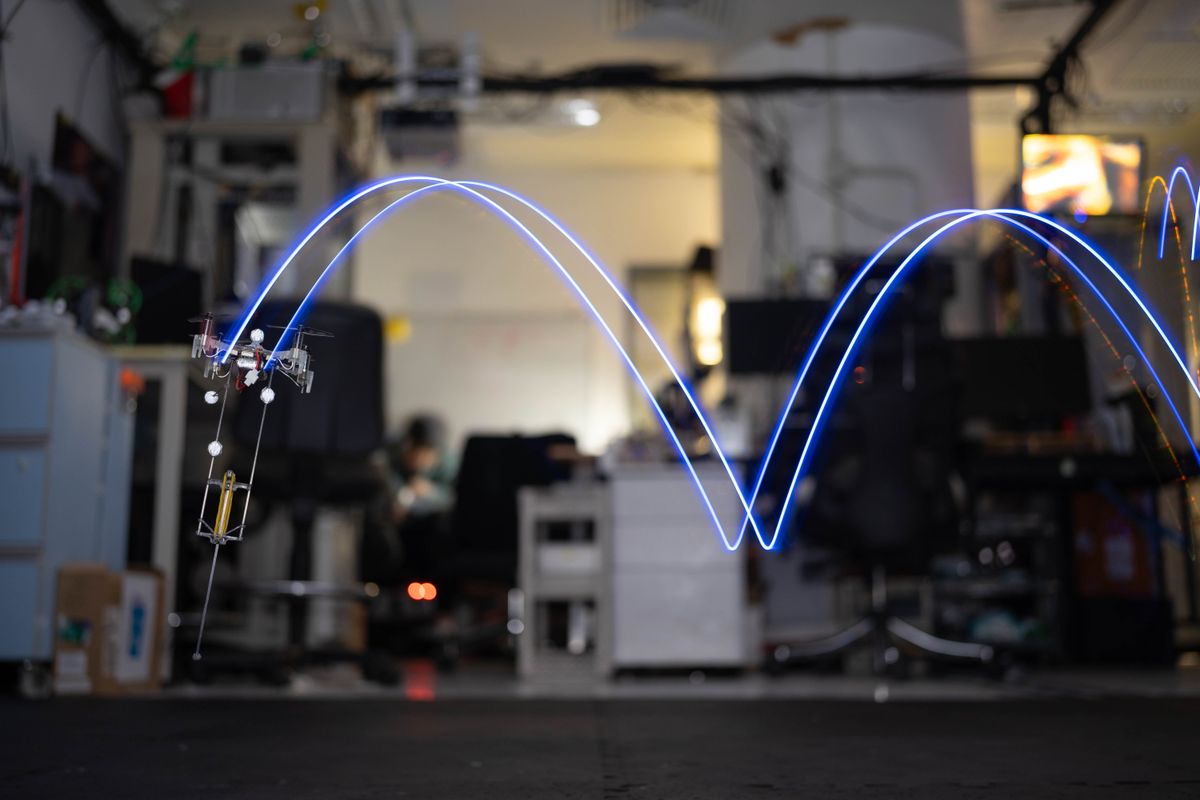
One of the very first U.S. National Robotics Week events took place on Saturday at Stanford University. It was a two day AR Drone hackathon hosted by the Stanford Robotics Club, and the winner project involved balloons and giant needles. AWESOME.
Do you like robot stuff? I know you do. Do you like free robot stuff? OF COURSE you do!Then go get your free Robots for iPad app on the App Store. More than 30,000 people have already downloaded the app over the weekend. What are you waiting for?
Boston Dynamics gets five demerits for posting this new video of PETMANafter our Video Friday post last week. I mean, seriously, don't they keep track of our schedule over there? It's a must-watch video, and even if you've already seen it, here's a reason to re-watch it: it's now got a killer '70s soundtrack.
Next week is U.S. National Robotics Week, of course, so really, we're just trying to blow through Friday as fast as possible and kick off a robotics-filled weekend. Sure, that describes pretty much every single Friday we've ever had, and watching a bunch robot videos is the best way that we know of to make that happen.
Most humanoid robots developed over the past few decades have had stiff joints, and that's a problem if they're ever going to interact with people. Their unyielding arms and legs could injury a person if they accidentally whack someone, or if they lose balance and fall down. Lately there's been a growing interest in developing robotic joints with variable stiffness, which would improve their safety, but so far few groups have built a complete robot. Now a team from the Italian Institute of Technology (IIT) is approaching that goal with their robot COMAN (COmpliant huMANoid).