We hear about lots of robots that could potentially be used for "search and rescue" or "disaster relief," because that's kind of what you say when you've made a robot that doesn't have a commercial or military application but you still need to come up with some task that it might be useful for. It's much rarer that we see these robots actually performing search and rescue or disaster relief tasks, which is why it's especially nice to see this firefighting robot from UCSD doing something that firefighters would find immediately useful.
Yesterday we took at look at some little legged robots from UC Berkeley. They're very clever, and very quick. This little legged robot from Johns Hopkins (pictured above) is quicker relative to its size. Much quicker.[See update below.] It can travel at over 30 body lengths every second, which works out to over two meters per second, or four and a half miles an hour. If you were travelling at 30 body lengths every second, you'd be going 122 miles an hour. Whoa.
When researchers at UC Berkeley figured out what kinds of awesome things were possible when you endowed a robot with an actuated tail that it could use for pitch control, it earned them an article in Nature, which is only slightly less prestigious than an article in IEEE Spectrum. Anyway, the Berkeley students have been exploring what else you can do when you give ground robots bio-inspired accessories, and they've got some little legged robots doing cool new stuff thanks to the addition of wings and tails.
The most anticipated robot event of the year,the DARPA Robotics Challenge (DRC), is heating up. In fact, the DRC isn't just a single event. It actually consists of three increasingly difficult competitions, and the first one is the Virtual Robotics Challenge (VRC), in which teams compete through a computer simulation of a robot and the challenge tasks. For the last month, teams from around the world have been submitting entries to the VRC qualification event, in order to earn a place in the VRC itself, and the latest results are in.
Trying to always be at the cutting edge of robotic technology (as we are), it's always fun to take a minute to look back and see just how much things have changed in a few short years. The PR2 and ROS, for example, have completely revolutionized robotics research (and a bunch of other things), but as with everything else, they had their origins, including Stanford's PR1. Videos of that robot, plus a lot more, in this week's Video Friday.
Since bipedal robots took their first steps, the majority has been designed with the same basic joint/actuator configuration in their legs. This design, based on a simplified human leg, uses just six motors (three for the hip, one for the knee, and two for the ankle), and though it proved successful, it has also shown several limitations over the last 25 years. Now researchers at the Humanoid Robotics Institute at Waseda University (the birthplace of the first real humanoid robots) have set out to reinvent the wheel, er, the leg, by developing an entirely new shank that more closely replicates human walking.
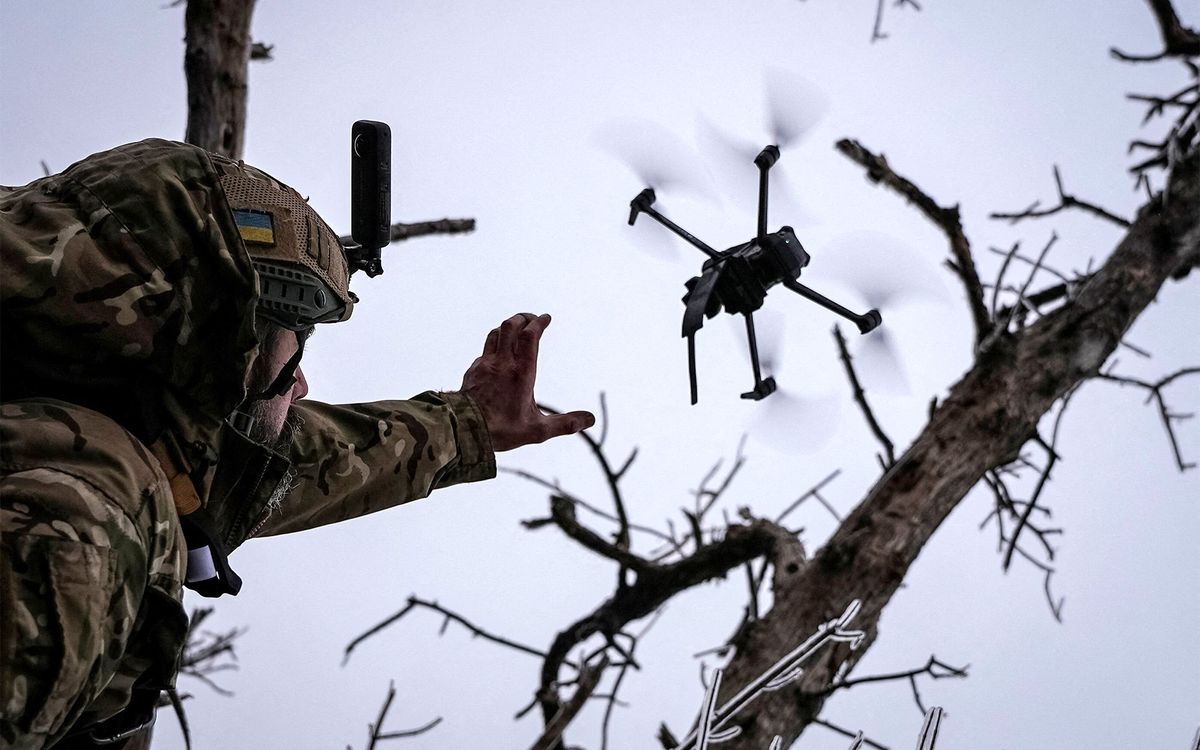
Throughout most of the world, robots aren't particularly helpful to humanity, at least, not yet. If you've got enough money, you can of course buy a robot to vacuum your floors or clean your pool, but that's more about making life easier, which isn't quite the same thing as helping people in need. What with the increasingly negative focus on UAVs that we've been seeing lately (in terms of both civilian privacy issues and the military), it's important to remember that the overall purpose of robots is to help us, and drones can be very effective at doing just that, if they're given the opportunity. Drone Adventures was founded earlier this year to find ways of "promoting the great potential of drones in civilian applications, focusing on conservation, humanitarian, cultural and search and rescue domains," and they've recently returned from their very first mission: a humanitarian mapping project in Haiti.
Last month (I don't know how it can possibly be just last month but somehow it is) at Stanford's Robot Block Party, we talked to the guys over at Barobo, who gave us a peek at a modular educational robot system that they were getting ready to Kickstart. The project has now launched, meaning that the time to get a DIY modular robotics kit of your very own is right now.
This week's Video Friday is kicking off with a long list of things not to do with an AR Drone unless you have the budget of a successful French wireless device manufacturer named after a bird.
Due to ICRA (among other robot-y things), we had to take a bit of a break from our TurtleBot tutorials, but we're back this week to help get you going with Linux and ROS. The good news is, if you managed to survive the Ubuntu install, getting ROS installed is a cinch. The latest ROS version is called Groovy Galapagos (hence the hippie tortoise above). We'll help you through it, and provide some tips on using Linux, in the next installment of our tutorial. Groovy!